
Last updated September 22, 2026
Free on-site gate assessment - hinges, posts, and your LiftMaster or Nice gate operator checked before anything is quoted
The assessment is free and the quote is the invoice.
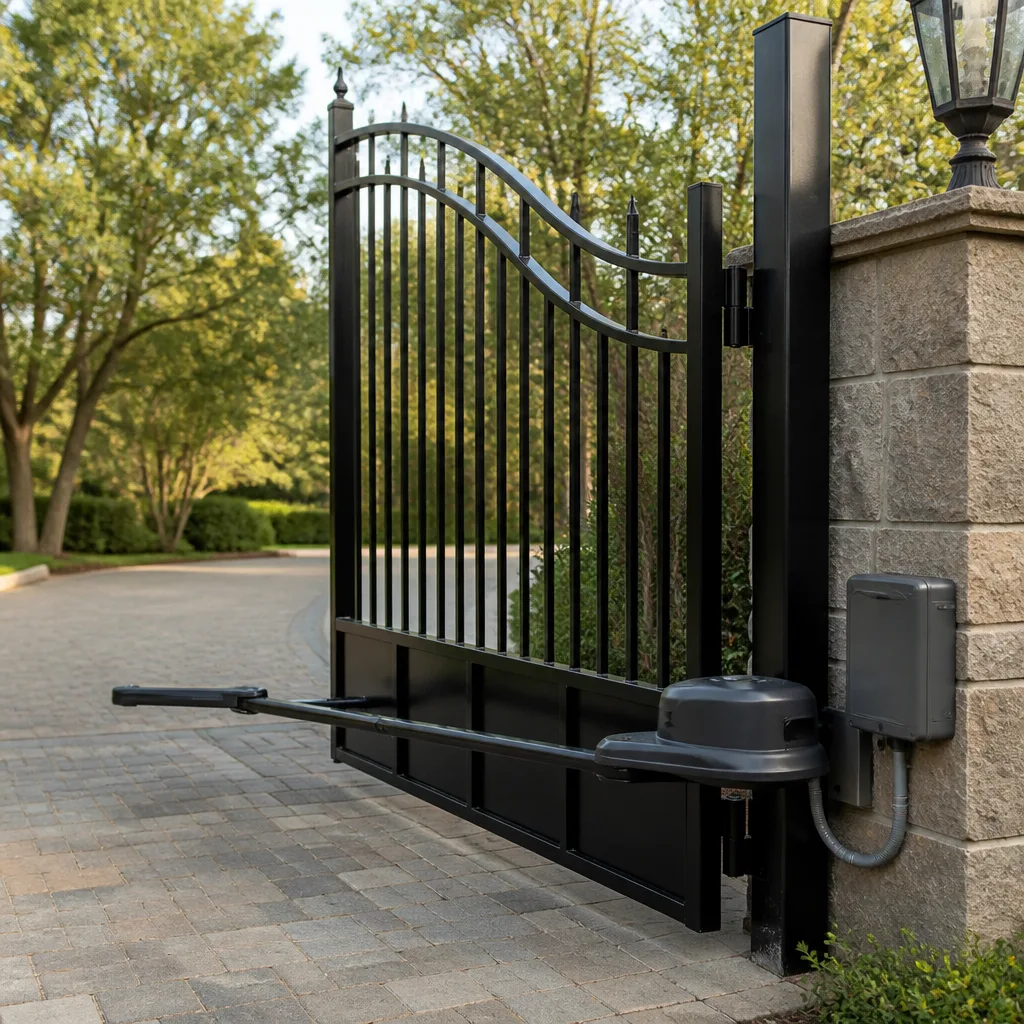
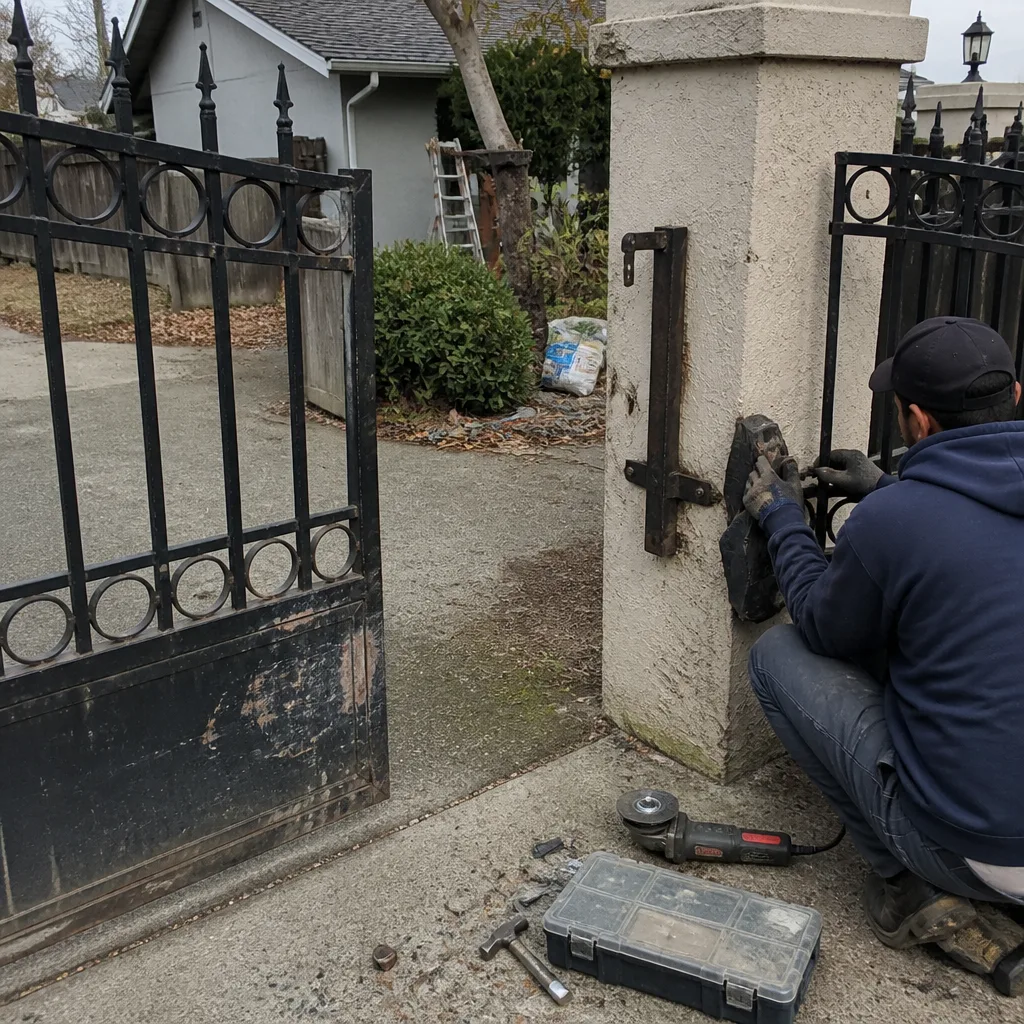 Before
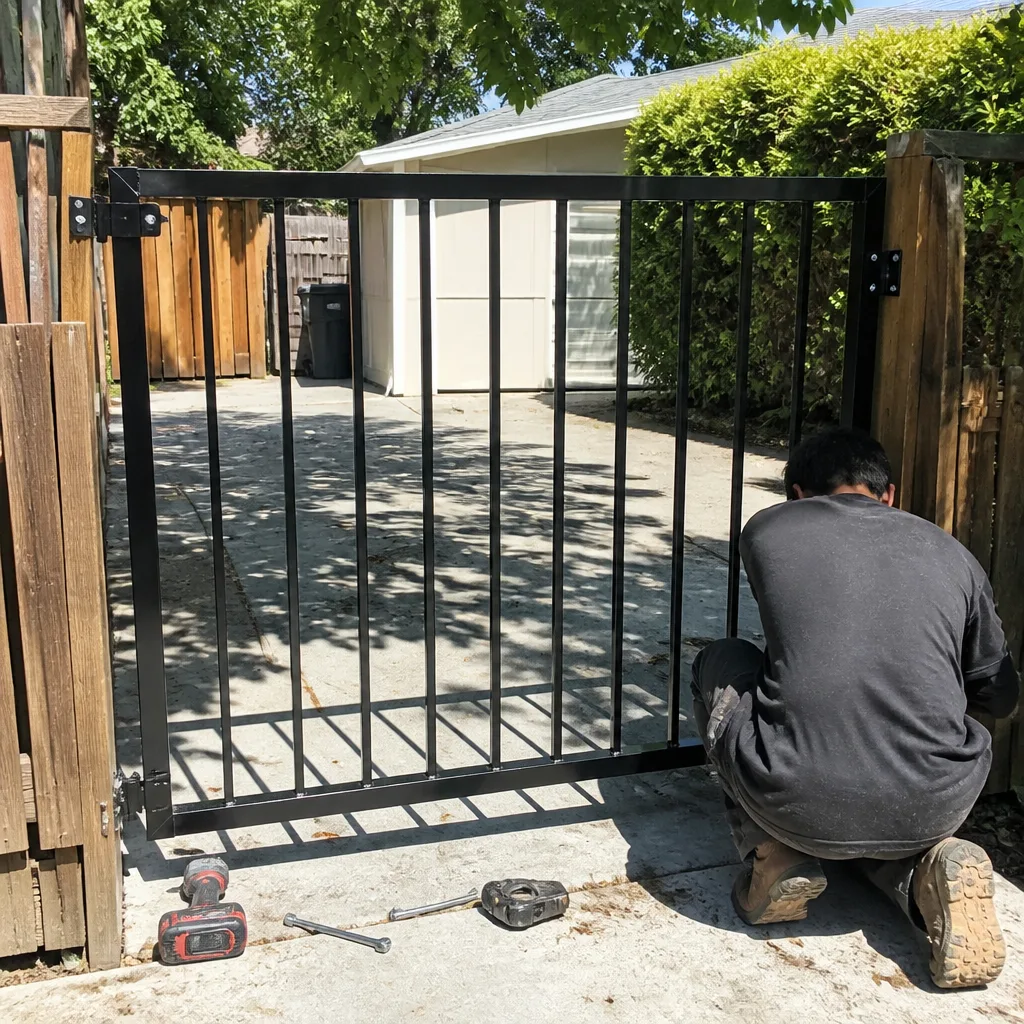 After
After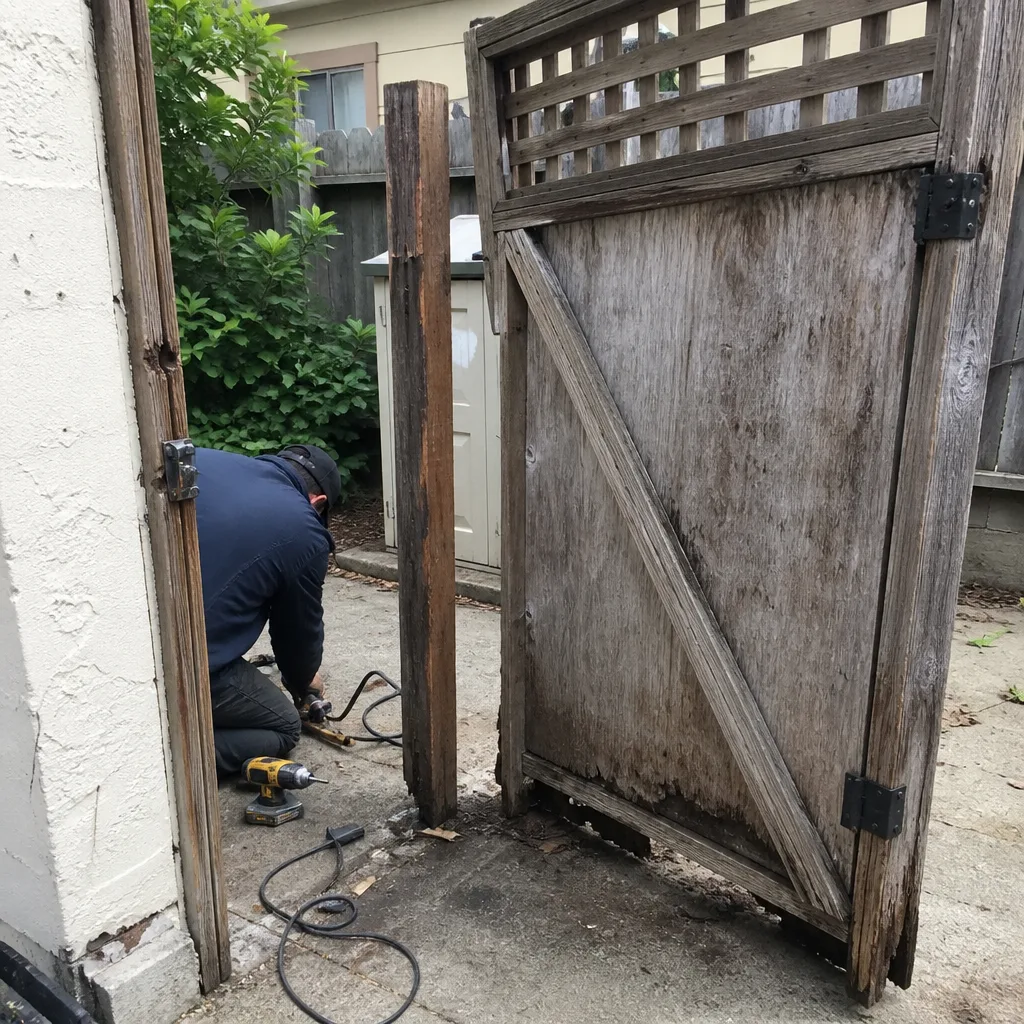 Before
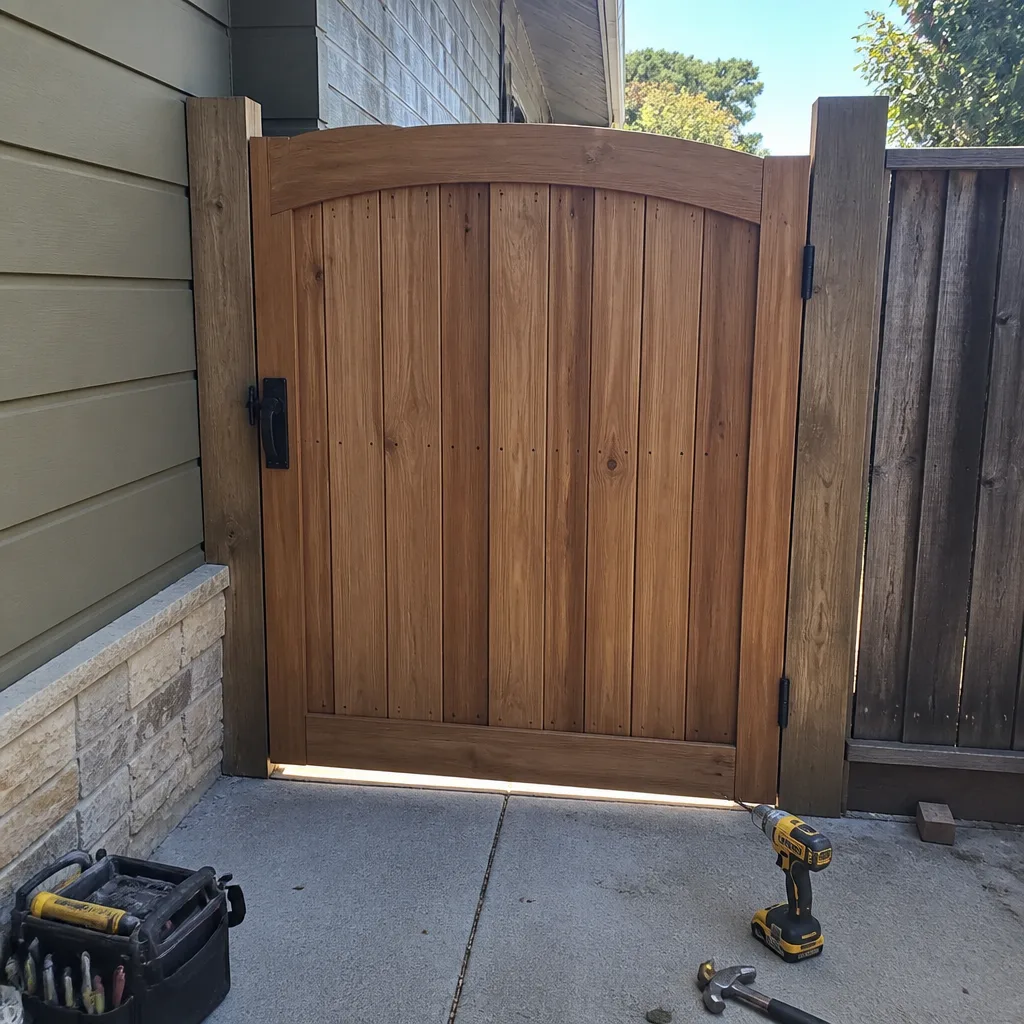 After
After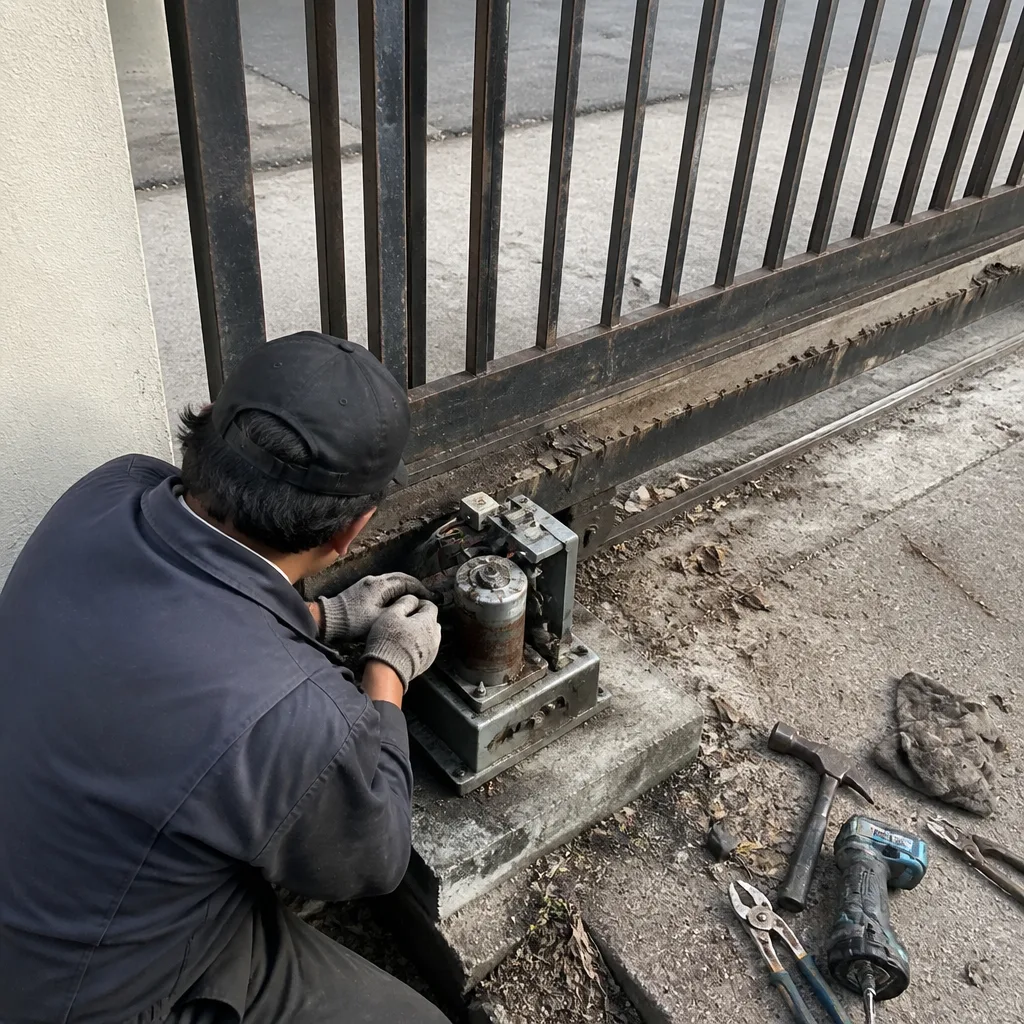 Before
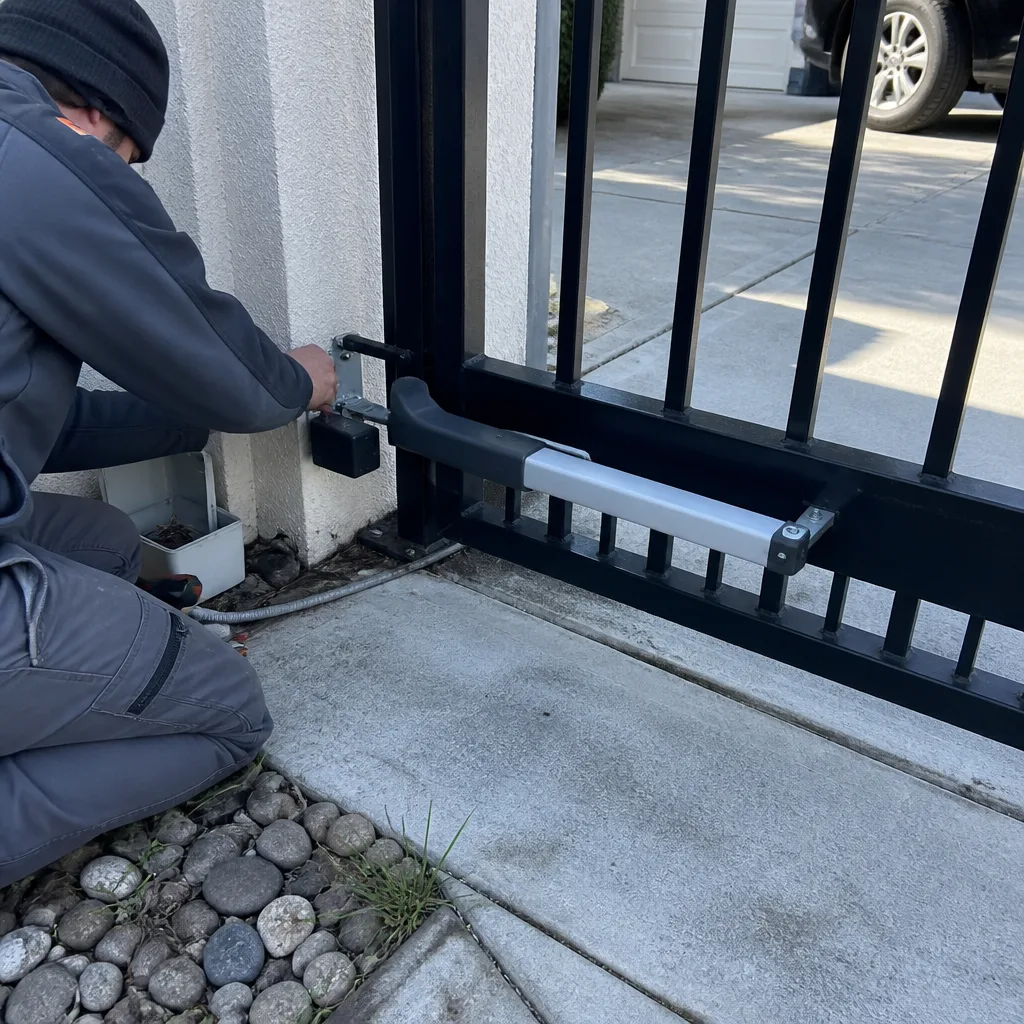 After
AfterGate Repair Maintenance Checklist for Sunnyvale Homeowners
Most printable gate checklists say “inspect hinges for wear,” which is the same as telling someone to inspect their brakes for badness. A checklist without a threshold is a liability, not a tool. Sunnyvale homeowners deal with a specific set of gate killers: clay soil that heaves after winter rains, dry-season ground shift that throws photo-eyes out of alignment, and the fine dust from nearby construction that grinds roller bearings into premature failure. This Gate Repair Warning Signs: A Sunnyvale Homeowner’s Reference Guide gives you pass-or-fail numbers for every inspectable component - millimeters of acceptable hinge play, decibel thresholds for bearing noise, and the amp-draw ceiling that signals motor failure before the gate stops entirely. You’ll know what’s a note-it item and what’s a stop-using-the-gate-today item.
Quick Answer
A proper Gate Repair maintenance checklist for Sunnyvale homeowners includes monthly visual inspections of hinges, photo-eyes, and safety edges; quarterly lubrication and electrical connection checks; and annual professional testing of motor amp draw, interlock sensors, and post footing stability against clay soil heave. Stop using the gate immediately if you find more than 2mm of hinge play, hear roller bearings above 60 decibels, or measure a motor pulling 20% above its nameplate amp rating.
Table of Contents
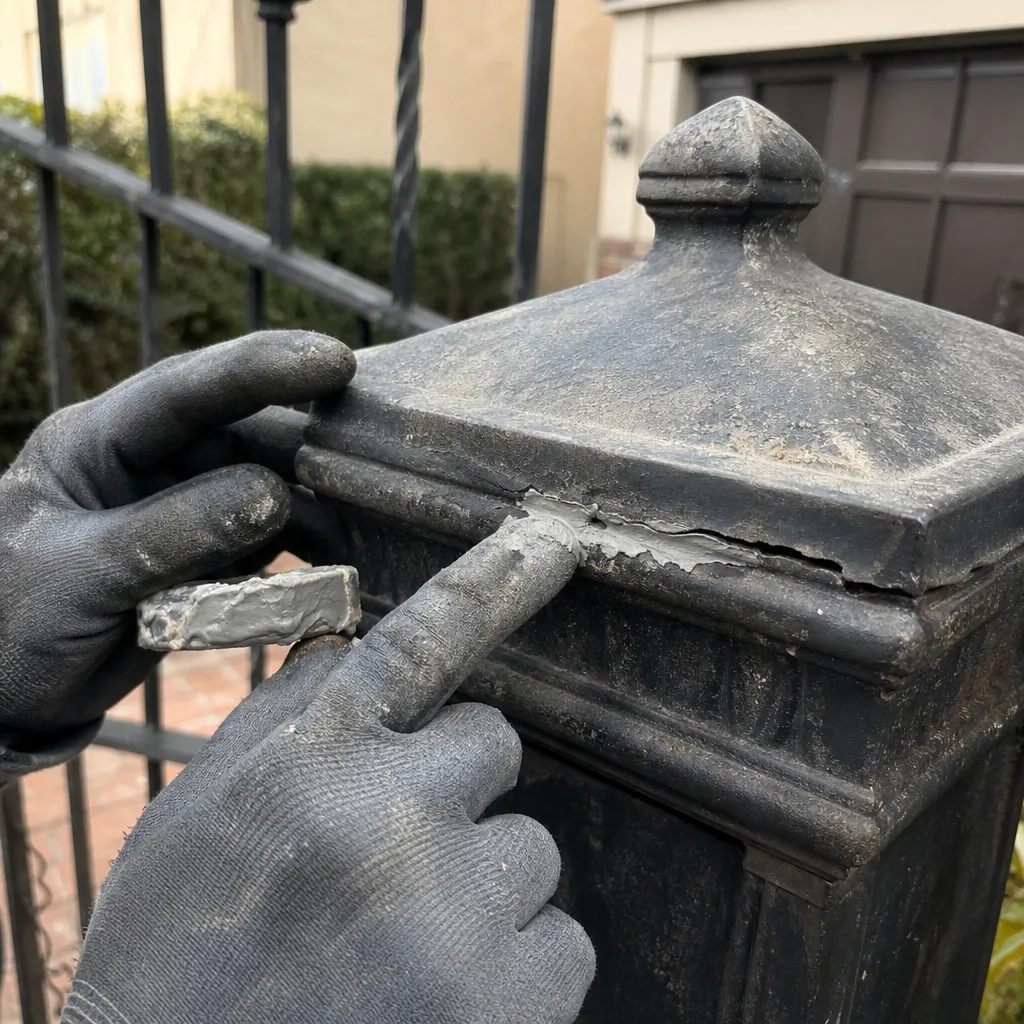
- Monthly Checks Homeowners Can Perform
- Quarterly Maintenance Tasks
- Annual Professional Inspection Requirements
- Sunnyvale-Specific Risks: Soil, Climate, and Construction Dust
- Quantified Pass/Fail Thresholds for Every Component
- Building Your Home Maintenance Log
- Red-Flag Readings: Stop Using the Gate Today
- Common Mistakes to Avoid
 Before
 After
AfterMonthly Checks Homeowners Can Perform
These five checks take under ten minutes and require no tools beyond a flashlight and your phone’s voice memo app. The goal is catching drift before it becomes failure.
1. Visual Hinge Inspection
Stand at the gate’s closed position and sight along the hinge barrel. You’re looking for two things: vertical alignment (the barrel should plumb straight, not lean toward or away from the post) and lateral play. Grip the gate leaf at the free edge and push side-to-side. Any perceptible movement at the hinge barrel indicates pin wear or bushing degradation. In our experience across Sunnyvale’s older neighborhoods like Old Town and the Birdland area, gates installed before 2010 often run on bare steel pins without sealed bearings. These wear faster in the salt air that pushes inland from the Bay, especially on properties west of Mathilda Avenue.
What to record: Note the date and whether movement was detectable. If you can feel clunk, schedule service. Don’t wait for the sag to become visible.
2. Photo-Eye Alignment Test
Every automated gate in Sunnyvale must have a functioning photo-eye under Gate Repair Permits, Codes & Inspections in CA: What You Need to Know. The infrared beam should sit between 6 and 24 inches above grade, and both emitter and receiver housings should be plumb. Test by breaking the beam with a cardboard box during a close cycle - the gate should reverse within 2 seconds. If it doesn’t, or if it reverses intermittently, the alignment has drifted.
Common cause in Sunnyvale: summer ground shrinkage after the winter wet season. We’ve realigned photo-eyes in the Lakewood neighborhood every September for years because the clay-dominant soil there contracts hard by August, tilting the mounting posts.
3. Safety Edge Response Check
Press the safety edge (the rubber contact strip on the leading edge of a sliding gate, or the bottom edge of a swing gate) while the gate is moving. It should stop and reverse. Test at three points: left end, center, right end. A dead zone in the middle usually means internal wire fatigue.
4. Listen to the Motor
Stand beside the operator during a full open-close cycle. A healthy motor hums; a failing motor grinds, squeals, or labors audibly on startup. Record a 10-second voice memo. Compare next month. Most homeowners catch bearing failure two to three months early this way.
5. Obstruction Path Clearance
Sliding gates need 2 inches minimum between the bottom of the gate and the highest point of the track. Swing gates need full arc clearance without vegetation contact. In Sunnyvale’s mature neighborhoods, root heave from established oaks and liquidambars is the usual culprit.
Quarterly Maintenance Tasks
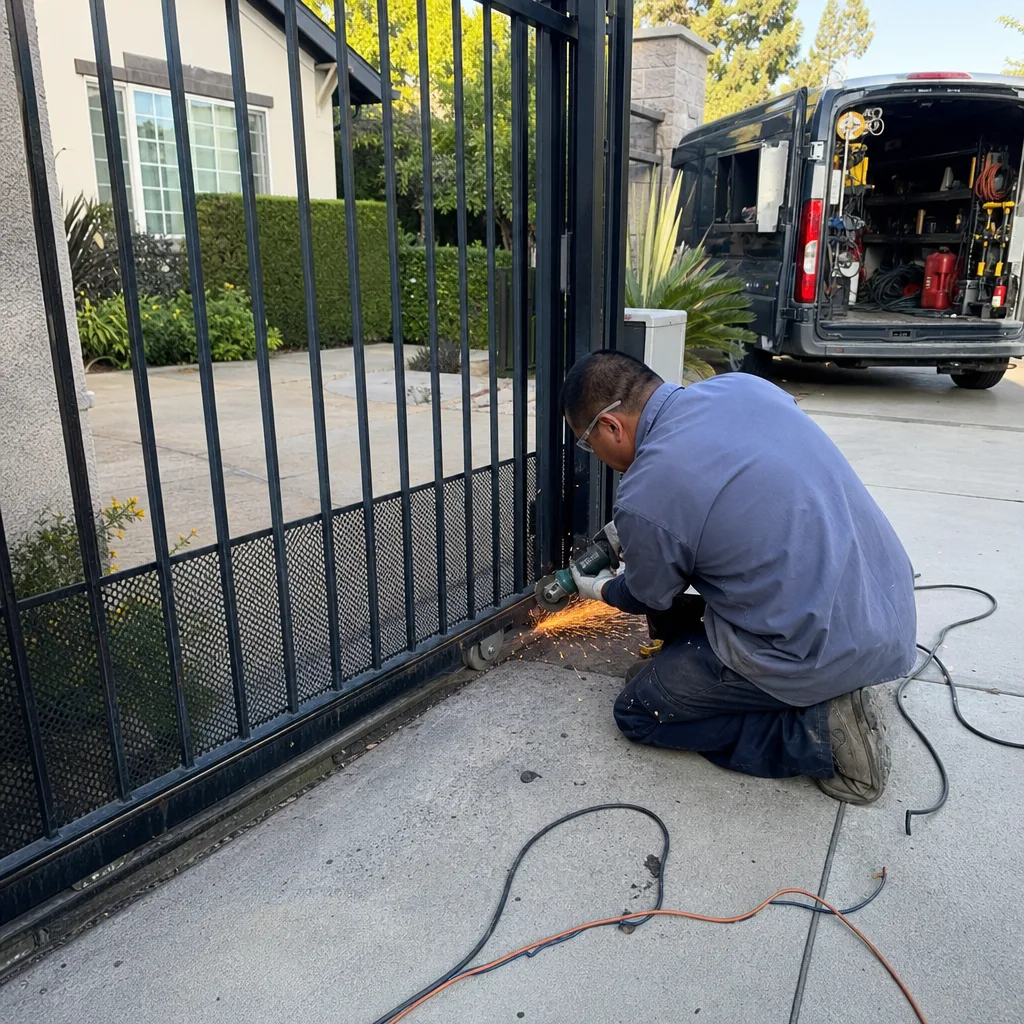
These tasks require basic tools and about thirty minutes. Do them in March, June, September, and December to stay ahead of seasonal shifts.
Lubrication Protocol
Use a white lithium grease on hinge pins and a dry PTFE spray on roller bearings. Never use WD-40 as a lubricant - it displaces water then evaporates, leaving metal bare. In Sunnyvale’s dry summers, bare metal seizes.
- Clean old grease from hinge pins with a rag
- Apply thin coat of white lithium grease to the pin surface
- Cycle the gate 3 times to distribute
- Wipe excess - accumulated grit sticks to excess grease
- Apply dry PTFE spray to roller bearings; spin by hand to distribute
For gate motor and opener service in Sunnyvale, the gearbox itself should not be opened by homeowners - the internal epicyclic gears require specific viscosity grease, and over-greasing blows the motor seals.
Electrical Connection Inspection
With the gate powered off at the breaker, open the operator control box. Photograph the terminal block before touching anything - this gives you a reference if a wire slips. Check for:
- Green corrosion on low-voltage terminals (common in Sunnyvale’s microclimates where fog lingers)
- Wire nuts that have backed off from thermal cycling
- Conduit entries where sealant has cracked, admitting spiders and moisture
Tighten only what was already tight - don’t overtorque. If you find corrosion, that’s a service call. The resistance it introduces can fry a control board.
Post Footing Visual Survey
Walk each post and look for new gap formation between the concrete footing and surrounding soil. In Sunnyvale’s clay-heavy zones - particularly north of 101 and east of Wolfe Road - winter rains saturate the soil, then summer drying creates shrinkage gaps. A gap wider than your thumb means the post is losing lateral support. Note it and watch monthly.
Annual Professional Inspection Requirements
Some measurements require tools most homeowners don’t own and training most haven’t received. These annual checks prevent the failures that cost $1,200 to $2,800 to remedy.
Motor Amp-Draw Testing
A clamp meter measures the current the motor draws during operation. Every motor has a nameplate rating - typically 3.5 to 6 amps for residential swing-gate operators, 4 to 8 amps for sliding-gate operators. A motor pulling 20% above nameplate is failing. A motor pulling 30% above is days from thermal shutdown or fire.
We’ve documented this repeatedly in Sunnyvale. In 2023, a homeowner on Ticonderoga Drive had a Viking operator pulling 7.2 amps against a 5.0-amp nameplate. The gate still opened. Three weeks later, the motor windings shorted and took the control board with it. The repair that could have been a $340 motor replacement became a $1,890 full operator rebuild.
Interlock Sensor Verification
Magnetic loop detectors, safety edges, and photo-eyes must be tested under load, not just in isolation. A technician with a multimeter verifies that each sensor’s output voltage drops to near-zero when triggered. A sensor that “works” in a simple test but outputs 4.5 volts instead of 0.2 volts under load will fail intermittently - the dangerous kind of failure, where the gate reverses nine times and crushes a bicycle on the tenth.
Post Stability Assessment
A technician checks post plumb with a digital level and tests footing integrity by applying lateral pressure. A post that moves more than 1/8 inch at the top under moderate hand pressure has compromised footings. In Sunnyvale’s clay soils, this usually means the concrete footing has cracked from soil heave or the rebar cage has corroded from moisture trapped in the pour.
Limit Switch Calibration
The limit switches tell the motor when to stop at fully open and fully closed. Drift here causes the gate to slam against its stops or stop short. A technician verifies the mechanical stop position against the limit switch reading - they should match within 2 degrees of travel. Under Vance Gate Repair Sunnyvale home service protocols, we photograph the limit switch position and leave the image with the homeowner.
Sunnyvale-Specific Risks: Soil, Climate, and Construction Dust
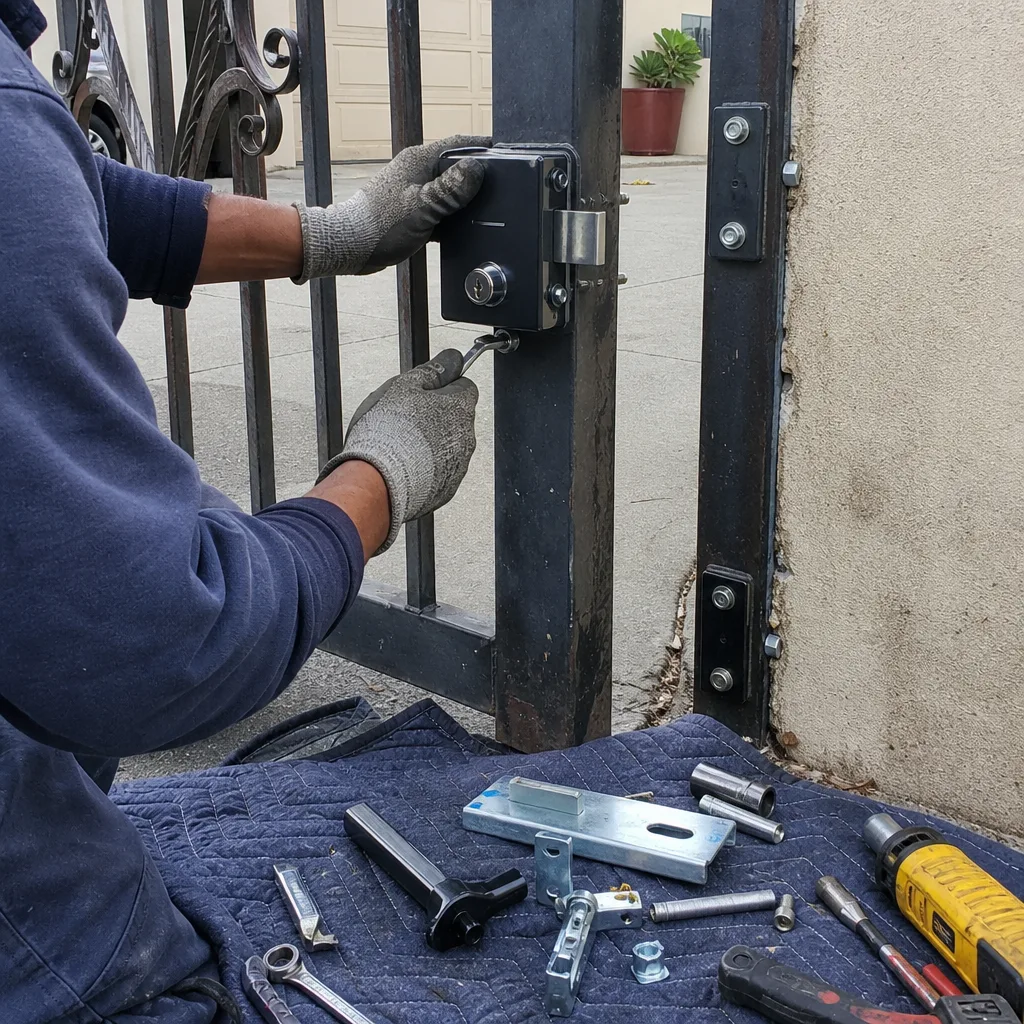
Sunnyvale sits on a patchwork of soil types that matter enormously for gate longevity. The western half, toward the Bay, has sandy loam that drains well but shifts during seismic events. The eastern half, toward the foothills, has heavy clay that expands when wet and contracts when dry. Both kill gates, but differently.
Clay Soil Heave
After a wet winter like 2022-2023, clay-saturated soil can lift concrete footings 1/2 inch or more. The gate leaf, attached to a post that’s now tilted, binds against the catch or drags on the ground. By late summer, the soil has shrunk back, but the footing rarely settles to its original position - the lift is partially permanent. We’ve replaced footings in the Ponderosa neighborhood where cumulative heave over five years had tilted posts 3 degrees off plumb.
Annual check: measure post plumb with a level in April, after the rains end, and again in October. If the April reading is worse, clay heave is active.
Dry-Season Ground Shift
From July through October, clay soil shrinkage opens gaps around footings and tilts photo-eye mounting posts. The alignment that was perfect in June is borderline by September. In the Cherry Chase area, where many homes were built in the 1960s on uncompacted fill, we’ve measured post tilt of 1/4 inch over a single dry season.
Construction Dust and Abrasion
Sunnyvale’s building boom generates fine silica dust that settles into roller bearings and gearboxes. Unlike organic dust, silica doesn’t degrade - it grinds. Gates near active construction sites need quarterly bearing inspection, not annual. If you can wipe black gritty paste from the track, that’s bearing grease loaded with silica. It’s cutting metal.
Salt Air Corrosion
Properties within 2 miles of the Bay get salt deposition on exposed steel. Hinge pins, chain drives, and weld plates show rust faster than inland equivalents. Stainless steel hardware is worth the upgrade here - 304-grade minimum, not the marginal “stainless” sold at hardware stores.
Quantified Pass/Fail Thresholds for Every Component
This is what separates a working checklist from a useless one. Every measurement below is a call-or-don’t-call boundary.
| Component | Pass | Fail | Action |
|---|---|---|---|
| Hinge lateral play | 0-1mm perceptible | 2mm or more | Schedule service - pin or bushing replacement |
| Roller bearing noise | Below 60 dB (smartphone app) | 60 dB or grinding audible | Replace bearings before seizure |
| Motor amp draw | Nameplate rating or below | 120% of nameplate | Immediate service - motor failing |
| Photo-eye alignment | Beam centered, plumb housings | Offset 1/4 inch or more | Realign or remount |
| Safety edge response | Stops/reverses at all test points | Dead zone or delayed response | Replace edge or repair wiring |
| Post plumb | Vertical within 1 degree | 2 degrees or more off plumb | Footing assessment - possible replacement |
| Footing soil gap | No visible gap | Gap wider than thumb | Monitor monthly, plan reinforcement |
| Track clearance (sliding) | 2 inches minimum | Less than 2 inches | Clear obstruction or adjust rollers |
| Chain tension (slide) | 1/2 inch sag at midpoint | 1 inch sag or tight as wire | Adjust tensioner or replace chain |
| Control board voltage | 115V ± 5% (residential) | Below 109V or above 121V | Electrician - utility or wiring issue |
For gate installation in Sunnyvale, these same thresholds apply to acceptance testing on new work. Under our Haven Standard, every new gate leaves with documented readings for motor amp draw, photo-eye alignment, and limit switch position - the baseline against which future maintenance is measured.
Building Your Home Maintenance Log
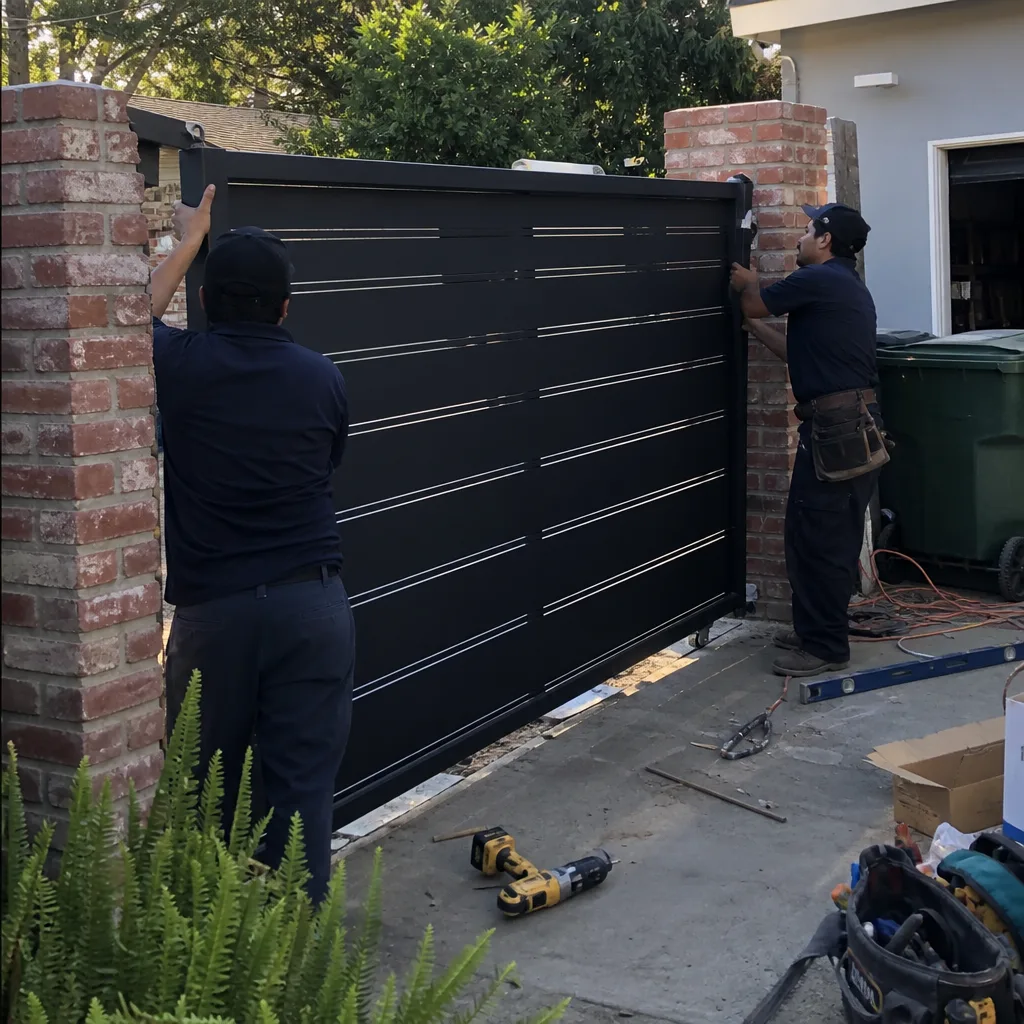
A maintenance log isn’t paperwork for paperwork’s sake. It’s a diagnostic shortcut that saves you money and gets your gate fixed faster.
What to Include
Each entry needs: date, weather, what you checked, what you measured, and whether it passed or failed. A simple spreadsheet works. A dedicated notebook works. What fails is “I think I checked it last month.”
Sample Entry
March 15, 2024. Post-rain, 62°F. Monthly check: hinge play detectable but under 1mm. Photo-eye beam centered, reversed on box test in 1.5 seconds. Motor voice memo sounds consistent with February entry. Safety edge responsive all points. Post plumb: vertical within 1 degree. No soil gaps visible. PASS all items.
Why Technicians Value Your Log
When you call for gate repair in Sunnyvale and hand us a year of dated entries, we start from known baselines instead of guessing. If your log shows motor noise increasing gradually over six months, we know to check bearings and amp draw first. If it shows sudden failure after a specific date, we look for impact damage or electrical events. The diagnostic time we don’t spend is time you don’t pay for.
Under Haven Standard Clause 4, our technicians add to your log on every visit - photographed findings, measured values, and what was adjusted or replaced. After three years, you have a complete equipment history that makes every subsequent visit faster and more precise.
Red-Flag Readings: Stop Using the Gate Today
Some findings mean immediate cessation of use. Operating the gate risks injury, property damage, or catastrophic equipment failure.
- Motor amp draw 150% of nameplate or higher. The motor is in thermal runaway. Continued operation melts windings and often ignites surrounding material. We’ve seen this in Sunnyvale’s older FAAC and BFT operators where thermal cutoff switches have failed.
- Visible weld crack at hinge plate or post bracket. A crack propagates under cyclic loading. The next cycle - maybe the next cycle - is complete separation. A 400-pound gate leaf falling free is not a repair. It’s an emergency.
- Interlock sensor failure: gate operates with safety edge or photo-eye defeated. This is illegal under California safety code and lethal if a child or pet is in the path. Test by deliberately defeating each sensor - if the gate still runs, power it off and call immediately.
- Post movement under hand pressure. If you can wobble a gate post, the footing is failed. The post can fall, and the gate with it. This is common after wet winters in Sunnyvale’s clay zones.
- Control board burning smell or visible scorching. Electrical fire is imminent. Turn off at the breaker, not just the remote.
- Chain or belt drive with broken strands or teeth. The next operation throws the broken segment. On a sliding gate, that means uncontrolled travel into the stop or beyond.
If you encounter any of these, stop operation and call, or browse our more guides & resources. Vance Gate Repair Sunnyvale offers free estimates - call (669) 900-1904. A live person answers 24 hours a day.
Common Mistakes to Avoid
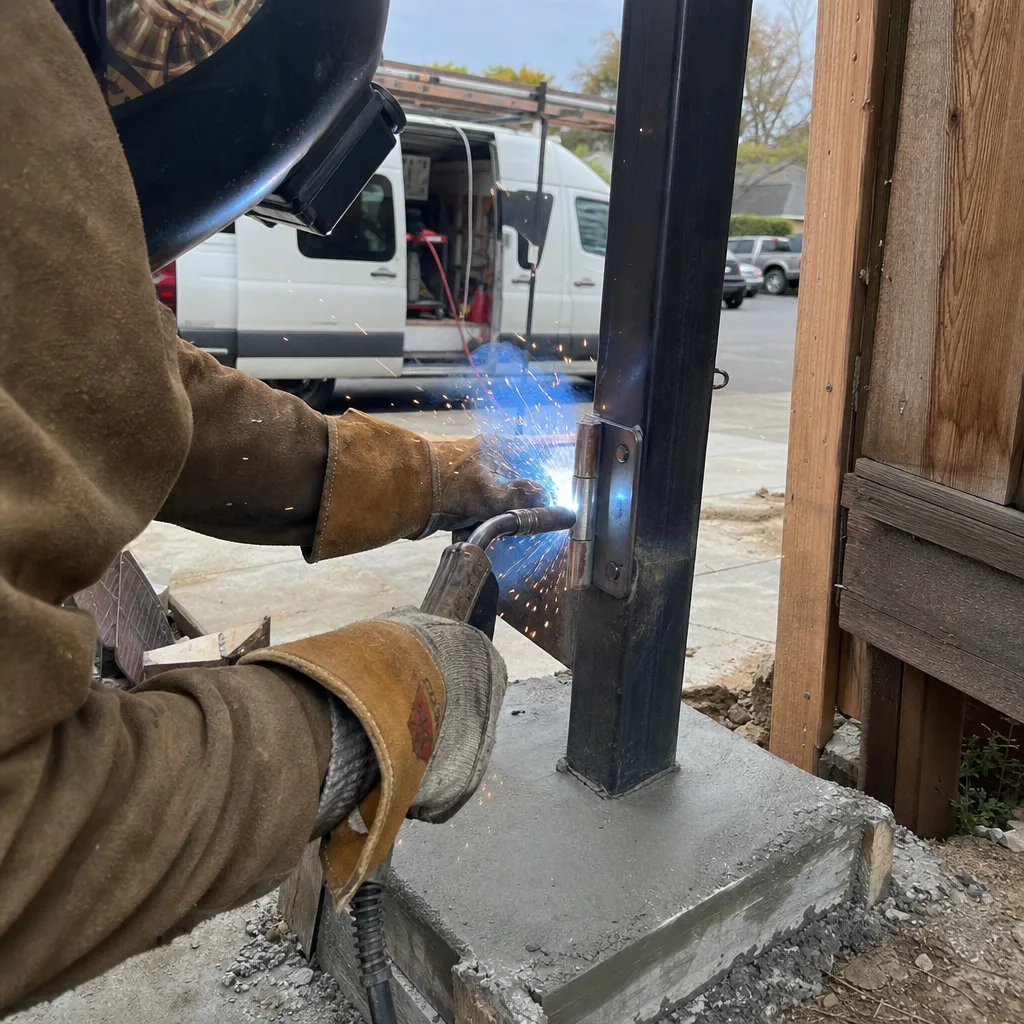
- Using WD-40 as a lubricant on hinges or bearings. It’s a water displacer, not a lubricant. In Sunnyvale’s dry climate, it evaporates in weeks and leaves metal unprotected. Use white lithium grease on hinges, dry PTFE on bearings.
- Ignoring seasonal re-check after the first rain. That October inspection you skipped? It’s when clay soil heave reveals itself. The gate that worked fine in September binds in November. Schedule the quarterly check for late October, not mid-September.
- Testing safety devices only at one point. A safety edge with internal wire fatigue often fails at the midpoint while working at the ends. Test three points every time, or you’re testing nothing.
- Replacing a motor without checking amp draw on the old one. High amp draw sometimes comes from mechanical binding, not motor failure. Replace the motor and the new one fails in months because the root cause was a bent track or seized bearing.
- Assuming all automation brands use the same lubricant spec. Linear operators specify NLGI #2 lithium grease. Viking gearboxes want a specific synthetic. FAAC and BFT units often ship with lifetime-sealed gearboxes that should never be opened. Check the manual, or ask a technician who works on nine major brands.
- Not documenting the baseline on a new or newly repaired gate. Without measured values from day one, you can’t detect drift. Every gate we service at Vance Gate Repair Sunnyvale leaves with a documented baseline under Haven Standard Clause 4.
- Waiting for complete failure before calling. A motor pulling 130% of nameplate still opens the gate - until it doesn’t, and takes the control board with it. The $340 repair becomes $1,200 because the warning was ignored.
When to Call a Professional
Call when your log shows drift beyond pass/fail thresholds, when you encounter any red-flag reading, or when annual testing requires tools you don’t own. Motor amp draw, interlock sensor voltage under load, and post footing integrity all need professional measurement.
Vance Gate Repair Sunnyvale offers free estimates in Sunnyvale - call (669) 900-1904. A live person answers the phone at any hour, and we dispatch background-checked, uniformed technicians with name and photo provided before arrival. Every job starts with a written price before work begins and ends with a documented photo record of what was found, what was adjusted, and what was replaced. The 365-Day Done Right Promise covers all completed work: if it’s not right, we make it right at no additional charge.
Frequently Asked Questions
Monthly visual checks, quarterly lubrication and electrical inspection, and annual professional testing with a clamp meter and digital level. Sunnyvale’s clay soil and seasonal moisture shifts make the quarterly check particularly important - skip it and you miss the ground movement that throws photo-eyes and loosens footings.
Photo-eye misalignment after summer ground shrinkage, followed by hinge pin wear in salt-air exposure zones west of Mathilda Avenue. Both are preventable with the monthly and quarterly checks in this guide. Call (669) 900-1904 for an exact quote - estimates are free.
Hinge pins and roller bearings, yes - with the correct lubricants specified above. The motor gearbox, no. Internal gears require specific viscosity grease, and over-greasing blows motor seals. We’ve replaced motors where homeowners pumped grease through the vent hole. Leave gearbox service to a technician.
Annual professional inspection and tune-up typically runs $180-$340 for a single residential gate, depending on access, automation brand, and whether issues are found that need correction. The price is written and agreed before any work starts. Call (669) 900-1904 for an exact quote - estimates are free.
Under Haven Standard Clause 4, every visit should leave you with photographed findings, measured values, and a written record of adjustments and parts. If your current provider hands you a verbal summary and an invoice, you’re paying for information that evaporates. We file every record and leave a copy with the homeowner.
Because “still works” is not a measurement. A motor pulling 130% of nameplate still opens the gate. A hinge with 2mm play still swings. These are pre-failure states that cost 3-5 times more when they become actual failures. Maintenance converts unpredictable emergency repairs into scheduled, lower-cost interventions.
The Bottom Line
A gate maintenance checklist without numbers is a liability. Sunnyvale homeowners need specific pass/fail thresholds - 2mm hinge play, 60 dB bearing noise, 120% motor amp draw - to make maintenance decisions that prevent emergencies. The monthly, quarterly, and annual rhythm in this guide catches clay soil heave, salt-air corrosion, and construction dust abrasion before they become $2,000 failures. Build a simple log, stick to the measurements, and know when a finding means stop using the gate today. The documentation habit saves diagnostic time, reduces repair costs, and gives every future technician the baseline they need to work precisely.
Written by Adrian Vance, Owner at Vance Gate Repair Sunnyvale, serving Sunnyvale since 2014.