
Last updated September 22, 2026
Free on-site gate assessment - hinges, posts, and your LiftMaster or Nice gate operator checked before anything is quoted
The assessment is free and the quote is the invoice.

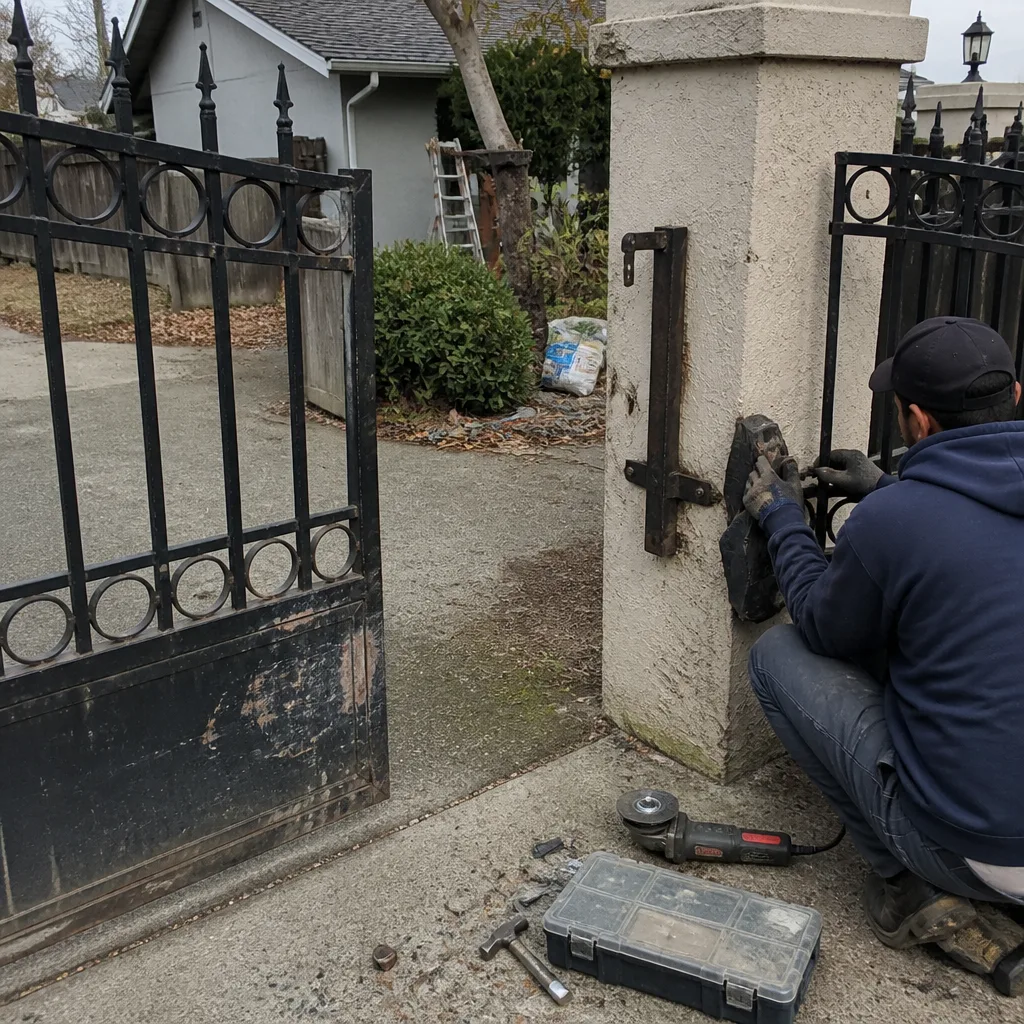 Before
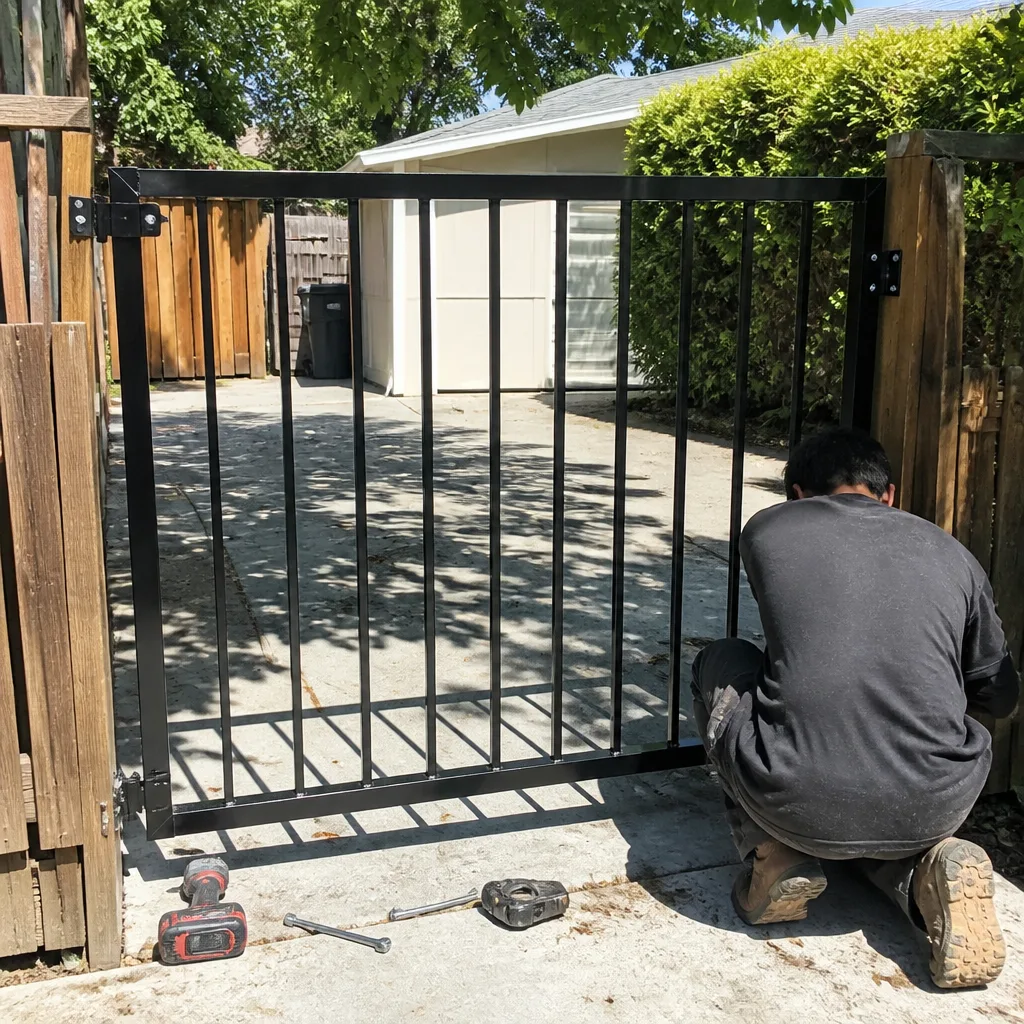 After
After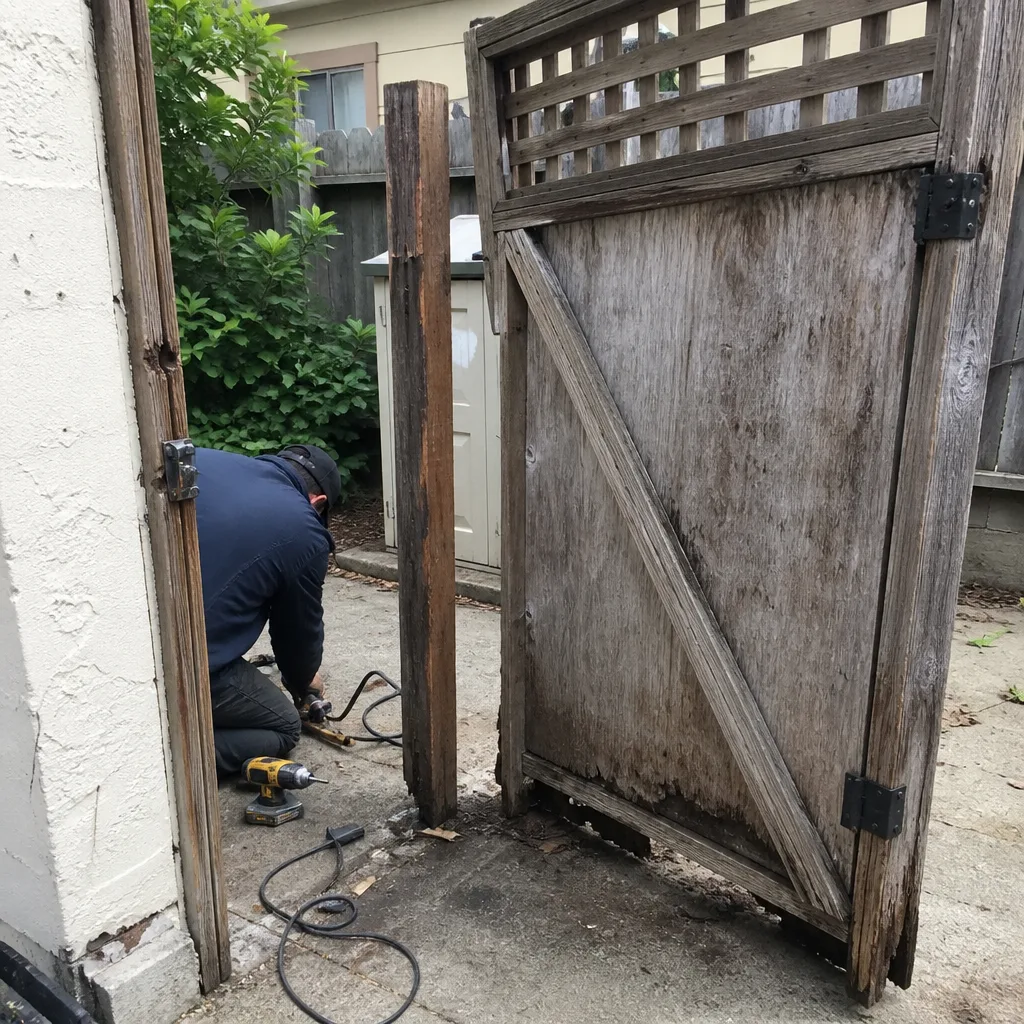 Before
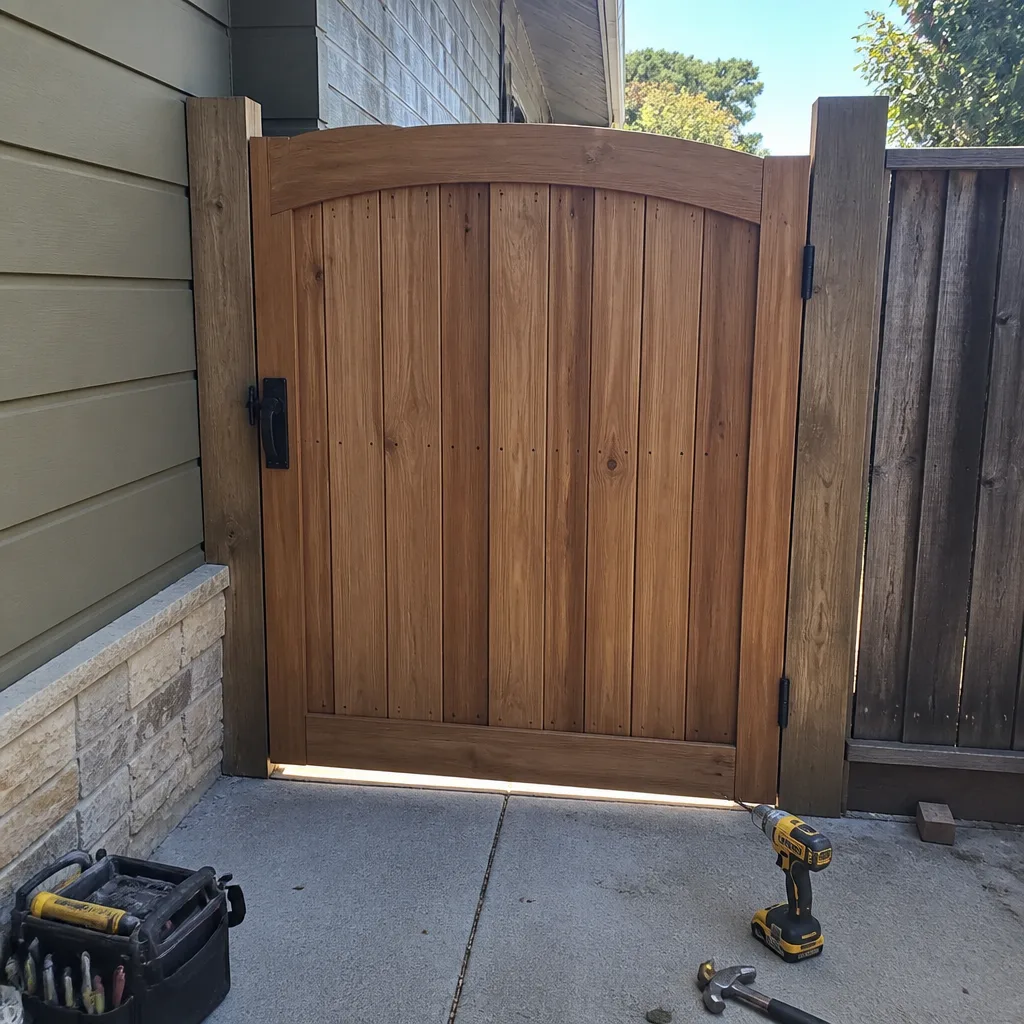 After
After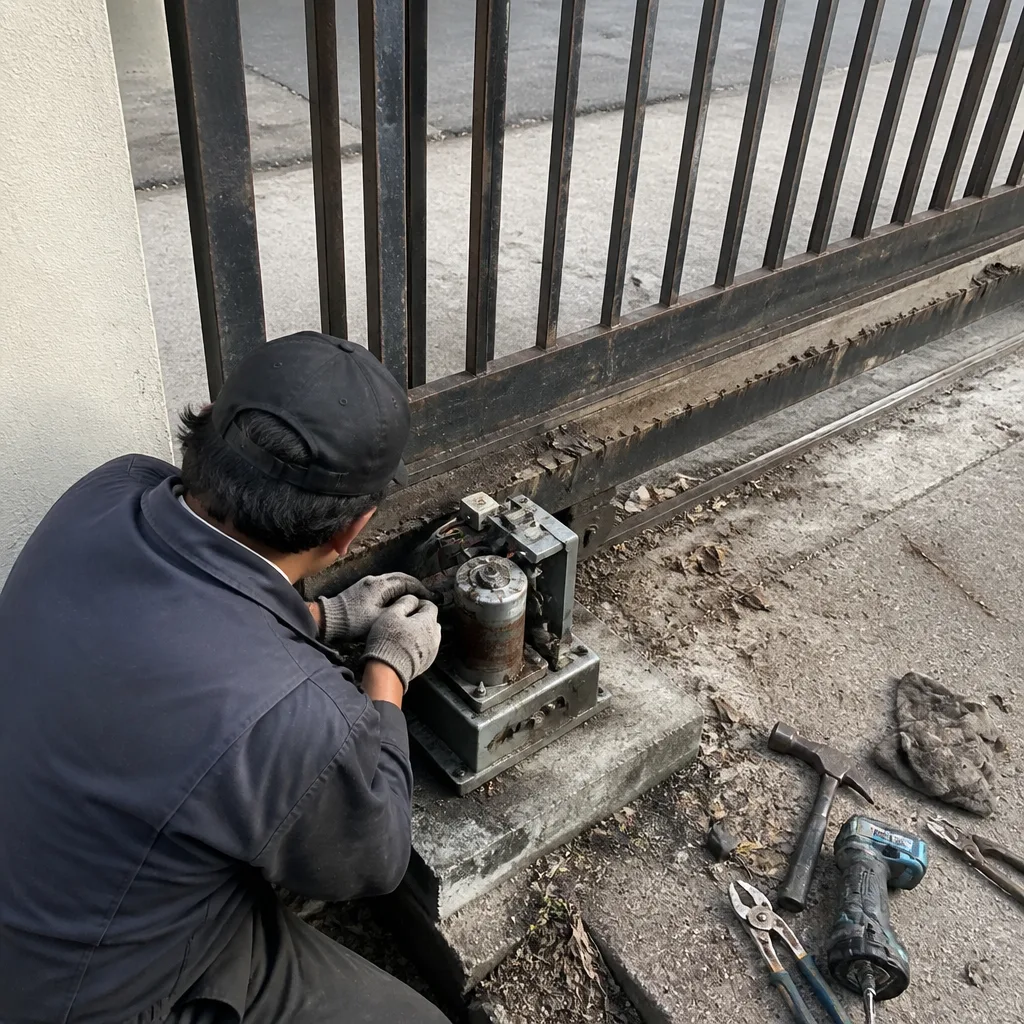 Before
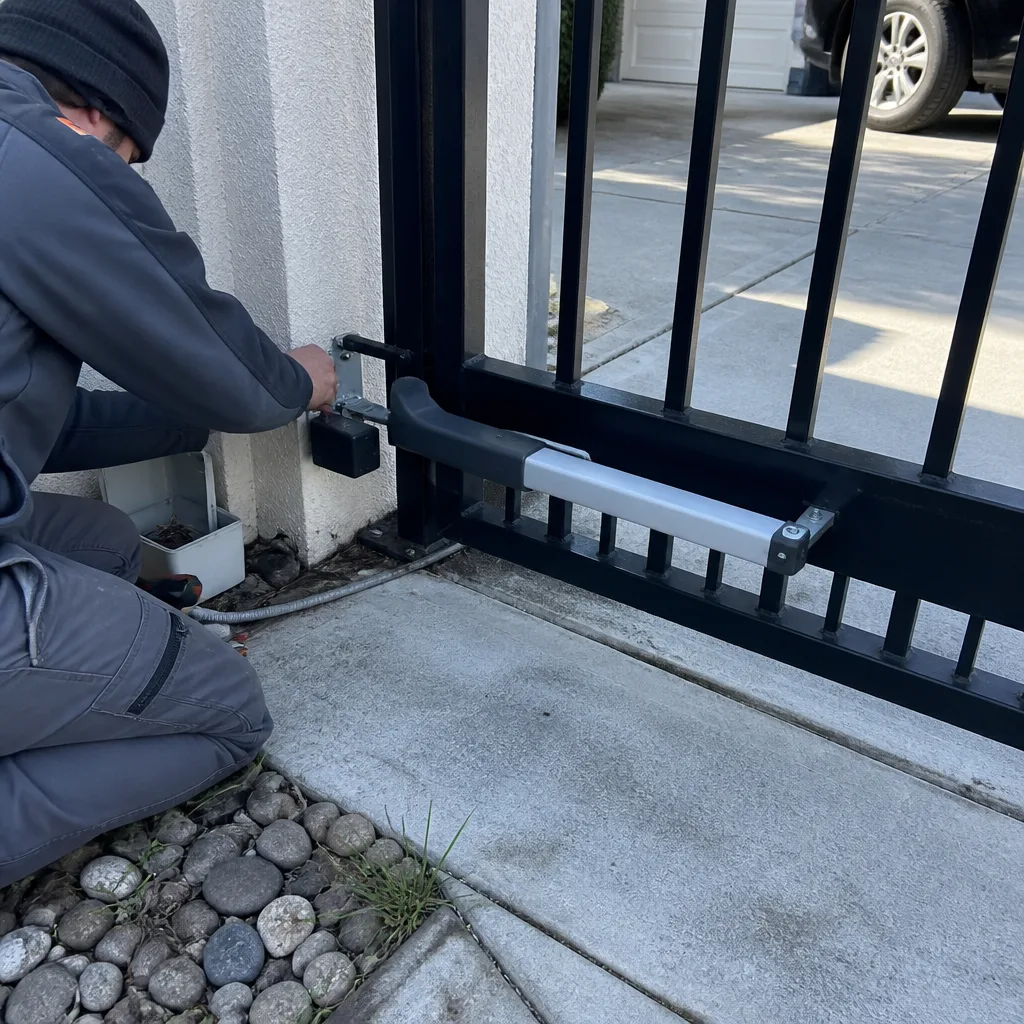 After
AfterGate Repair Warning Signs: A Sunnyvale Homeowner’s Reference Guide
A gate that reverses unexpectedly isn’t malfunctioning at random - it’s responding to a specific sensor reading or mechanical load, and identifying which one cuts the diagnostic time in half and the repair bill with it. Most Sunnyvale homeowners we meet have watched their gate behave strangely for weeks before calling our Gate Repair services, assuming the problem would either resolve itself or worsen enough to become obvious. It doesn’t work that way. Gate failure follows a documented sequence, and the four observable warning signs that precede total failure are each tied to a specific component. Learn to name what you’re seeing, and you’ll get a targeted repair instead of paying for a full diagnostic every time something changes.
Quick Answer
The four gate repair warning signs every Sunnyvale homeowner should recognize are: (1) slow or hesitant travel, indicating motor strain or track obstruction; (2) reversal at a consistent point, signaling photo-eye misalignment or limit-switch drift; (3) grinding or clicking noises, pointing to mechanical wear in rollers, hinges, or the drive assembly; and (4) intermittent non-response to remote or keypad, suggesting transformer voltage drop or failing circuit board. Document each symptom with a full travel-cycle video, note the weather and time of day, and call for a written estimate before the behavior becomes a safety failure under UL 325 entrapment standards.
Table of Contents
- Slow or Hesitant Travel: The First Warning
- Reversal at the Same Point: Sensor or Switch Failure
- Grinding, Clicking, or Metal-on-Metal Noise
- Intermittent Non-Response: Electrical vs. Mechanical
- Sunnyvale-Specific Triggers: Climate and Ground Conditions
- How to Document Warning Signs Correctly
- The Stop-Using-It Threshold: UL 325 Safety Risks
- Common Mistakes to Avoid
- When to Call a Professional
- Frequently Asked Questions
 Before
 After
AfterSlow or Hesitant Travel: The First Warning
Slow travel is the most commonly ignored warning sign because it develops gradually. A gate that took eight seconds to open last year and now takes fourteen isn’t “just getting older” - the motor is working harder against increased mechanical resistance, and that resistance has a specific source.
We separate slow-travel causes into two categories: load problems and power problems. Load problems mean the gate is physically harder to move. Power problems mean the motor isn’t receiving or delivering full voltage.
Load Problems: What Creates Resistance
- Track or wheel debris: In Sunnyvale’s oak-dense neighborhoods like Birdland and Cherry Chase, acorn caps and leaf litter pack into slide-gate tracks. A single lodged acorn can add 15-20% to motor load.
- Hinge seizure: Swing-gate hinges on properties near the Bay fill with salt air residue. The hinge doesn’t stop moving entirely; it just requires more torque. The motor compensates until it can’t.
- Ground shift misalignment: Sunnyvale’s clay-heavy soils shrink dramatically in dry months. We’ve measured 3/8-inch vertical drop on slide gates between May and October. The gate still moves, but it drags along the track.
- Chain or belt tension: A loose chain skips teeth on the sprocket; an overtightened chain binds the reducer. Both show as hesitation at startup.
Power Problems: Voltage and Motor Health
- Transformer voltage drop: The 24V AC transformer common on LiftMaster and FAAC systems outputs 22V or less under load. The motor runs, but torque falls off.
- Capacitor degradation: Start capacitors lose capacitance over time. The motor hums longer before engaging, or stalls on cold mornings.
- Control board output limitation: Some boards reduce motor voltage when they detect a prior overcurrent event, a protective mode that persists until reset.
The diagnostic test we use: disconnect the gate from the operator and move it by hand. If it moves freely, the problem is power. If it resists, the problem is mechanical load. This single test prevents replacing a $600 motor when the issue was a $45 hinge rebuild.
Under gate motor and opener service in Sunnyvale, we document the no-load versus loaded amperage draw on every motor inspection. The difference tells us where to look.
Reversal at the Same Point: Sensor or Switch Failure
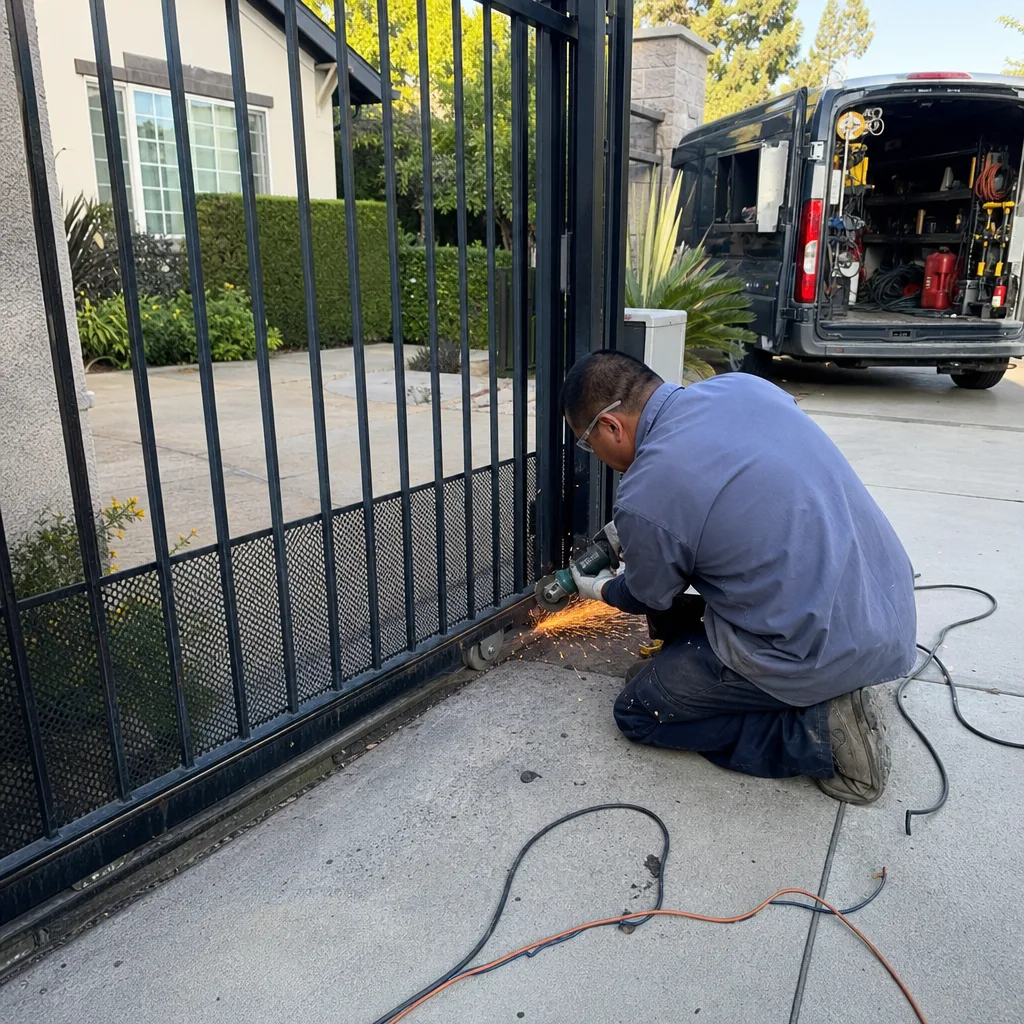
A gate that reverses consistently at the same point in its travel is giving you the most specific diagnostic information possible. The component responsible for that exact position is failing. The challenge is knowing which component governs which position.
The Position-Component Map
- Reversal 6-12 inches from full open or full closed: Limit switch. These magnetic or mechanical switches tell the control board where the gate is. When a switch drifts or fails, the board loses position reference and defaults to reverse.
- Reversal at mid-travel, inconsistent point: Photo-eye (safety sensor). The infrared beam between the two eyes is interrupted - by misalignment, by fog, by a spider web, or by voltage fluctuation causing momentary signal loss.
- Reversal only on close, never on open: Closing-loop detector or edge sensor. The in-ground loop or safety edge is signaling obstruction. Edge sensors on swing gates are particularly prone to wire fatigue at the hinge side.
Here’s what we found on a call in the Ponderosa neighborhood last March: a Vance Gate Repair Sunnyvale home customer reported reversal at “about two feet from closed, every single time.” The limit switch bracket had cracked where it mounted to the gate frame. The switch itself was fine; it just moved with the gate until the magnet passed out of range. We replaced the bracket, reset the switch position, and photographed the new gap - 3/16 inch, within the 1/8-to-1/4-inch spec for that Linear actuator. Total repair: $127. A company that doesn’t check the bracket replaces the $280 control board.
Photo-eye misalignment is the most misdiagnosed reversal cause. The eyes can appear aligned to casual inspection while being outside the 15-degree acceptance angle of the receiver. We use a laser alignment tool, but homeowners can perform a rough check: place your hand between the eyes and watch the LED indicator. It should extinguish immediately. If it flickers, the alignment is marginal and will fail under vibration or temperature swing.
Grinding, Clicking, or Metal-on-Metal Noise
Noise is the warning sign homeowners report most accurately - they can describe it, record it, and compare it to normal operation. The error is in interpretation. A grinding noise doesn’t automatically mean “motor failure,” and a clicking noise doesn’t automatically mean “electrical problem.”
Grinding: Mechanical Wear Locations
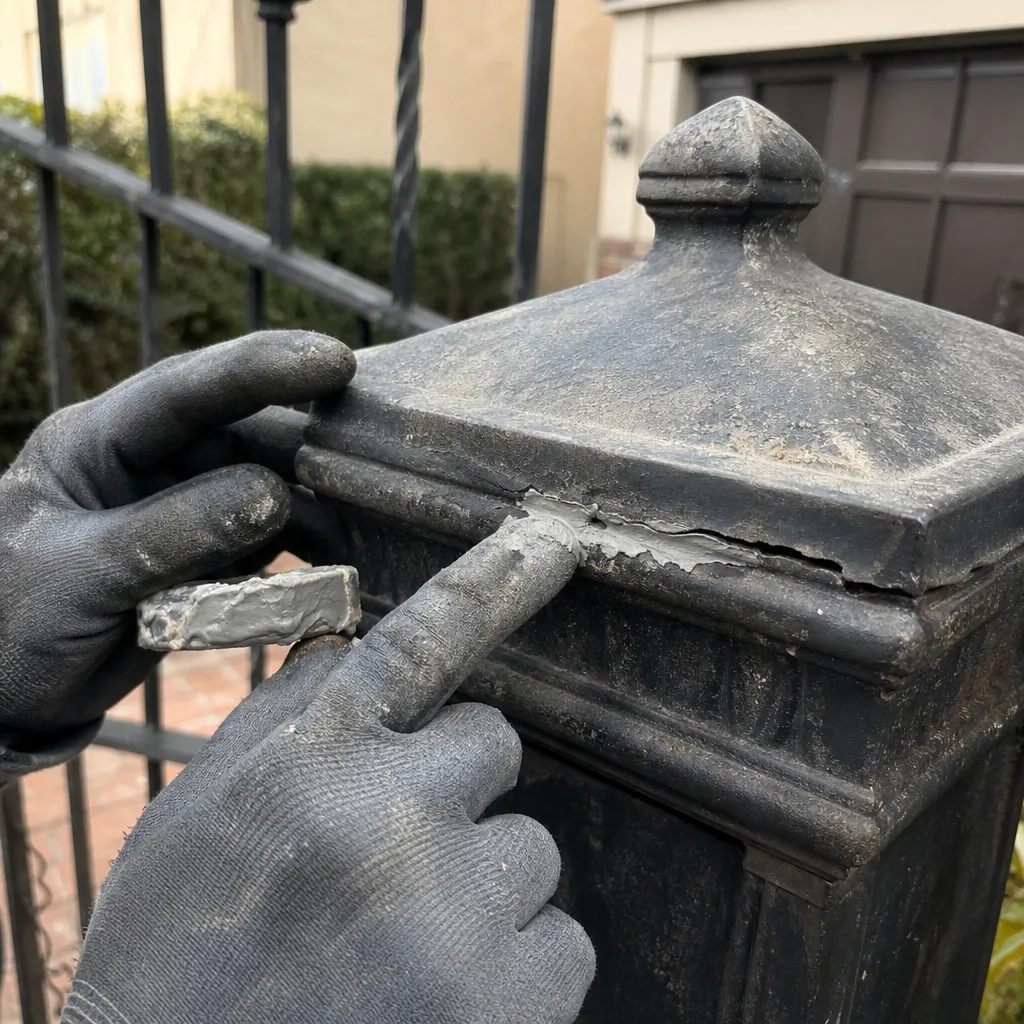
- Slide gate trucks/rollers: Polyurethane wheels degrade and expose the steel bearing race. The sound is low-frequency, continuous, and loudest at the wheel location.
- Chain or rack drive: Missing teeth on a steel rack, or a chain with frozen links, produces rhythmic grinding synchronized to gate speed.
- Motor reducer (gearbox): Worm gear wear creates a higher-pitched grind, often with metal flake in the lubricant. This is the only grinding source that justifies motor replacement.
Clicking: Electrical vs. Mechanical Sources
- Control board relay chatter: Rapid, irregular clicking from the board enclosure. Indicates low input voltage or failing relay contacts. The board may still function intermittently.
- Solenoid lock engagement: Single loud click at open or closed position. Normal on systems with electric locks; abnormal if the click repeats or occurs mid-travel.
- Chain skipping on sprocket: Rhythmic click at consistent intervals, speed-dependent. The chain tension is wrong or sprocket teeth are worn.
We ask Sunnyvale customers to send us a ten-second video with the phone held steady. The frequency pattern - continuous versus rhythmic, speed-dependent versus position-dependent - tells us whether to pack a motor, a chain kit, or a control board. Under Clause 4 (Evidence on every job), we record the same type of video during our inspection so the customer can compare before and after.
Intermittent Non-Response: Electrical vs. Mechanical
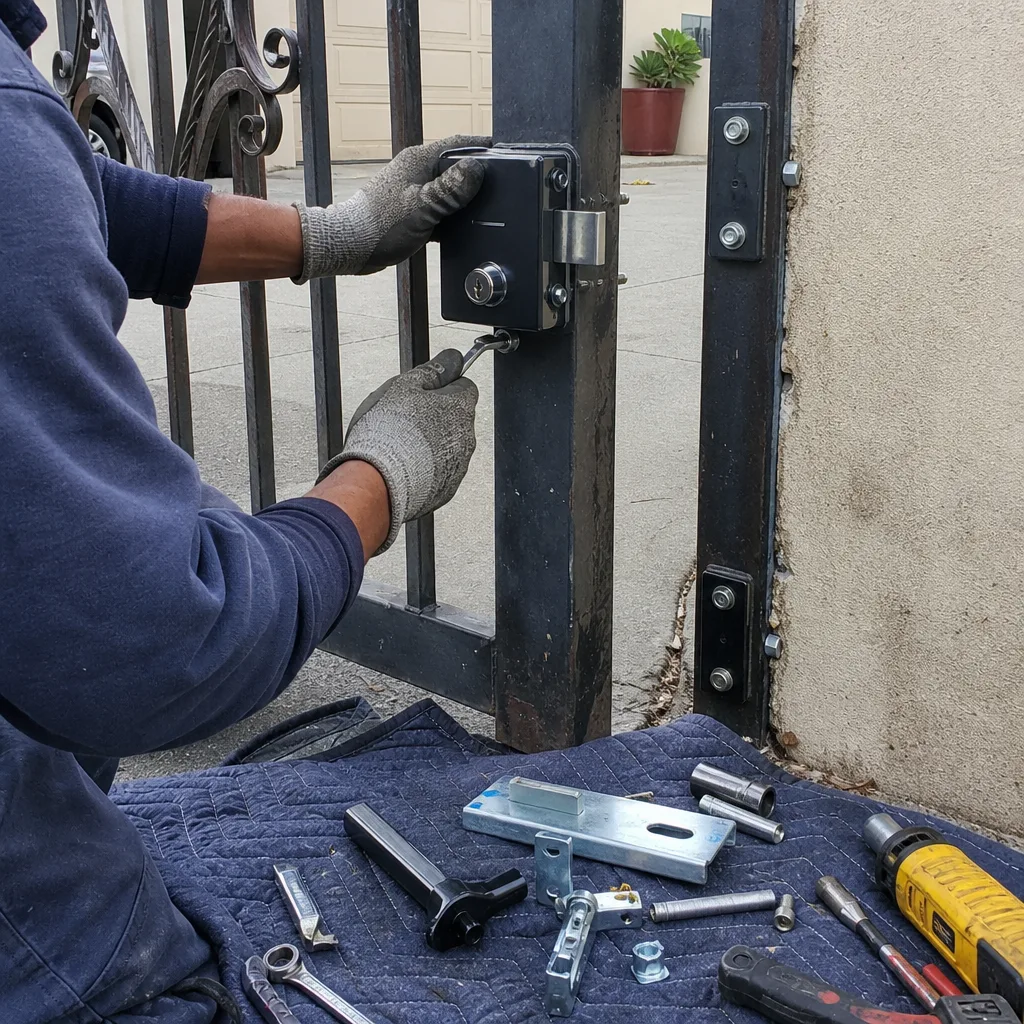
Intermittent failure is the most frustrating warning sign because it disappears when the technician arrives. The gate worked fine all morning, failed at 2 PM, and works again at 5. Without documentation, diagnosis becomes expensive guesswork.
The electrical-mechanical distinction matters because the diagnostic approach differs completely. Electrical intermittents are usually thermal or load-dependent. Mechanical intermittents are usually position-dependent.
Electrical Intermittent Patterns
- Thermal: Works cold, fails after 3-4 cycles. Transformer or control board component heating up. Common on Sunnyvale’s 95°F September afternoons when enclosure ventilation is poor.
- Load-dependent: Works with no resistance (gate disconnected), fails under load. Motor winding or capacitor developing short.
- Voltage sag: Works at night, fails when household load peaks. The gate circuit shares a breaker with pool equipment or EV charger.
- RF interference: Works with keypad, fails with remote. New neighbor’s WiFi extender or security system on overlapping frequency.
Mechanical Intermittent Patterns
- Position-dependent: Always fails at the same point. Binding track, damaged rack section, or limit switch flutter.
- Direction-dependent: Opens reliably, fails to close (or reverse). Closing circuit or safety sensor circuit issue.
- Weather-dependent: Fails in morning dew, works dry. Moisture in photo-eye housing or control board enclosure.
Our documentation protocol for intermittents: we install a temporary voltage logger on the transformer secondary and ask the customer to note failure times. When the log shows a 2V drop coinciding with reported failure, we’ve found the problem without replacing anything. This is the Haven Standard applied to diagnosis - evidence before parts.
Sunnyvale-Specific Triggers: Climate and Ground Conditions
Sunnyvale’s location between the Bay and the Santa Cruz Mountains creates gate-failure patterns that don’t appear in generic repair guides. Understanding these local conditions prevents misdiagnosis and unnecessary parts replacement.
Dry-Season Ground Shift
From May through October, Sunnyvale receives negligible rainfall. The clay soils in neighborhoods like Fairbrae and Serra shrink, causing concrete footings to settle differentially. A slide gate that ran freely in April develops drag by August. The motor works harder, amperage rises, and the control board may throw an overload fault.
We’ve replaced exactly zero motors for this condition in eleven years. The repair is track realignment, footing shim, or - on severe cases - a new gate installation in Sunnyvale with adjustable mounting hardware. The motor was never the problem.
Salt Air Corrosion
Properties within two miles of the Bay, particularly in the Ortega and Lakewood areas, see accelerated corrosion on steel components. Hinge pins seize, chain links stiffen, and control board traces oxidize. The warning sign is often “slow travel” that progresses faster than expected for gate age. We use marine-grade lubricants and stainless hardware on these properties, and we document corrosion progression in the photo record so the homeowner can plan replacement before failure.
Tree Debris and Wildlife
Sunnyvale’s urban forest is dense. Acorns, oak catkins, and pine needles pack into track systems. We’ve found squirrel nests inside operator housings on three separate occasions in the Birdland area. The warning sign is grinding or hesitation that worsens after wind events - not gradual wear, but sudden load increase.
Code and Permit Context
Sunnyvale requires permits for new gate installations and significant modifications, but not for direct component replacement. A homeowner who replaces a failed motor with the same model needs no permit. One who upgrades from a basic operator to a BFT with obstacle-detection firmware may trigger inspection requirements. We handle permit research as part of our written scope when the work boundary is unclear.
How to Document Warning Signs Correctly
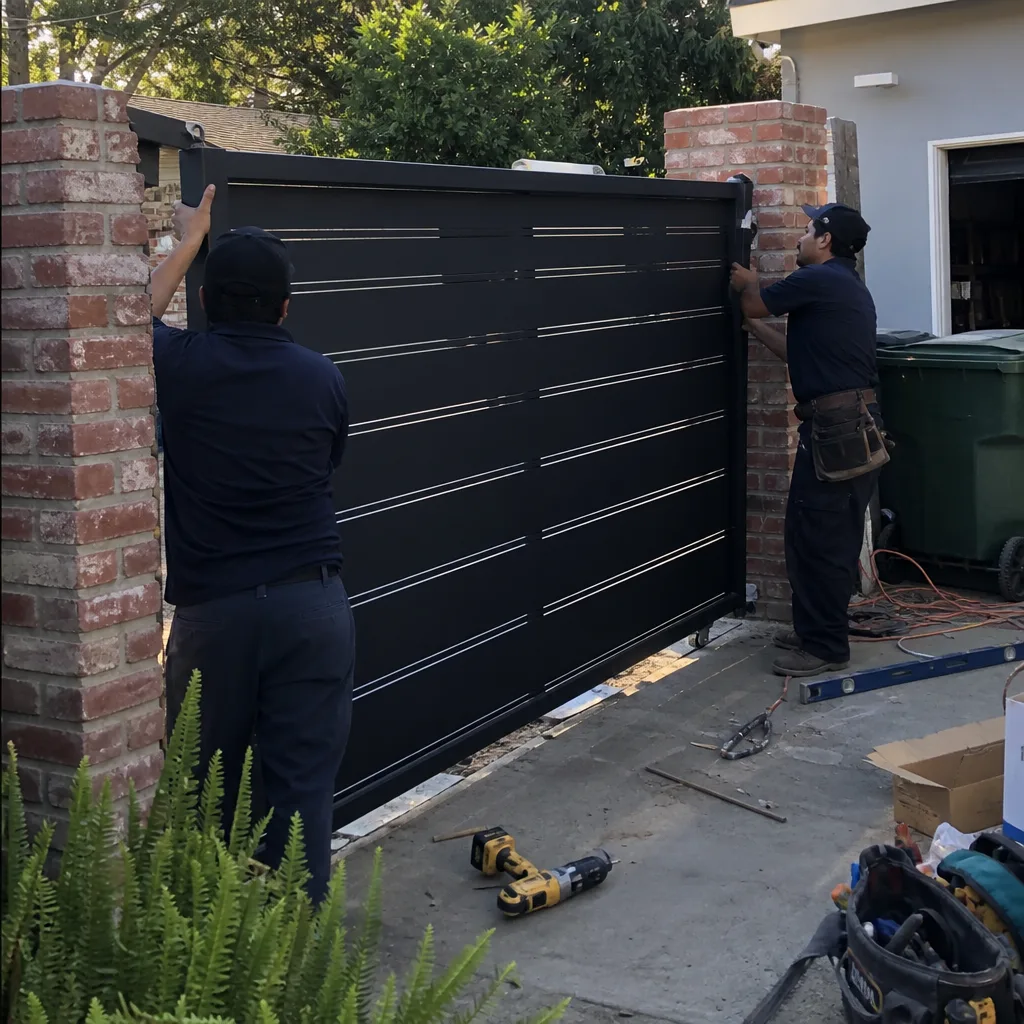
The video you send a technician should answer their questions before they ask them. Most homeowner videos show the problem moment - the gate reversing, the motor clicking - without the context that makes diagnosis possible.
The Full Travel-Cycle Video Protocol
- Position the phone: Fixed position, not handheld. A tripod or propped phone captures consistent reference points. Show the full gate and the operator enclosure if possible.
- Record one complete cycle: From fully closed to fully open, pause five seconds, then fully closed again. The “normal” portions of travel are as diagnostic as the failure point.
- Include audio: Don’t add music or voiceover. The technician needs to hear motor strain, relay chatter, or mechanical noise.
- Note conditions: Time of day, temperature, recent weather, and whether the failure is consistent or intermittent. Send this as text, not in the video.
- Measure if possible: If the gate reverses at a consistent point, measure the distance from full closed and include it.
We receive these videos at our office daily. A well-documented video lets us prepare a written estimate with specific parts listed - not “diagnose and repair, $TBD,” but “replace left-side truck assembly, reset limit switch gap, lubricate track: $X.” That’s Clause 1 in practice.
For gate repair in Sunnyvale customers who prefer, we also offer video consultation: you show us the behavior live, we ask targeted questions, and you receive a written scope by email within the hour. No charge, no obligation.
The Stop-Using-It Threshold: UL 325 Safety Risks
Some warning signs indicate entrapment hazard under UL 325, the safety standard governing gate operators. Continuing to use the gate creates liability for the homeowner and genuine risk to pedestrians, children, and pets.
Behaviors That Require Immediate Discontinuation
- Reversal failure: The gate does not reverse when obstructed. Test with a rigid object (not your body) at mid-travel. If the gate continues against resistance, the safety circuit is compromised.
- Run-on: The gate continues past the normal stop point, hitting the mechanical stop hard. Limit switches or control board logic has failed.
- Uncommanded movement: The gate opens or closes without remote, keypad, or loop activation. This indicates control board failure or wiring short that could activate unpredictably.
- Missing or bypassed safety devices: Photo-eyes removed, edge sensors disconnected, or safety loops disabled. Some homeowners bypass these when they “cause problems” - this is a code violation and a known fatality cause.
- Gate leaf separation: On dual swing gates, the meeting stile has separated or the electric lock no longer engages. A single leaf can swing independently in wind.
Under UL 325, residential gates must have two independent safety systems: typically photo-eyes plus edge sensors, or photo-eyes plus safety loops. If either system is non-functional, the gate should not operate automatically. Manual release and hand operation is the temporary workaround, not continued automatic operation with “careful” use.
We’ve arrived at Sunnyvale properties where the homeowner “just been careful” for six weeks. The repair that would have cost $180 in March cost $840 in May, because continued operation destroyed the rack, the motor reducer, and the control board. More importantly, no injury occurred during those six weeks by chance, not by design.
Common Mistakes to Avoid
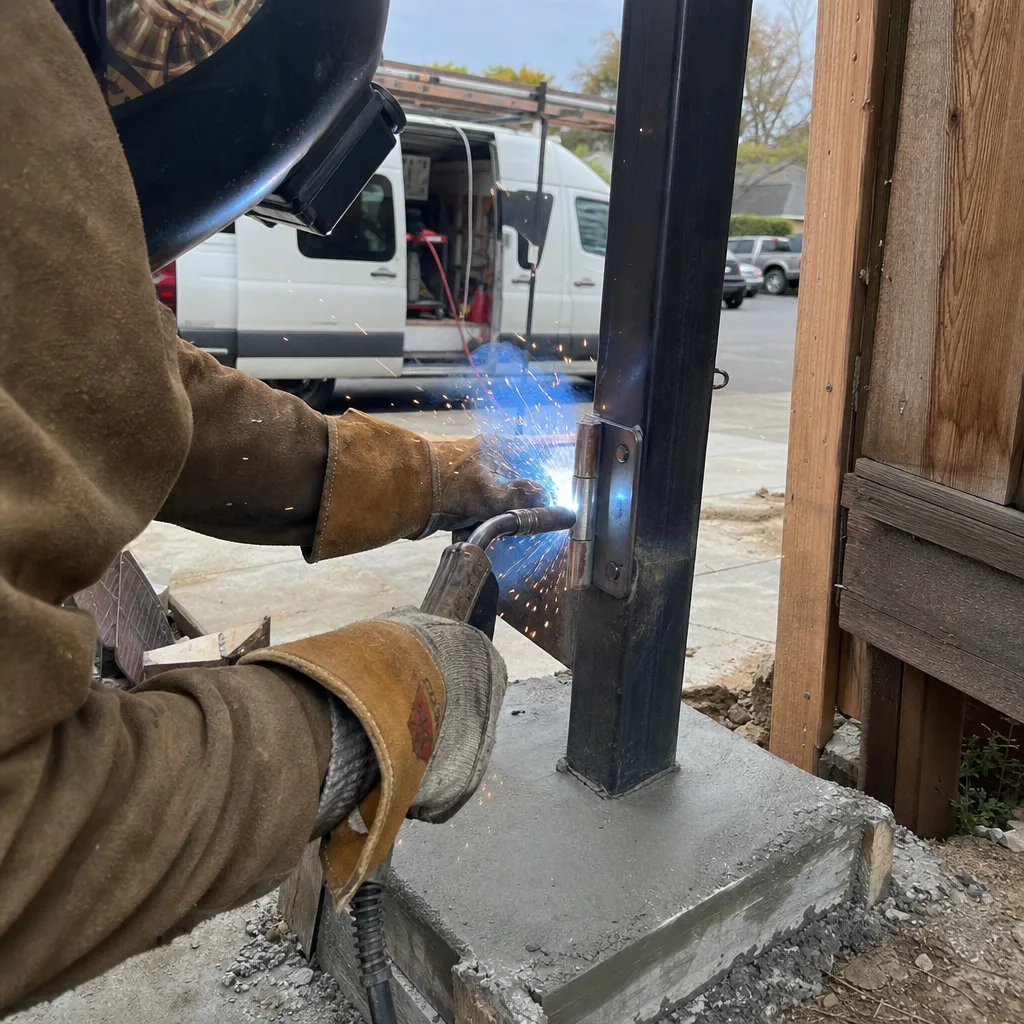
- Assuming slow travel means motor replacement: In Sunnyvale’s dry-season conditions, ground shift causes more slow-travel calls than motor failure. Always test gate movement independent of the operator before authorizing motor work.
- Cleaning photo-eyes without checking alignment: A clean but misaligned eye is still non-functional. The LED indicator tells you alignment status; cleaning alone proves nothing.
- Ignoring intermittent behavior until it becomes constant: Intermittent failures are easier and cheaper to diagnose. Once the failure becomes constant, secondary damage often masks the original cause.
- Applying general-purpose lubricant to gate components: WD-40 attracts debris and degrades polyurethane wheels. Use lithium grease on metal, silicone on plastic, and never lubricate a photo-eye lens.
- Replacing the remote battery twice before checking the receiver: Two battery replacements with no improvement suggests receiver or antenna issue, not power. Continuing to replace batteries wastes money and delays proper repair.
- Accepting a verbal estimate for gate work: Without written scope and price, you have no recourse for scope expansion. The Haven Standard exists because we’ve seen too many $400 estimates become $900 invoices.
- Continuing to operate after any safety device bypass: This is not a cost-saving measure. It’s a liability exposure that can void homeowner insurance coverage after an incident.
When to Call a Professional
Call when you’ve identified a warning sign and documented it, or immediately if any UL 325 safety behavior appears - or read How to Hire a Gate Repair Contractor in Sunnyvale: A Step-by-Step Guide before you choose. The value of professional service isn’t just repair - it’s targeted diagnosis that prevents replacing functional components.
We dispatch background-checked, uniformed technicians to every job. You receive the technician’s name and photo before arrival, and every visit leaves a documented photo record of what was found, what was adjusted, and what was replaced. The 365-Day Done Right Promise covers all completed work: if the repair is not right, we make it right at no additional charge.
Vance Gate Repair Sunnyvale offers free estimates in Sunnyvale - call (669) 900-1904. A live person answers 24 hours a day, seven days a week. No voicemail loop, no callback queue. Bring a written estimate from another company and we’ll review it at no cost.
Frequently Asked Questions
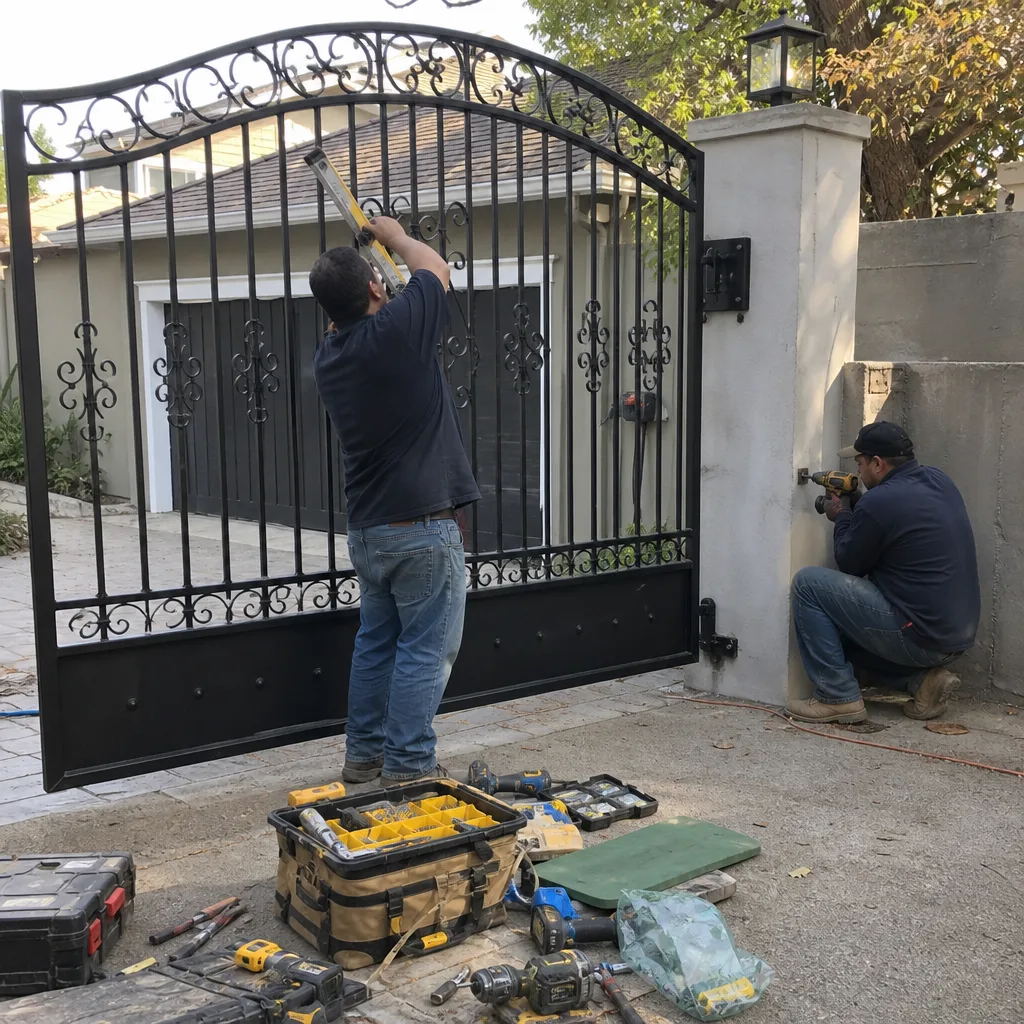
Most gate repairs in Sunnyvale range from $140 for track realignment or limit-switch adjustment to $680 for control board replacement with programming. Motor replacement on a standard residential swing or slide gate typically runs $480-$920, depending on brand and whether the mounting bracket is reusable. We deliver a written price before any work starts - no call-for-quote, no surprise invoice. Call (669) 900-1904 for an exact quote; estimates are free.
Same-day repair is available for most common failures when parts are in stock. We carry LiftMaster, FAAC, BFT, and Linear components on our Sunnyvale service vehicles, along with universal hardware for nine major brands. Complex repairs requiring specialty parts are scheduled for next-day completion with the part ordered. Call (669) 900-1904 to check same-day availability for your specific symptom.
Temperature-sensitive failure usually indicates a transformer or control board component approaching thermal limits. The component functions at lower temperatures but exceeds its rated operating range in Sunnyvale’s September heat. We log voltage and temperature data during inspection to confirm the pattern. This is a common misdiagnosis: the motor gets blamed when the power supply is the actual fault.
Not always, but it always indicates contact between surfaces that shouldn’t contact. Polyurethane wheel degradation is a scheduled maintenance item. Gearbox grinding is an urgent motor replacement. The difference is in the sound frequency and whether it correlates to gate position or speed. Send us a video and we’ll tell you which before we arrive.
Direct component replacement - same-model motor, new photo-eyes, track repair - does not require a permit. New installations, structural modifications, or upgrades to safety systems may trigger Sunnyvale’s building inspection process. We research permit requirements as part of our written scope when the work boundary is unclear, and we handle permit application when required.
We service nine major automation brands: LiftMaster, FAAC, BFT, Linear, Viking, Ghost Controls, DoorKing, Elite, and Mighty Mule. We do not steer customers toward replacement with a “preferred” brand. Our inventory and expertise cover the full range, so we repair what’s installed rather than selling what we stock.
The Bottom Line
Gate failure is predictable. Slow travel, reversal at a consistent point, grinding or clicking noise, and intermittent non-response each point to specific components, and misidentifying them leads to unnecessary replacement. Sunnyvale’s climate and soil conditions create additional diagnostic complexity - dry-season ground shift masquerades as motor failure, salt air accelerates wear patterns that inland properties don’t see. Document what you observe with a full travel-cycle video, note the conditions, and demand a written scope and price before authorizing work. Browse our more guides & resources to stay ahead of problems. The homeowner who can name what they’re seeing gets a targeted repair, pays once, and receives a documented record that prevents future technicians from rediscovering the same problem.
Written by Adrian Vance, Owner at Vance Gate Repair Sunnyvale, serving Sunnyvale since 2014.