
Last updated September 22, 2026
Free on-site gate assessment - hinges, posts, and your LiftMaster or Nice gate operator checked before anything is quoted
The assessment is free and the quote is the invoice.
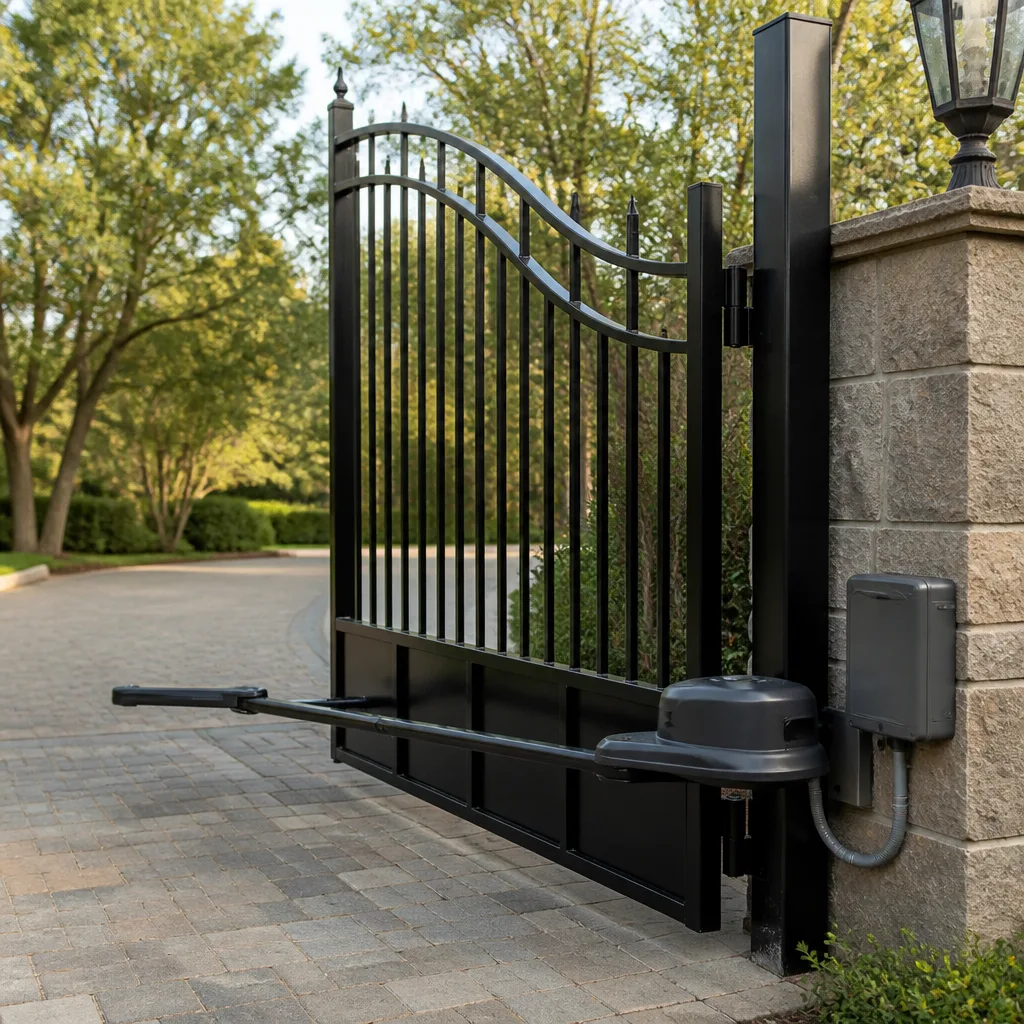
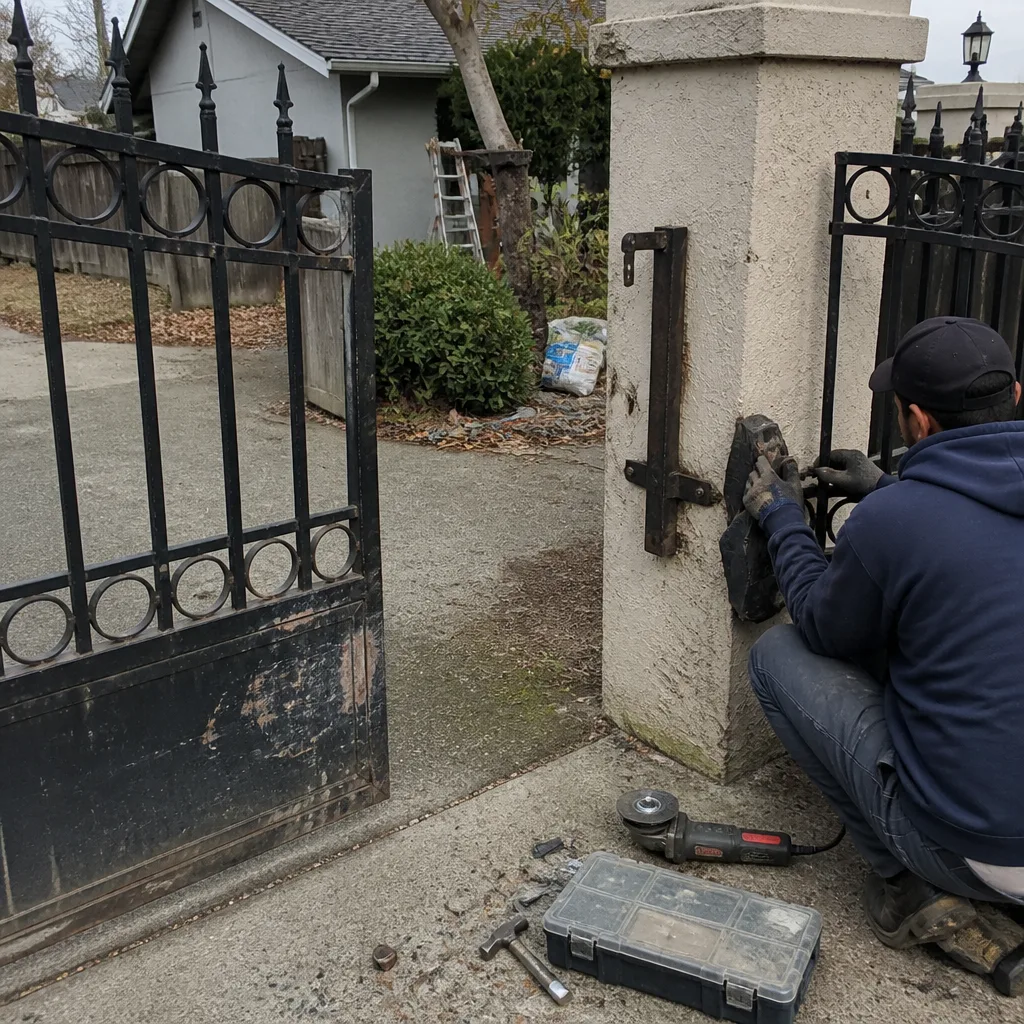 Before
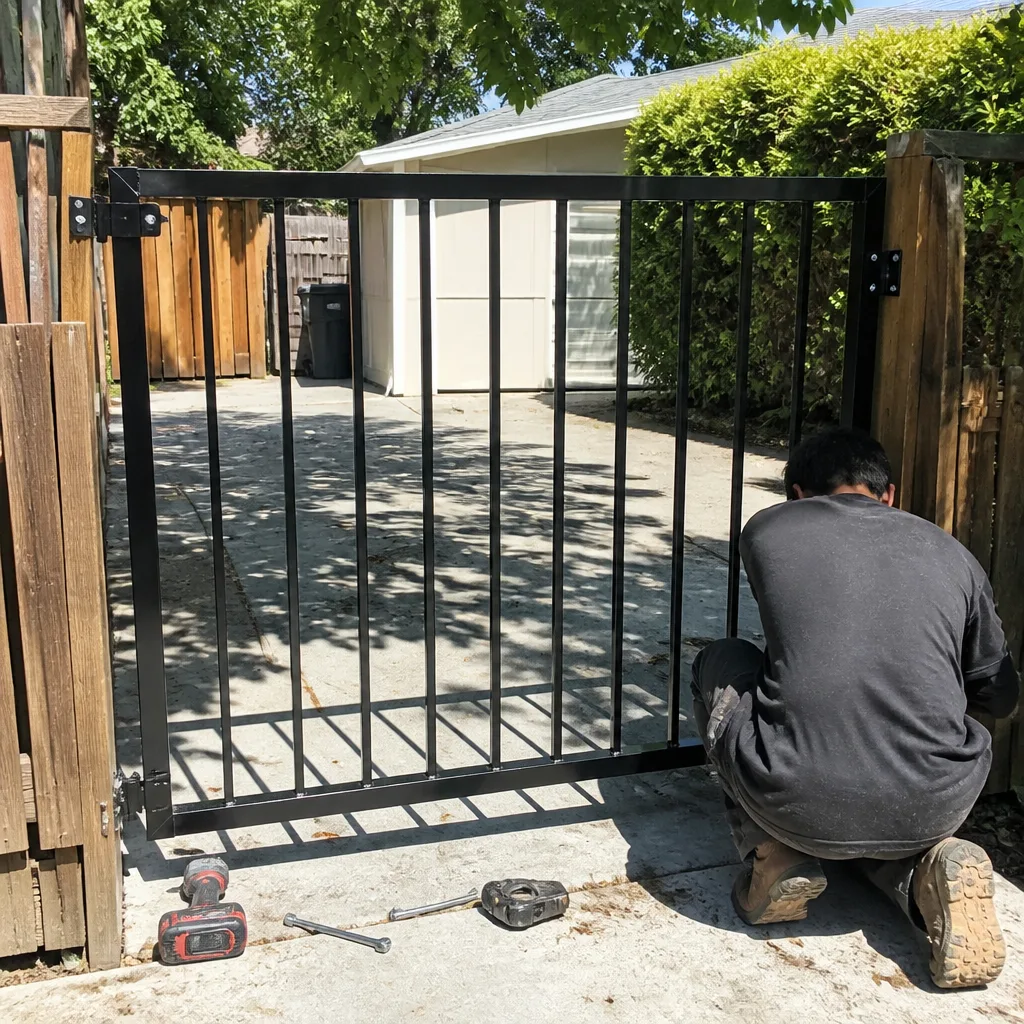 After
After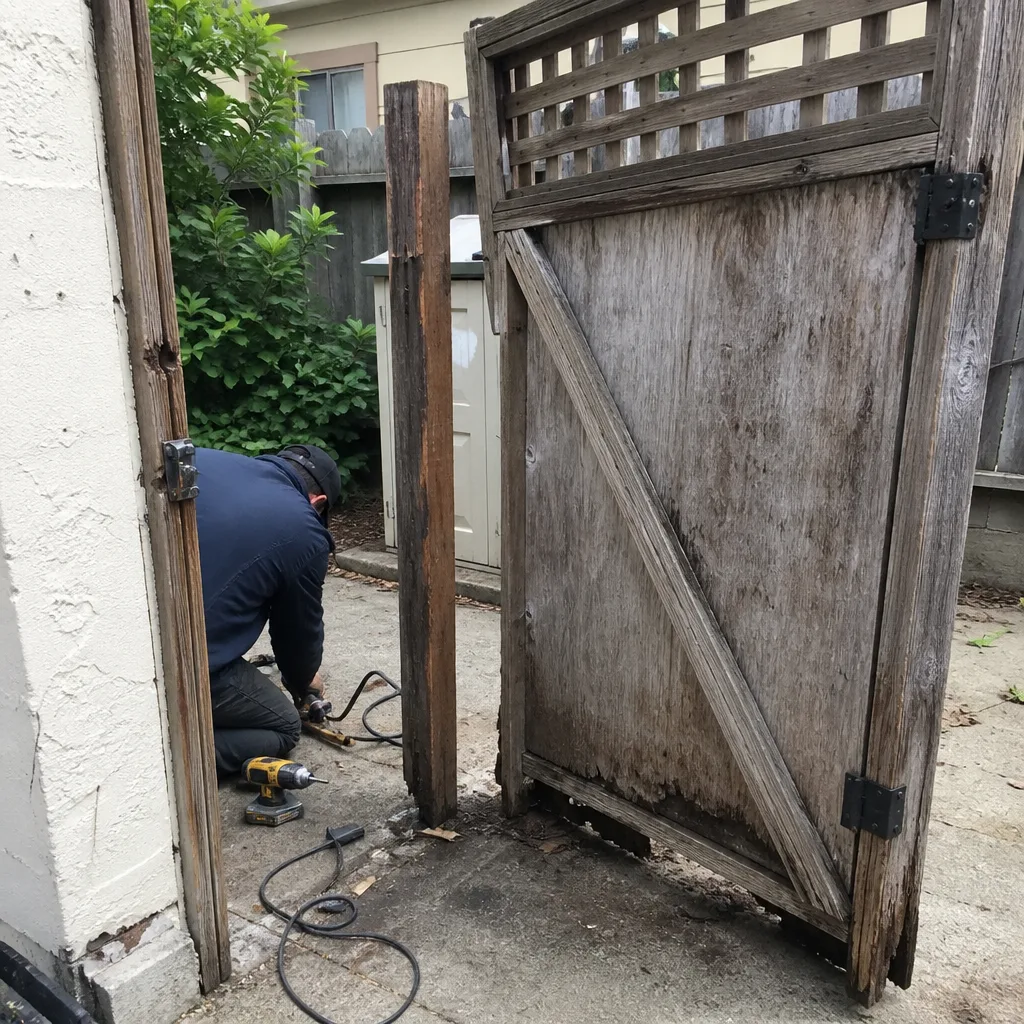 Before
 After
After Before
 After
AfterGate Repair Permits, Codes & Inspections in CA: What You Need to Know
An unpermitted gate motor replacement in California can void a homeowner’s insurance coverage for a vehicle or person injured by that gate. Most contractors who skip the permit process never mention this. In Sunnyvale and across Santa Clara County, the line between a repair that needs a permit and one that doesn’t is drawn at motorized components and structural changes, not at dollar amount or job size. This guide, alongside our Gate Repair Warning Signs: A Sunnyvale Homeowner’s Reference Guide, explains exactly where that line sits, what inspectors actually check, and how to protect yourself from the liability that unpermitted work creates.
Quick Answer
In California, gate repairs require a permit when they involve replacing or installing an automatic gate operator, modifying structural posts or footings, or altering entrapment-protection systems such as photo-eyes or safety edges. Purely mechanical repairs to hinges, latches, or non-powered swing arms typically do not require permitting. All automatic gate operators must comply with UL 325 safety standards, and work in Sunnyvale must satisfy both city building codes and any applicable HOA covenants.
Table of Contents
- When Is a Permit Required for Gate Repair in California?
- UL 325 Explained: The Safety Standard That Controls Every Automatic Gate
- The Santa Clara County Permit Process: Step by Step
- What Inspectors Check and What Fails Most Often
- HOA Rules vs. City Permits: Why Approval From One Doesn’t Mean Compliance With the Other
- What Unpermitted Gate Work Looks Like on a Home Inspection Report
- How to Document Your Installation for Fast Inspection Approval
- Permit Costs and Timeline in Sunnyvale
 Before
 After
AfterWhen Is a Permit Required for Gate Repair in California?
California building code draws a bright line around automatic gate operators. Any work that touches the motor, the control board, or the safety system triggers permit requirements. This surprises many homeowners who assume permits track project cost or square footage.
Here is what requires a permit in Sunnyvale and Santa Clara County:
- Automatic operator replacement or new installation: Any time a motorized component is added, removed, or swapped, the work falls under the California Residential Code and requires an electrical permit. This includes upgrading from a manual gate to an automatic one, replacing a failed LiftMaster or Mighty Mule operator, or converting from a swing gate to a sliding gate with motorization.
- Structural post work: Replacing or relocating gate posts, pouring new footings, or modifying the post depth or diameter requires a structural permit. In Sunnyvale’s clay-heavy soils, post stability is a known issue; inspectors verify that footings extend below the frost line and are sized to the gate’s weight and wind load.
- Entrapment-protection modifications: Adding, removing, or relocating photo-eyes (infrared beams that stop gate travel when interrupted), safety edges (pressure-sensitive strips on leading edges), or audible warning devices triggers permit requirements because these are classified as life-safety devices.
- Access control integration: Hardwired intercoms, keypad entry systems, or telephone-entry systems that draw permanent power require both electrical and low-voltage permits.
What does not require a permit:
- Hinge replacement or adjustment on manually operated gates
- Latch repair or replacement
- Cosmetic welding or metal fabrication that does not alter structural members
- Manual gate wheel or guide replacement
- Routine lubrication and alignment
We’ve seen homeowners in Sunnyvale’s Birdland and Ponderosa neighborhoods assume their gate motor swap was “just a repair” and skip the permit. When the gate later injured a delivery driver, their insurer denied the claim based on unpermitted electrical work. The contractor who performed the swap had disappeared. This is why we flag permit requirements in writing before any work starts, under Haven Standard Clause 1.
UL 325 Explained: The Safety Standard That Controls Every Automatic Gate
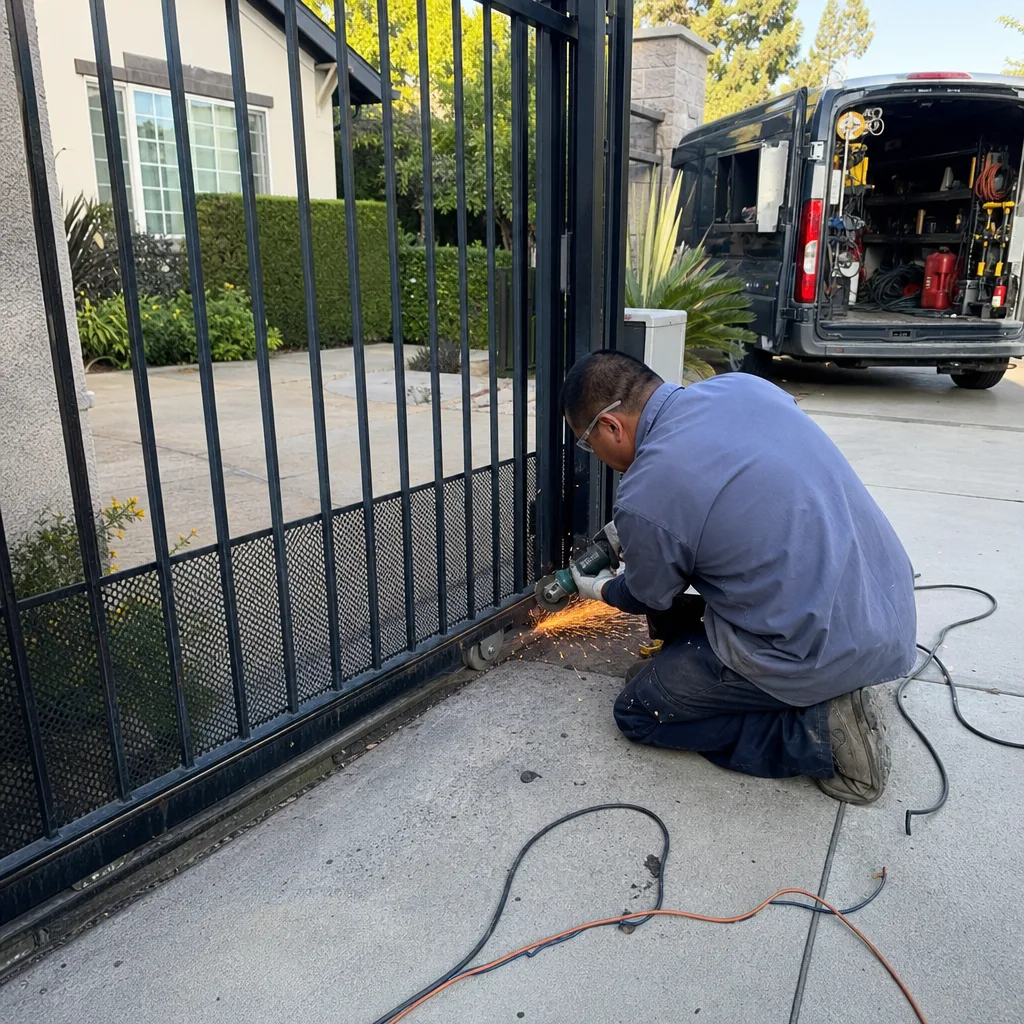
UL 325 is the Underwriters Laboratories standard for door, drapery, gate, louvre, and window operators and systems. It is not optional in California. Every automatic gate operator installed in Sunnyvale must carry a UL 325 listing, and the installation must follow the standard’s entrapment-protection requirements.
Here is what UL 325 mandates in plain terms:
- Primary entrapment protection: Every automatic gate must have at least one external entrapment-protection device. For residential swing gates, this is typically a photo-eye positioned no higher than six inches above grade, or a monitored safety edge on the leading edge of the gate leaf. The device must stop and reverse the gate within one second of activation.
- Secondary entrapment protection: A second independent device is required if the gate operator does not have inherent force-sensing technology that meets UL 325’s 40-pound maximum force threshold. Most modern operators, including current LiftMaster and Elite models, have built-in force sensors, but the secondary device is still recommended and often required by local amendment.
- Warning signage: A permanently affixed warning sign must be visible from both sides of the gate, stating “AUTOMATIC GATE - KEEP CLEAR” or equivalent language. The sign must be weather-resistant and positioned at eye level for pedestrians.
- Control station location: Controls must be positioned so the operator has full view of the gate during operation, or remote operation must include visual confirmation. This prevents blind activation when a child or pet is in the gate’s path.
- Release mechanism: A manual release must be accessible from inside the property without tools, allowing the gate to be opened during power failures. The release location must be documented on the installation record.
- Determine permit type: Motor or operator work requires an electrical permit. Post or footing work requires a building permit. Both together require separate permits or a combined residential alteration permit, depending on project scope.
- Prepare documentation: Submit a site plan showing gate location, property lines, and setback distances; a detail drawing of the operator mounting; manufacturer cut sheets for the proposed operator showing UL 325 listing; and a load calculation for the electrical circuit. For HOA-governed properties, include HOA approval letter.
- Submit application: Sunnyvale accepts online submission through the city’s permit portal. Fees are calculated based on project valuation. Typical gate operator permits run $200-$400 for the base application, with plan check fees if the project exceeds standard prescriptive compliance.
- Plan review: Standard review takes 5-10 business days for prescriptive electrical permits. Complex projects or those near property lines may trigger a 15-20 day review or referral to planning for setback verification.
- Permit issuance: Once approved, the permit must be posted on-site before work begins. In Sunnyvale, inspectors verify permit posting during the first inspection.
- Rough inspection: For electrical work, this occurs after conduit and wiring are in place but before cover. The inspector verifies conductor sizing, grounding, and GFCI protection for outdoor receptacles.
- Final inspection: Occurs after installation is complete. The inspector tests operator function, entrapment protection, and signage compliance. A passing final inspection generates a certificate of completion.
- UL 325 label legibility: The operator’s listing mark must be permanently affixed and readable. Weather-faded labels from used or gray-market equipment fail immediately.
- Photo-eye height and alignment: The primary photo-eye must be 6 inches or less above finished grade. Misalignment by even half an inch, common after ground settling in Sunnyvale’s expansive clay soils, causes failure.
- Reversal force and timing: The inspector places a test object in the gate path and measures stopping distance and force. Gates that strike the object before reversing, or that reverse too slowly, fail.
- Warning sign presence and wording: Signs must use exact or substantially similar language to UL 325 requirements. “Automatic Gate” alone fails; “AUTOMATIC GATE - KEEP CLEAR” passes.
- Manual release accessibility: The release must be reachable without tools from inside the property, and its location must be obvious. Hidden or tool-required releases fail.
- Grounding and bonding: Metal gate frames must be bonded to the equipment grounding conductor. This is frequently missed on retrofits where the original installer skipped bonding.
- GFCI protection: Outdoor receptacles serving gate operators require GFCI protection. Older installations grandfathered under prior codes often fail when any new work triggers full compliance.
- HOA approval is about aesthetics and uniformity: The HOA architectural committee reviews paint color, gate style, material, and sometimes operator visibility. They may prohibit above-ground operator arms or require specific wood species to match neighborhood character.
- City permitting is about safety and code compliance: The building department does not care about paint color. They care about UL 325, electrical grounding, and structural load.
- Sequence matters: In most Sunnyvale HOAs, city permit approval is a prerequisite for HOA final approval, not a substitute. Submit your building permit application first, then take the approved plans to the HOA. Attempting HOA approval first often results in redesign when the city requires changes.
- Documentation gaps create sale problems: A gate with HOA approval but no city permit shows up on title searches as unpermitted work. A gate with a city permit but HOA violation creates a compliance action from the association. Both delay or derail property sales.
- “Automatic gate operator installed without visible permit documentation”: The inspector notes the operator’s presence but finds no permit sticker, no inspection record, and no documentation in city files. This triggers a buyer request for seller disclosure of installation details.
- “Gate safety devices non-functional or absent”: Common on DIY installations or cut-rate contractor work where photo-eyes were never installed or were disconnected after nuisance tripping. The inspector recommends immediate evaluation by a qualified gate contractor.
- “Electrical supply to gate operator does not meet current code”: Indicates missing GFCI, improper conductor sizing, or unbonded metal components. The repair cost is typically $400-$1,200, but the permit retroactive process adds weeks.
- “Structural posts show evidence of recent modification without permit”: Fresh concrete, new post bases, or altered footing dimensions that don’t match original construction records. This can trigger a full structural evaluation.
- Permit card with all required signatures: The physical or digital permit card must show approved plans, fee payment, and scheduled inspection dates. Sunnyvale inspectors verify this before beginning.
- Manufacturer cut sheets with UL 325 listing highlighted: Not the full manual, just the specification page showing model number, voltage, amperage, and the specific UL 325 listing mark. We attach this to the permit card in a weatherproof sleeve at the operator location.
- Site plan with gate location dimensioned: Shows property lines, gate swing arc, and setback to sidewalk or street. For corner lots in Sunnyvale’s older neighborhoods, this includes sight-line triangles required by the municipal code.
- Wiring diagram: A single-page diagram showing power source, conduit routing, control station location, and safety device wiring. This is the documentation habit Adrian Vance developed on commercial DoorKing and LiftMaster installations starting in 2014.
- Photo log of installation stages: Date-stamped photographs of footing excavation, post placement, conduit routing, operator mounting, safety device alignment, and final appearance. We leave a copy with the homeowner and file the original.
- Test record: Signed record of force and reversal testing, with the test object specification and measured stopping distance. This demonstrates UL 325 compliance at the moment of installation.
- Simple electrical permit, no plan check: 3-5 business days to issuance, inspection within 2-3 days of request
- Building permit with plan check: 10-15 business days to issuance
- Combined permit with HOA documentation: 15-25 business days to issuance
- Re-inspection after failure: 3-5 business days to reschedule
What happens when a non-compliant operator is installed? The inspector fails the job. More seriously, if an injury occurs, the installer and homeowner share liability for deploying unlisted equipment. We’ve encountered Mighty Mule operators purchased online that carried a UL listing for garage door openers but not for gate operators; the homeowner assumed the UL mark meant compliance. It did not. Under Haven Standard Clause 4, we photograph the UL label on every operator we install and record the listing number in the job file.
Santa Clara County has not adopted additional amendments beyond the state baseline, but Sunnyvale’s building department does verify UL 325 compliance during electrical inspections for gate operators. They check the label, test the reversal function, and confirm that warning signage is present and legible.
The Santa Clara County Permit Process: Step by Step
The permit process for gate work in Sunnyvale runs through the city’s Building Division, with Santa Clara County providing overlay requirements for unincorporated areas. For properties within Sunnyvale city limits, here is the sequence:
Timeline reality: a straightforward operator replacement with no structural work typically moves from application to final inspection in 2-3 weeks. Projects requiring planning review or HOA documentation can extend to 6-8 weeks. We advise Sunnyvale customers to begin permit applications before ordering operators, especially for DoorKing or Elite systems with longer lead times.
One detail competitors miss: Sunnyvale’s building department requires that the permit holder match the licensed contractor performing the work. Homeowner-permitted electrical work on automatic gates is technically allowed under California law for owner-occupants, but most insurers and all HOA policies require licensed contractor installation for coverage validity. We perform work only under our own permits, with our C-10 electrical license and C-61/D-28 gate and door contractor classification, so the documentation chain remains unbroken.
What Inspectors Check and What Fails Most Often
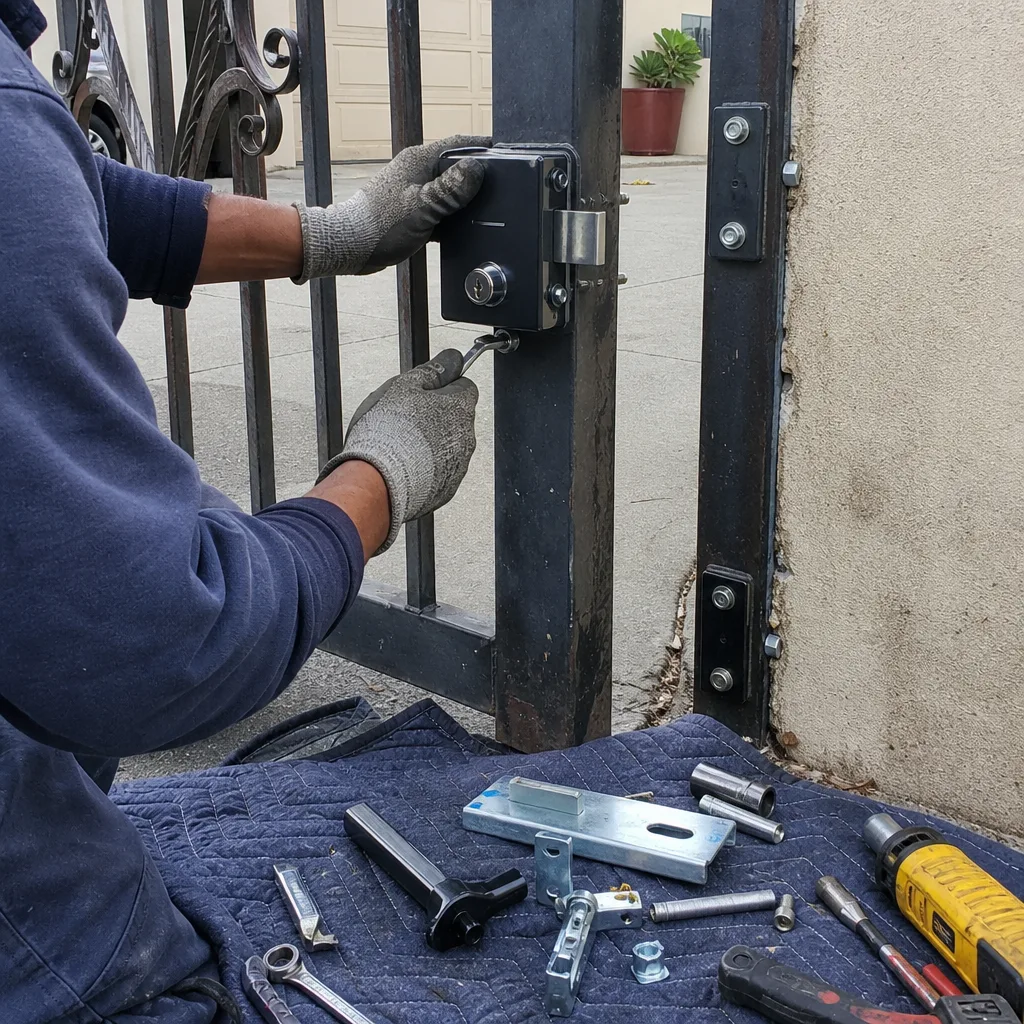
Sunnyvale gate inspectors follow a standardized checklist derived from the California Residential Code and UL 325. Understanding this checklist before installation prevents the re-inspection fees and delays that frustrate homeowners.
Here is what the inspector verifies:
The most common failure we see in Sunnyvale re-inspections is photo-eye misalignment caused by minor ground movement or vegetation interference. Our documentation protocol includes a photograph of the photo-eye alignment at installation, with measurements referenced to fixed points, so re-alignment after settling is fast and verifiable.
The second most common failure is missing or inadequate warning signage. Some installers treat signs as optional aesthetic elements. They are not. We include a weather-rated aluminum sign on every installation and photograph its placement for the job record.
HOA Rules vs. City Permits: Why Approval From One Doesn’t Mean Compliance With the Other
Sunnyvale contains dozens of homeowner associations, from the townhome clusters near Lawrence Expressway to the single-family neighborhoods south of El Camino Real. HOAs govern appearance, materials, and sometimes operator brands. They do not govern electrical safety or structural code. A gate can be fully HOA-approved and completely unpermitted, or fully permitted and in HOA violation.
Here is how the overlap works in practice:
We’ve worked with Sunnyvale homeowners who received HOA approval for a custom wrought-iron gate with a hidden Elite operator, only to discover that the city’s electrical inspector required visible conduit routing that conflicted with the HOA’s “no visible wiring” rule. The resolution, reached before installation, was a surface-mounted conduit painted to match the gate frame, with the HOA’s written exception filed alongside the permit. Planning this sequence in advance saved a $4,000 rework.
Our standard practice: we request HOA CC&Rs at the estimate stage, identify potential conflicts with code requirements, and document the resolution in writing before any permit application. This is part of Haven Standard Clause 1, the written scope that prevents surprises.
What Unpermitted Gate Work Looks Like on a Home Inspection Report
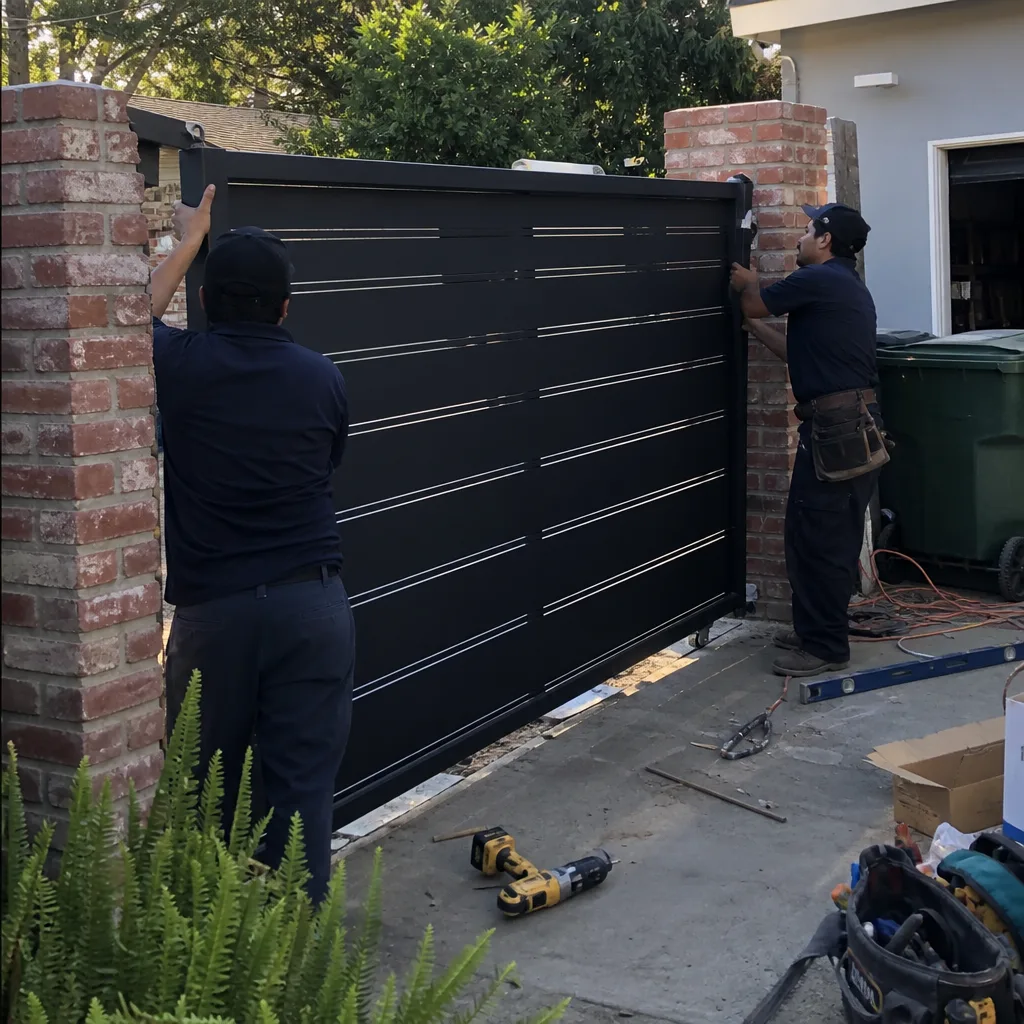
In Santa Clara County’s active real estate market, unpermitted gate work is increasingly flagged during pre-sale inspections. Buyers and their insurers have grown cautious since several high-profile gate injury lawsuits in California established that unpermitted automatic gates create strict liability exposure.
A home inspection report typically describes unpermitted gate work in one of these ways:
The financial impact extends beyond repair costs. In Sunnyvale’s competitive market, buyers often demand permit retroactivity or price reductions of $5,000-$15,000 to account for the risk and hassle. Some insurers refuse to bind homeowner’s policies until permitted status is verified. We’ve been called to document and permit-retrofit gates installed years earlier by other contractors who never mentioned permits to the original owner.
Our documentation habit, developed from commercial access-control work, prevents this entirely. Every Vance Gate Repair installation since 2014 carries a permit number, inspection date, and photo record. When a Sunnyvale homeowner sells, they hand over a file that satisfies any buyer’s due diligence.
How to Document Your Installation for Fast Inspection Approval
Inspectors move faster when documentation is organized and complete. Disorganized documentation is the primary cause of inspection delays that have nothing to do with code compliance. Here is the documentation package we prepare for every permitted gate job in Sunnyvale:
When we arrive for final inspection with this package, Sunnyvale inspectors typically complete their review in 15-20 minutes. Without it, inspections stretch to an hour or require return visits for documentation that should have been present. The time savings is not ours alone; it is the homeowner’s, who scheduled their day around the inspection window.
Under Haven Standard Clause 4, this documentation is included on every job at no additional charge. It is not an upsell. It is how we work.
Permit Costs and Timeline in Sunnyvale
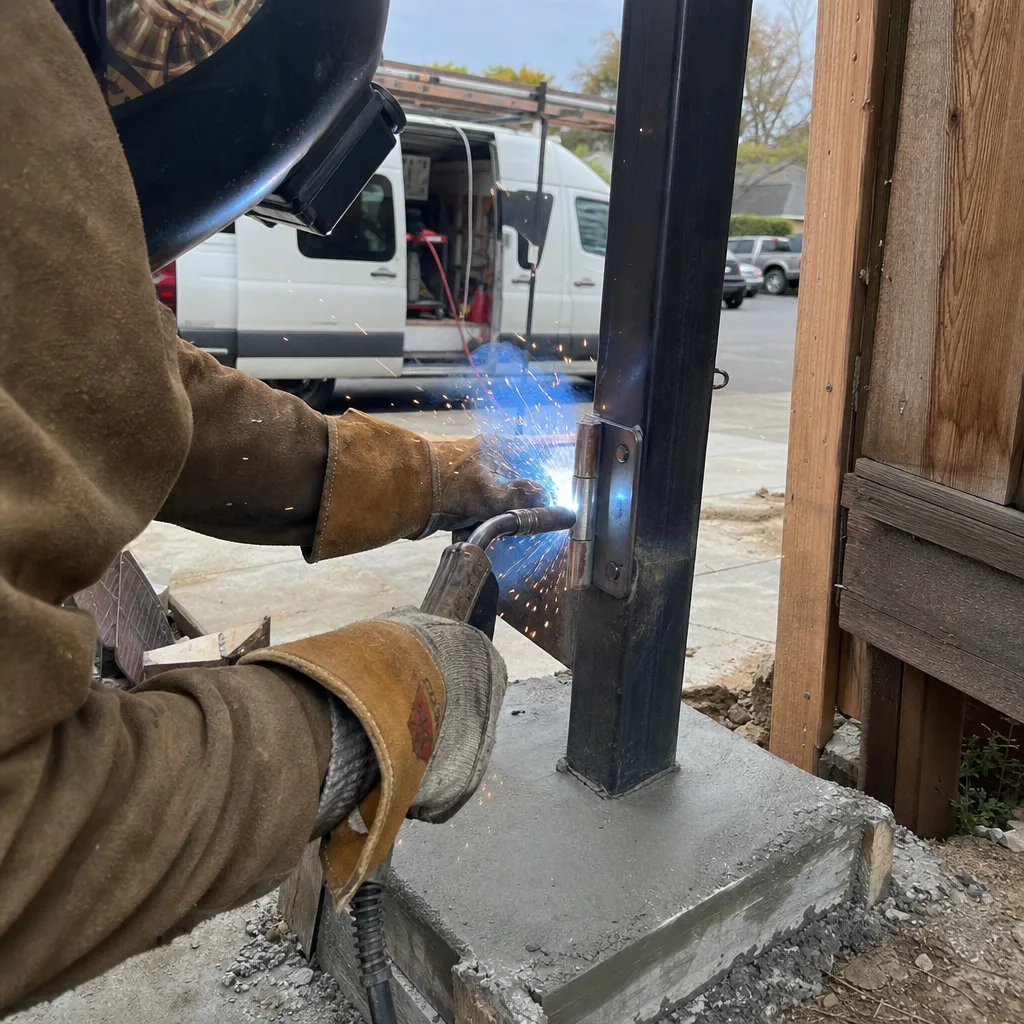
Permit costs for gate work in Sunnyvale are predictable when the scope is defined. Here are the ranges we see on current projects:
| Permit Type | Base Fee | Plan Check (if required) | Typical Total |
|---|---|---|---|
| Electrical (operator only) | $180-$280 | $0 | $180-$280 |
| Building (structural post/footing) | $220-$380 | $150-$300 | $370-$680 |
| Combined residential alteration | $350-$500 | $200-$400 | $550-$900 |
| Re-inspection fee (if failed) | $150-$200 | $0 | $150-$200 |
Timeline expectations:
These timelines assume complete initial applications. Incomplete applications, common with homeowners self-permitting or contractors unfamiliar with Sunnyvale’s portal, add 1-2 weeks of back-and-forth. We submit complete packages because we have done this hundreds of times; since 2014, we’ve processed over 22,000 gate jobs, each with a written price before work started and a documented record when we left.
One cost that does not appear on the permit fee schedule: the liability exposure of unpermitted work. A single denied insurance claim after a gate injury can exceed any permit fee by orders of magnitude. We mention this not to alarm, but to name the real cost that contractors who skip permits never disclose.
Common Mistakes to Avoid
- Assuming “repair” means “no permit needed”: In California, replacing a failed gate motor is legally an installation of new electrical equipment, not a repair. The permit requirement is triggered by the work type, not the homeowner’s perception of the project scale.
- Buying a UL-listed operator without verifying the UL 325 gate-specific listing: Many online retailers sell garage door openers with general UL listings that do not cover gate applications. The UL mark alone is insufficient; the listing must specify gate operator compliance.
- Getting HOA approval before city permit: This sequence reversal causes redesign when the city requires changes the HOA already approved. Start with the city, then take approved plans to the HOA.
- Ignoring ground bonding on metal gate retrofits: Original manual gates often lacked grounding. Adding an automatic operator without bonding the frame creates a code violation and shock hazard. Inspectors catch this on every final inspection.
- Disconnecting photo-eyes after nuisance tripping: A common homeowner response to a gate that won’t close because a photo-eye is misaligned. Disabling safety devices voids UL 325 compliance and creates strict liability for any injury.
- Failing to document the manual release location: Inspectors require obvious, tool-free access. Hidden releases behind landscaping or locked panels fail immediately and are expensive to relocate after installation.
- Hiring a contractor who will not pull permits: This shifts all liability to the homeowner. Any contractor who suggests “saving money” by skipping permits is exposing you to risk they will not share. We pull permits on every job that requires them; the permit number appears on your written price quote under Haven Standard Clause 1.
When to Call a Professional
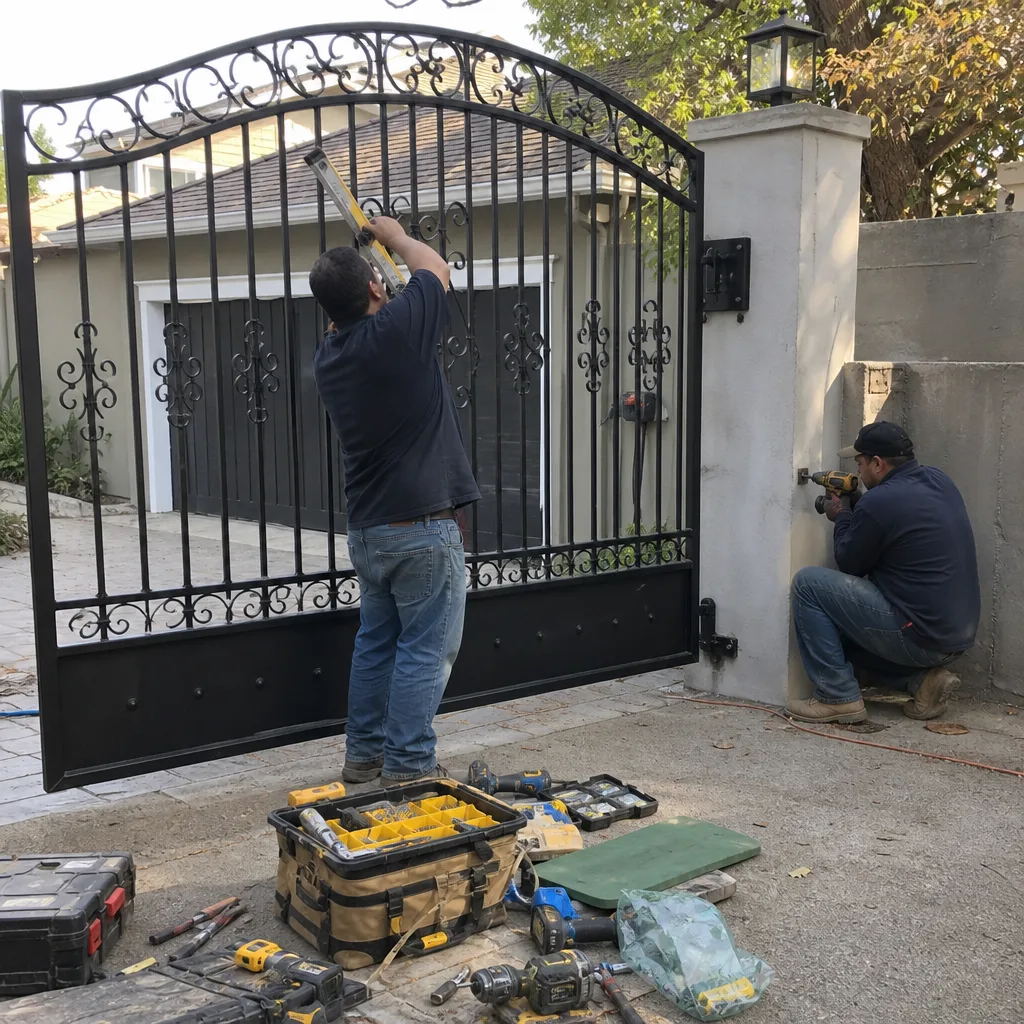
Call a licensed contractor for our Gate Repair services when your project involves any motorized component, structural modification, or safety system change. The permit process, electrical requirements, and liability exposure exceed what most homeowners can safely manage alone. Even “simple” operator replacements often reveal code gaps in the original installation, bonding, or GFCI protection that require professional correction.
Vance Gate Repair Sunnyvale offers free estimates in Sunnyvale. We review your existing gate, identify permit requirements, and provide a written price before any work starts. Call (669) 900-1904 to schedule. Every estimate includes a preliminary permit assessment so you know the full scope, including fees and timeline, before committing. For How to Hire a Gate Repair Contractor in Sunnyvale: A Step-by-Step Guide, see our companion resource.
Frequently Asked Questions
Yes. Replacing an automatic gate operator requires an electrical permit in Sunnyvale because the work involves installing new motorized electrical equipment. The permit ensures UL 325 compliance, proper grounding, and inspection of safety devices. Call (669) 900-1904 for a free estimate that includes permit identification and cost.
UL 325 is the safety standard that governs automatic gate operators, requiring entrapment protection, force limitation, warning signage, and manual release accessibility. Non-compliant installations can fail inspection, void insurance coverage, and create strict liability for injuries. Every operator we install carries a verified UL 325 gate-specific listing.
California law allows owner-occupants to perform electrical work on their own property, but most insurers and all HOA policies require licensed contractor installation for coverage validity. The permit cost is minor compared to the liability exposure of an unpermitted, uninspected installation. We provide written pricing that includes permit costs so the total is transparent.
A straightforward electrical permit for an operator replacement typically takes 3-5 business days for issuance, with inspection available 2-3 days after. Projects requiring structural work or HOA documentation extend to 2-4 weeks. We manage the timeline and keep you informed at each stage.
Not automatically. HOA approval addresses appearance and materials; city permitting addresses safety and code. Both are required, and approval from one does not guarantee approval from the other. We review CC&Rs during estimation and identify conflicts before any application is filed.
Unpermitted gate work typically appears on home inspection reports as a material defect, triggering buyer demands for permit retroactivity, repair credits, or price reductions. Some insurers refuse coverage until permitted status is verified. Our documentation on every job since 2014 prevents this scenario entirely.
The Bottom Line
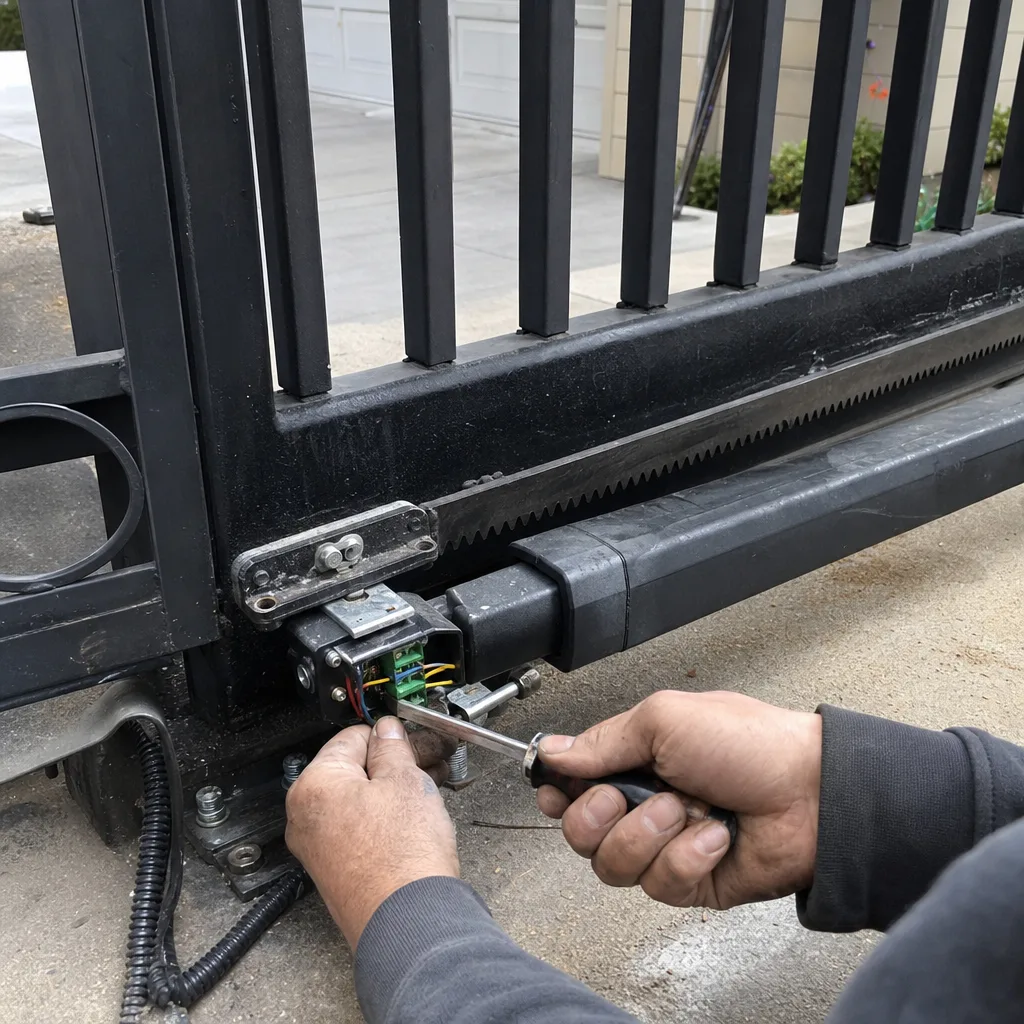
California gate permitting is granular, specific, and enforced at the point of property transfer and injury liability. The triggers are motorized components, structural changes, and safety system modifications, not project size or cost. UL 325 compliance is mandatory, not optional. HOA approval and city permitting operate on separate tracks and both must be satisfied. Documentation organized before installation prevents inspection delays and sale complications later. For Sunnyvale homeowners, the path to compliant, insurable, transferable gate work runs through proper permitting, licensed installation, and complete records. Explore more guides & resources on gate compliance and maintenance. That is how we have operated since 2014, and it is the standard we apply to every job.
Written by Adrian Vance, Owner at Vance Gate Repair Sunnyvale, serving Sunnyvale since 2014.