
Last updated September 22, 2026
Free on-site gate assessment - hinges, posts, and your LiftMaster or Nice gate operator checked before anything is quoted
The assessment is free and the quote is the invoice.
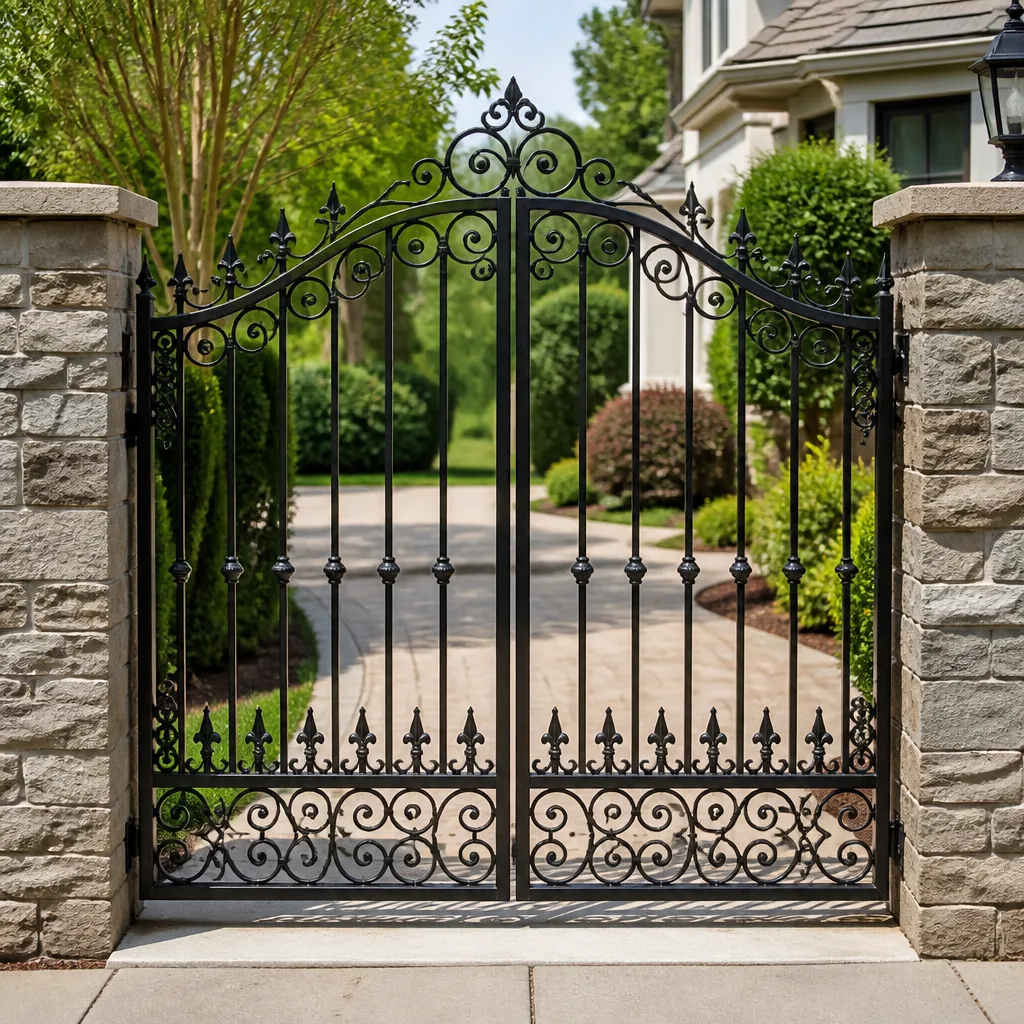
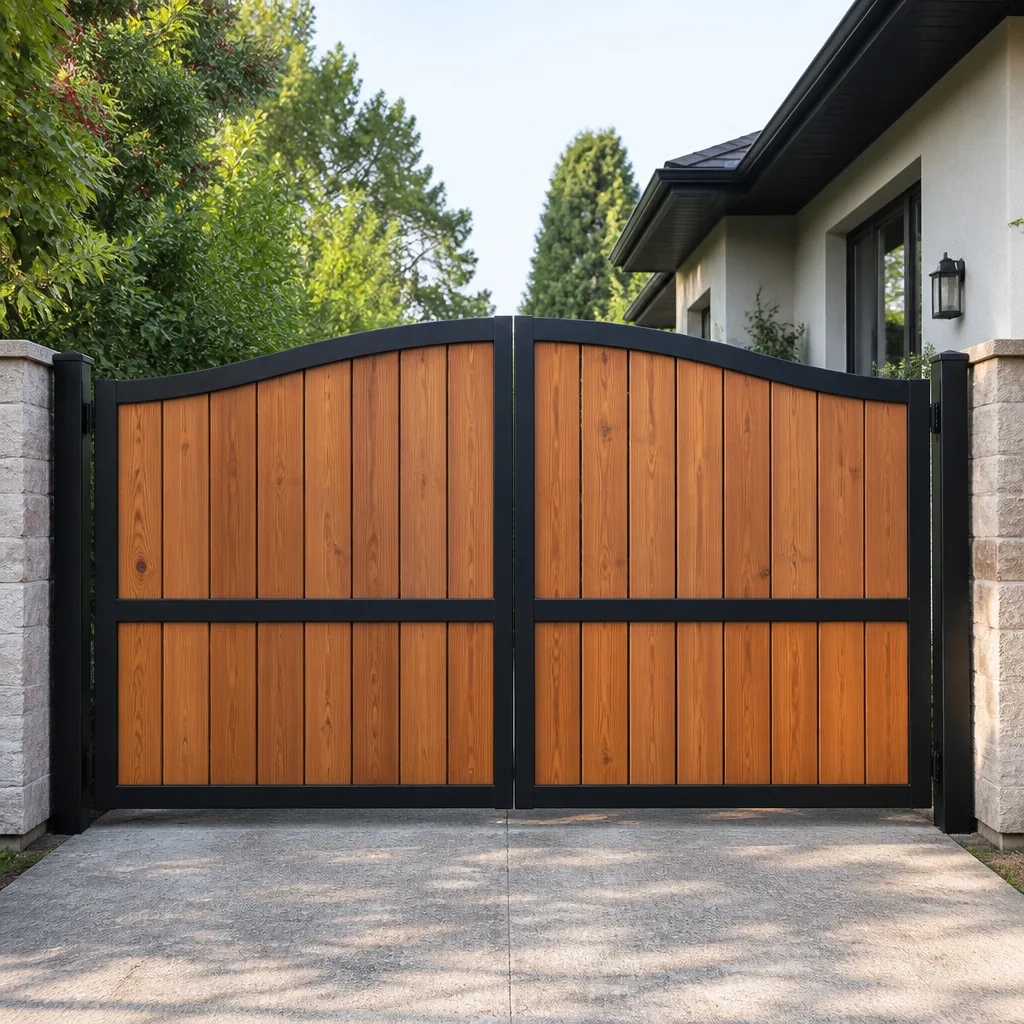
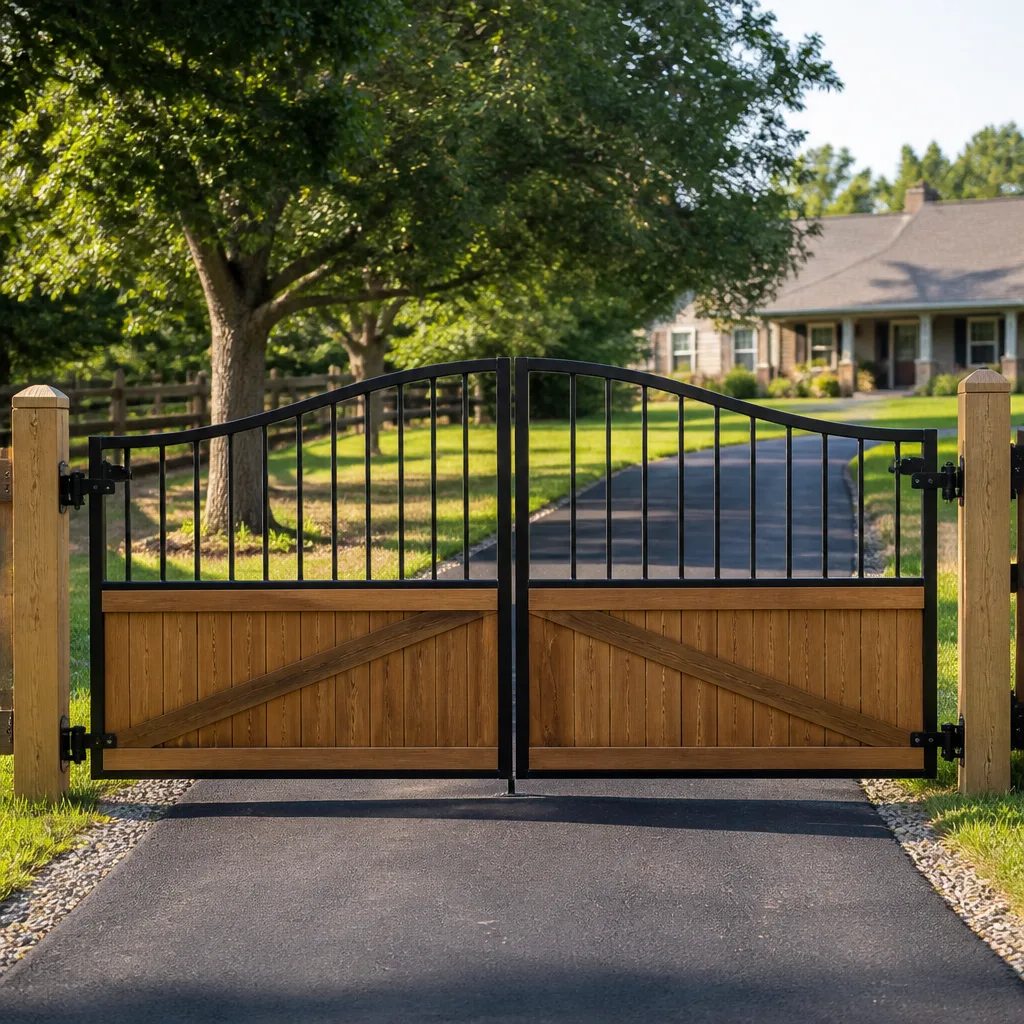
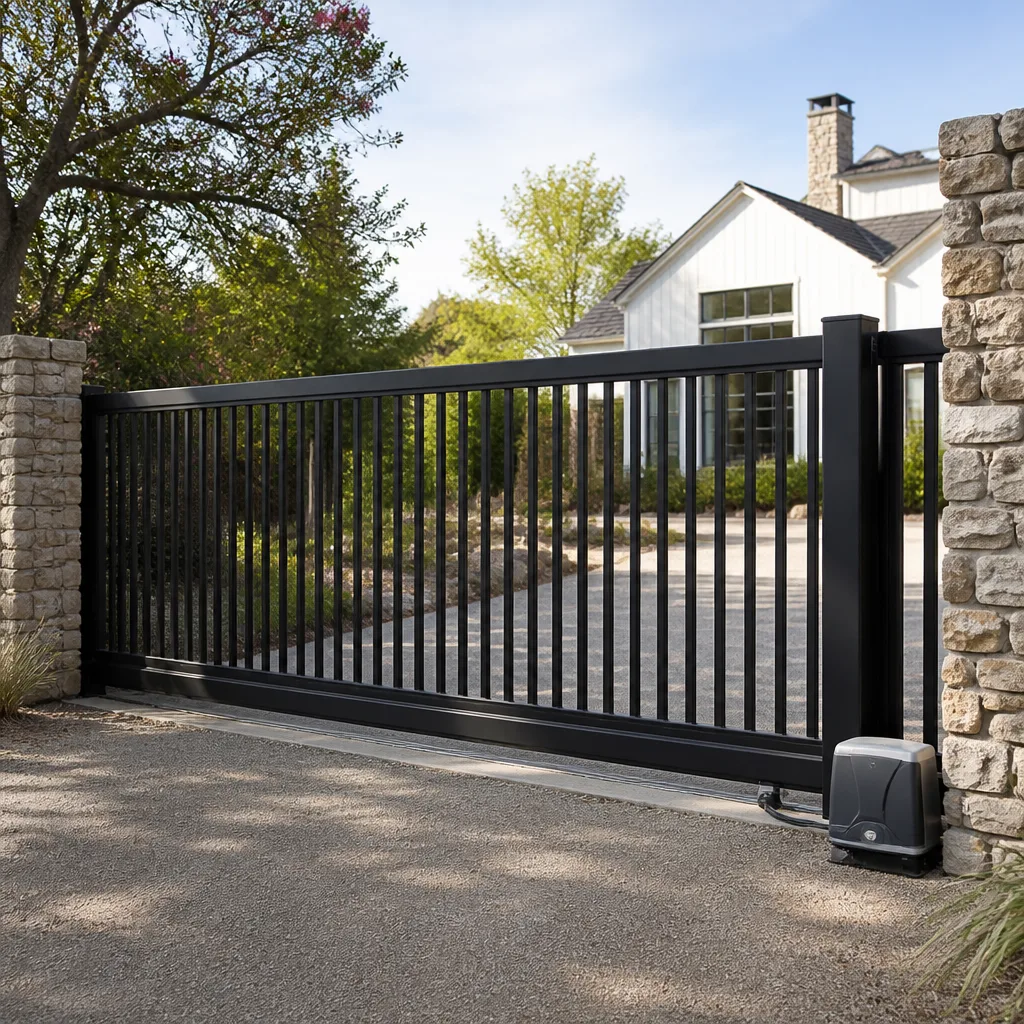
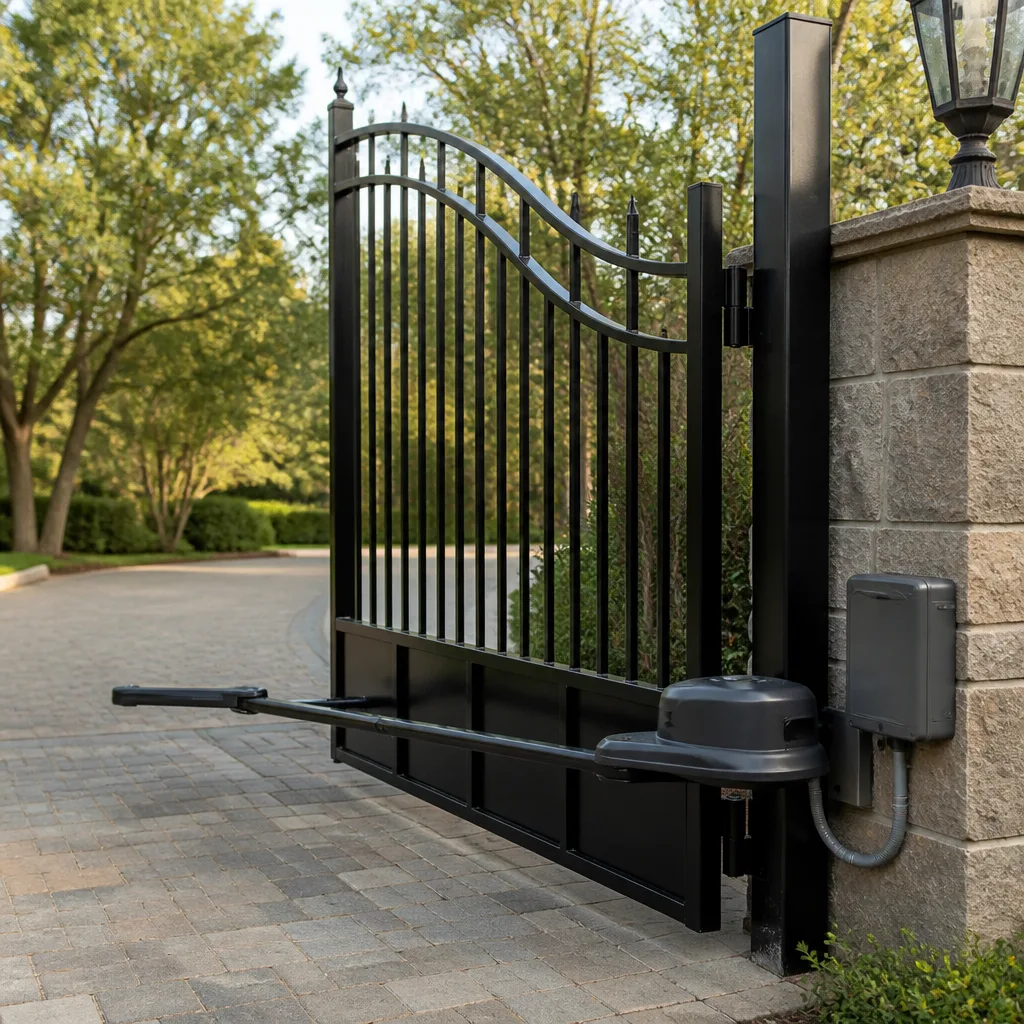
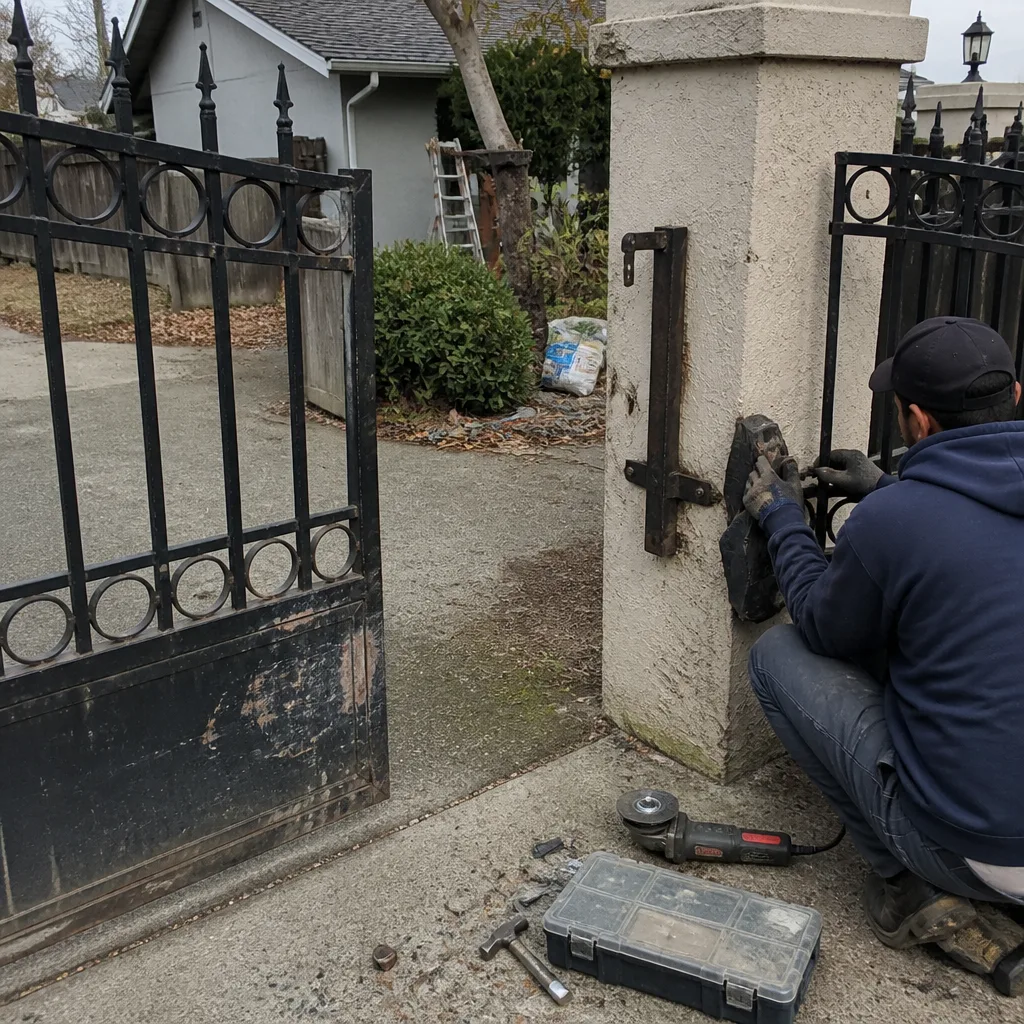 Before
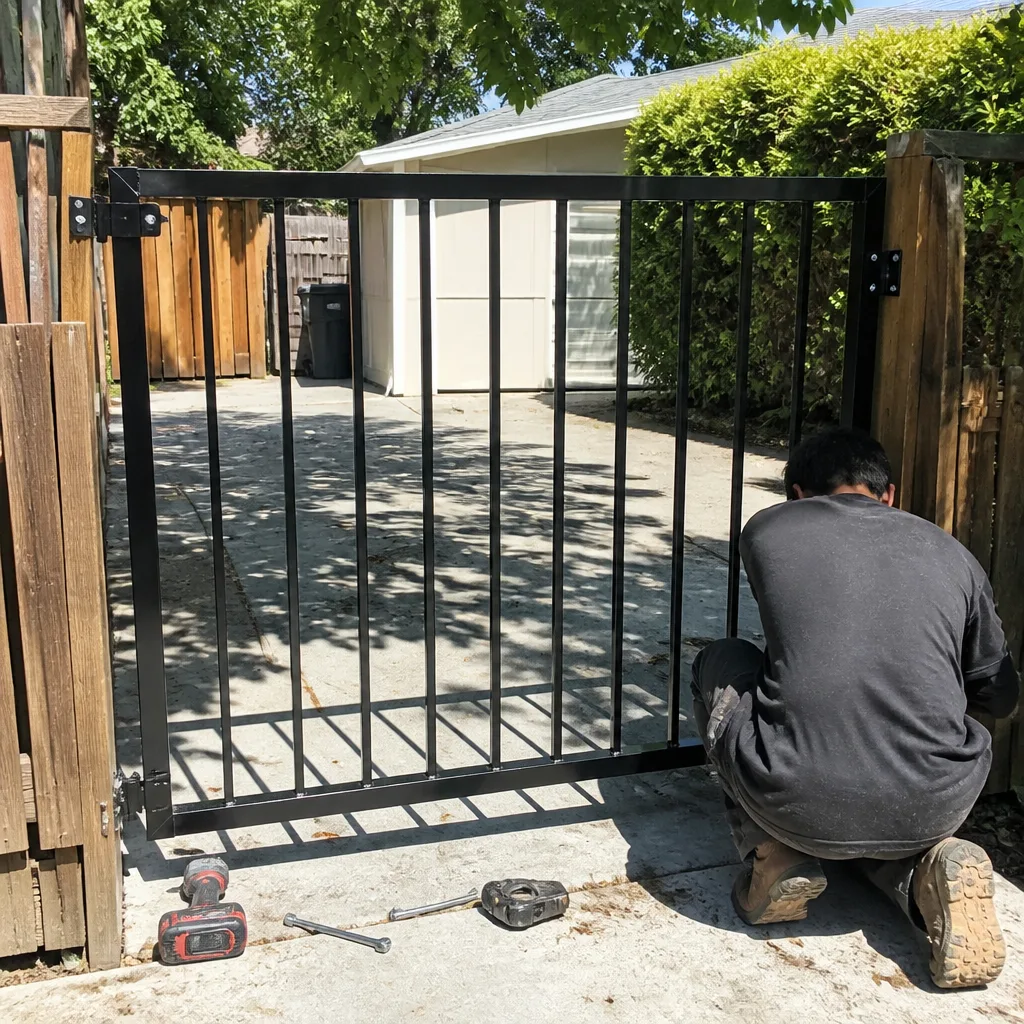 After
After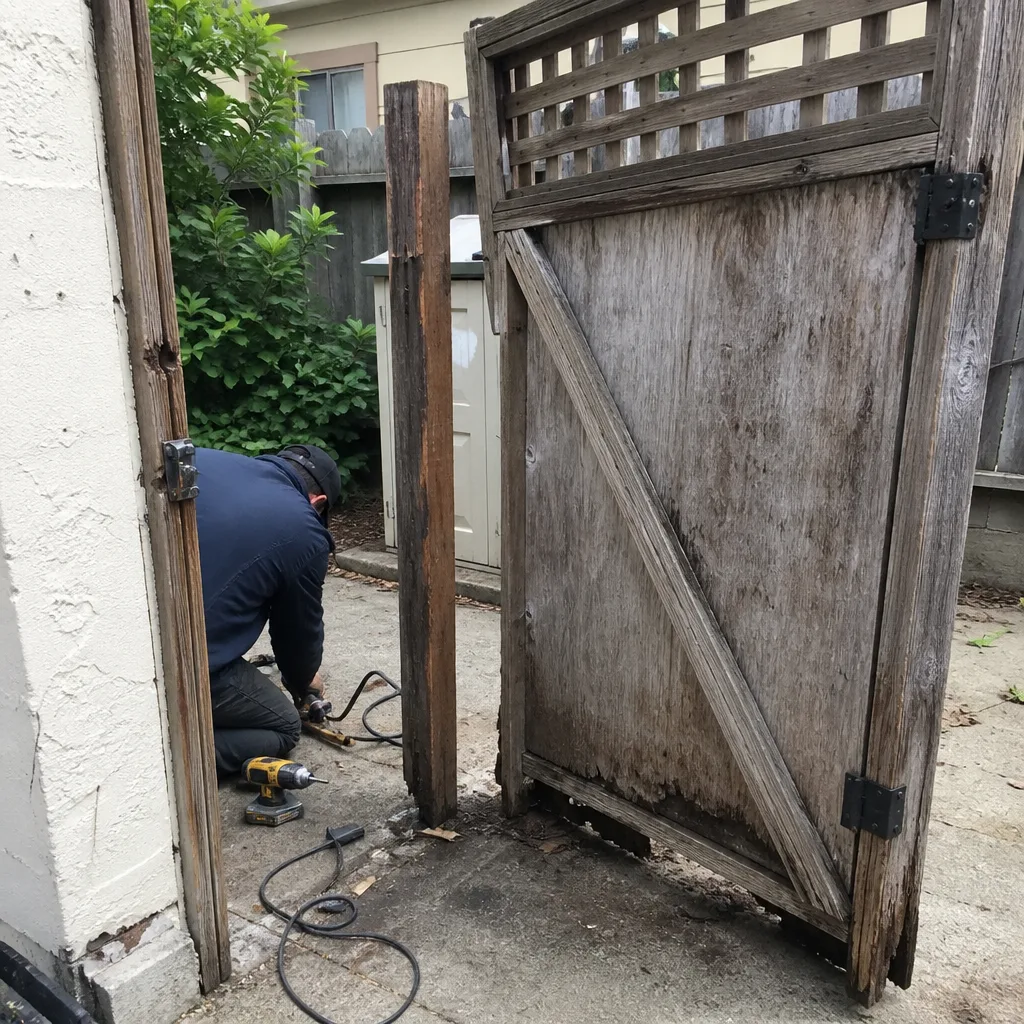 Before
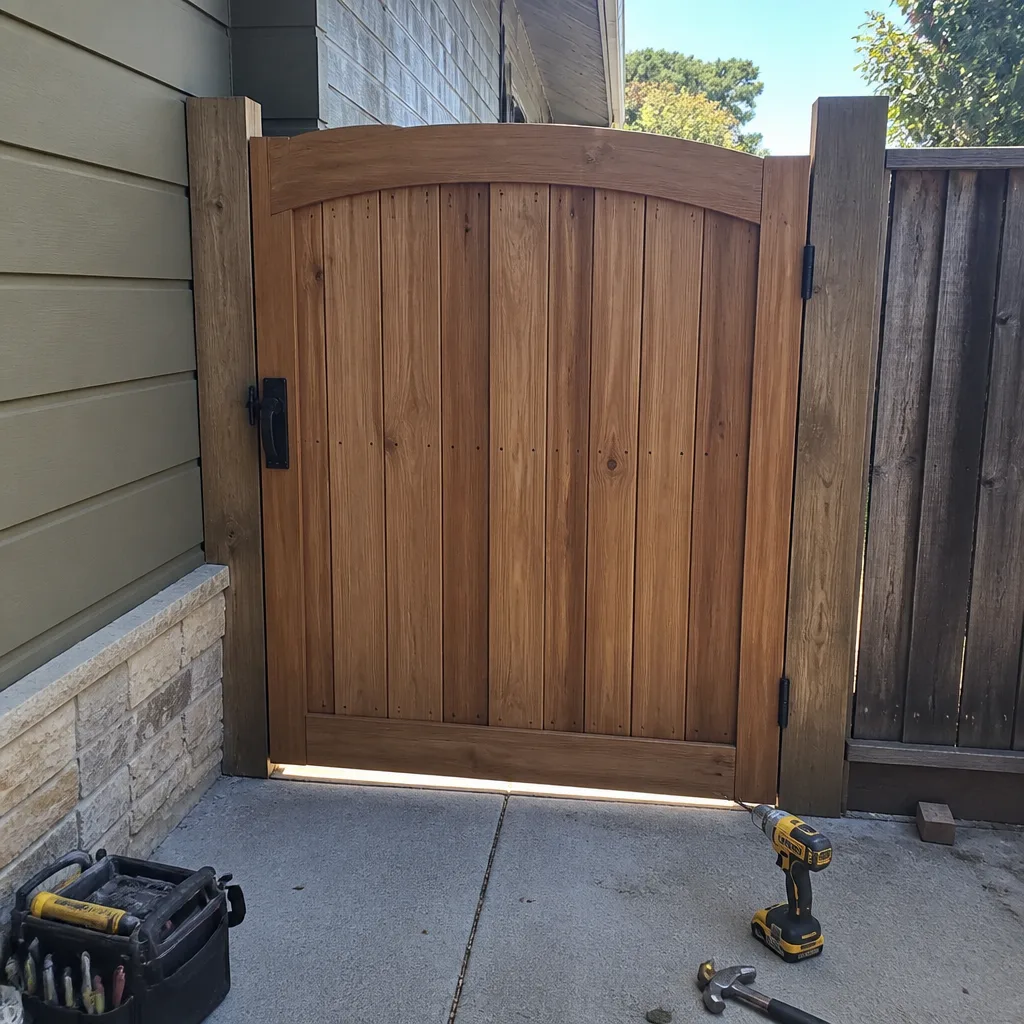 After
After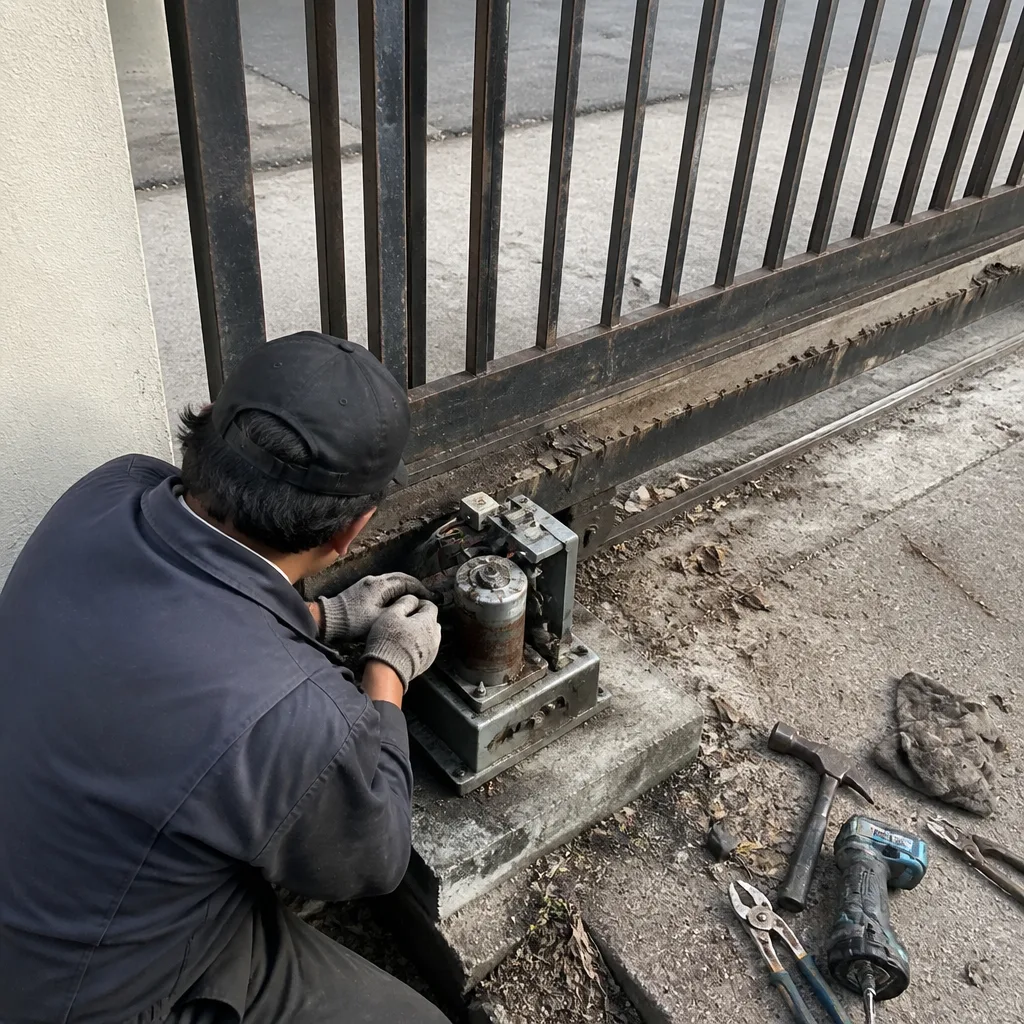 Before
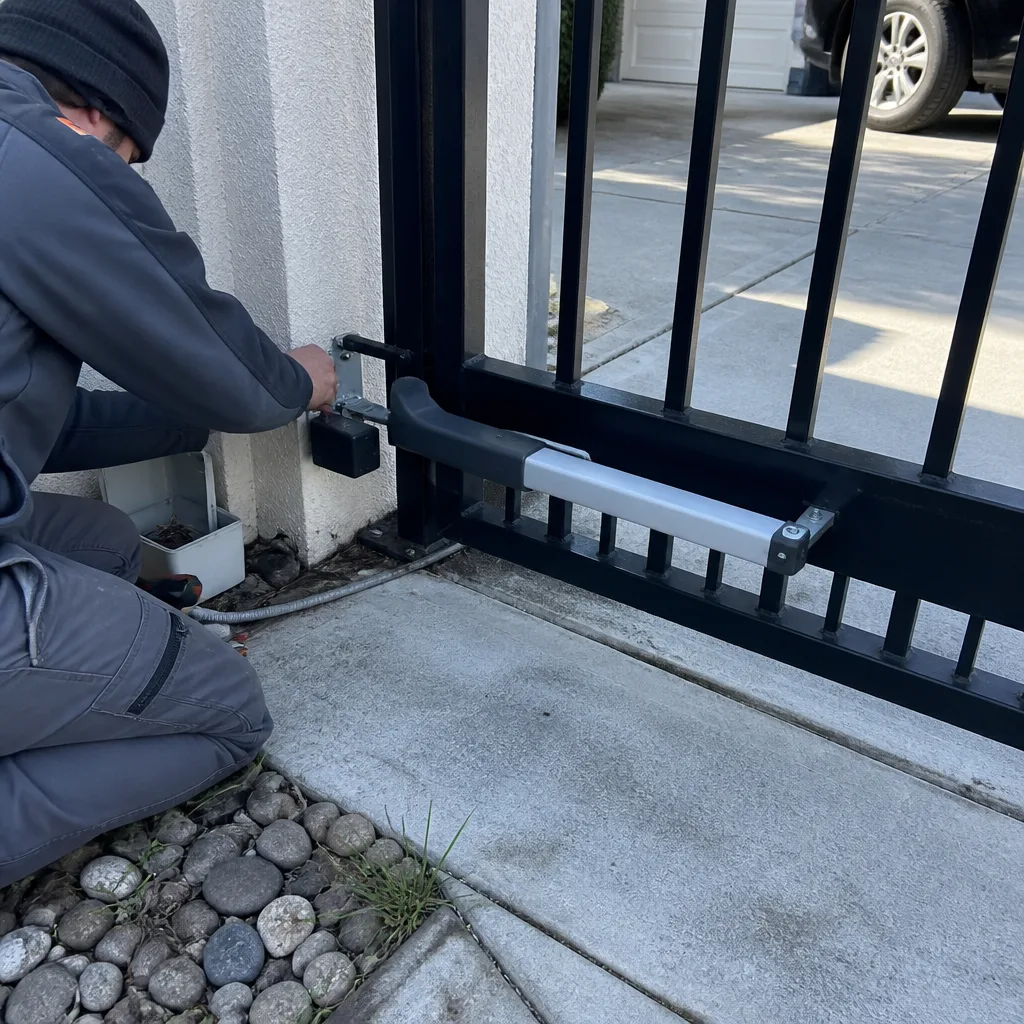 After
AfterDIY vs Professional Gate Repair: The Sunnyvale Homeowner’s Decision Guide
A homeowner in Sunnyvale who successfully installs their own replacement gate motor may have just performed an unpermitted modification to a California-regulated safety device. Their insurer can deny a bodily-injury claim if that gate later strikes a visitor. The DIY versus professional question is not about whether you’re handy with tools. California law draws a hard line between homeowner maintenance and licensed contractor work, and crossing it exposes you to liability that has nothing to do with whether the repair functioned when you finished it. This guide breaks down exactly where that line sits, component by component, so you can decide with full knowledge of the legal and financial stakes.
Quick Answer
Most Sunnyvale homeowners can legally perform basic gate maintenance themselves: lubricating hinges, tightening visible bolts, and replacing manual locks. Any work involving the motor, electrical connections, or entrapment sensors requires a California-licensed contractor and, in many cases, permits. The liability risk of unpermitted DIY on automated gates far exceeds the Gate Repair Cost Breakdown: The Sunnyvale Homeowner’s Reference for 2026, which is why professional repair includes documented safety testing that protects your insurance coverage.
Table of Contents
- The California Legal Boundary: What You Can and Cannot Touch
- Component-by-Component DIY Viability Guide
- The Liability Math: How DIY Repairs Affect Your Insurance
- What Professional Repair Documents That DIY Cannot
- The One Case Where DIY Is Always Wrong
- Sunnyvale Climate, Codes, and Common Gate Issues
- Cost Comparison: DIY Expense vs. Professional Repair Pricing
- Common Mistakes to Avoid
- When to Call a Professional
- Frequently Asked Questions
 Before
 After
AfterThe California Legal Boundary: What You Can and Cannot Touch
California Business and Professions Code Section 7048 allows homeowners to perform “maintenance, repair, and minor improvements” on their own property without a contractor license. The key word is minor. The moment your work involves electrical connections over 50 volts, modifies a safety system, or replaces a regulated component, you cross into territory reserved for C-61/D-28 (Lock and Security Equipment) or C-10 (Electrical) licensed contractors.
For gates specifically, the California Department of Industrial Relations and local building departments treat automated gate operators as special equipment under UL 325 standards. This is not intuitive. Many homeowners assume a gate motor is like a garage door opener, a simple appliance swap. It is not. A gate operator is classified as a regulated access-control device, and its installation or replacement triggers permit requirements in Santa Clara County and the city of Sunnyvale when any of these conditions apply:
- The operator connects to 110V or 220V household power
- The repair modifies or replaces entrapment protection (photo-eyes, safety edges, current-sensing reverse mechanisms)
- The gate is part of a multi-unit residential or commercial property
- The work occurs within a public right-of-way or shared driveway easement
What remains legal for homeowners is narrower than most assume. You may lubricate hinges and rollers with appropriate products. You may tighten visible fasteners that do not require disassembly of the operator housing. You may replace a manual slide bolt or padlock hasp. You may clear debris from the gate track or path. That’s roughly the boundary.
What crosses the line: replacing a gate motor, even a direct swap of the same model; adjusting limit switches that control where the gate stops; modifying or relocating photo-eye sensors; splicing or extending low-voltage control wiring; programming remote controls or keypad codes when it requires accessing the operator’s internal logic board. These tasks require a licensed contractor in California, and performing them without that license voids your protection under the state’s consumer-recovery fund if something goes wrong.
The permit question surprises many Sunnyvale homeowners. Single-family residential gate operator replacement does not always require a building permit in Santa Clara County, but it does require electrical permit verification if new conduit is run or the power source is relocated. More importantly, the work must be performed by someone with the appropriate license. A homeowner doing it themselves has no license to display, no bond to file against, and no pathway to the state’s contractor recovery fund if a subcontractor they hired causes damage.
Component-by-Component DIY Viability Guide
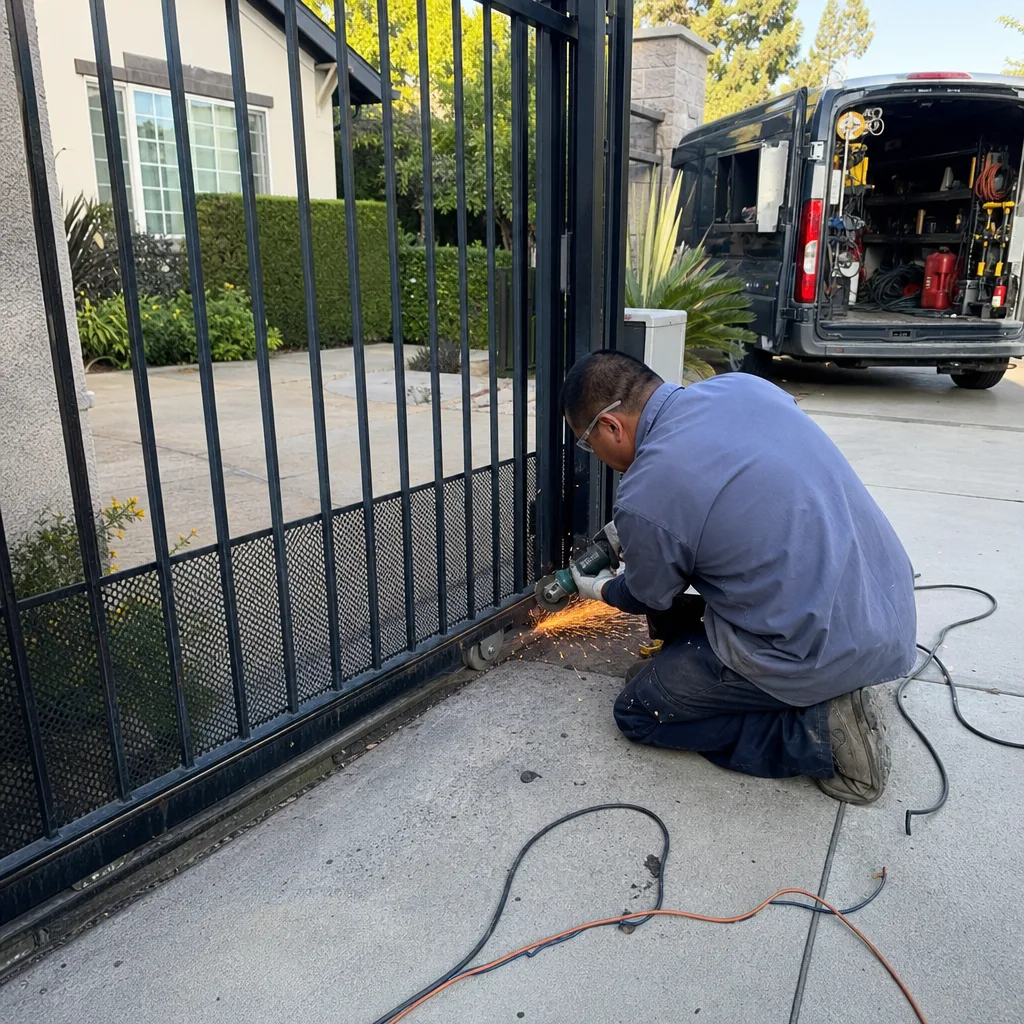
Below is a Gate Repair Maintenance Checklist for Sunnyvale Homeowners and practical breakdown of common gate repairs, rated by four factors that matter more than a simple difficulty scale: legal permissibility in California, actual skill requirement, safety risk, and whether the work triggers permit or inspection requirements. Use this to assess any repair before you pick up a tool.
Hinges and Pivot Hardware
Legal status: Permitted for homeowners.
Skill requirement: Moderate. Requires understanding of load-bearing alignment.
Safety risk: High if the gate is heavy and unsupported during work.
Permit trigger: No.
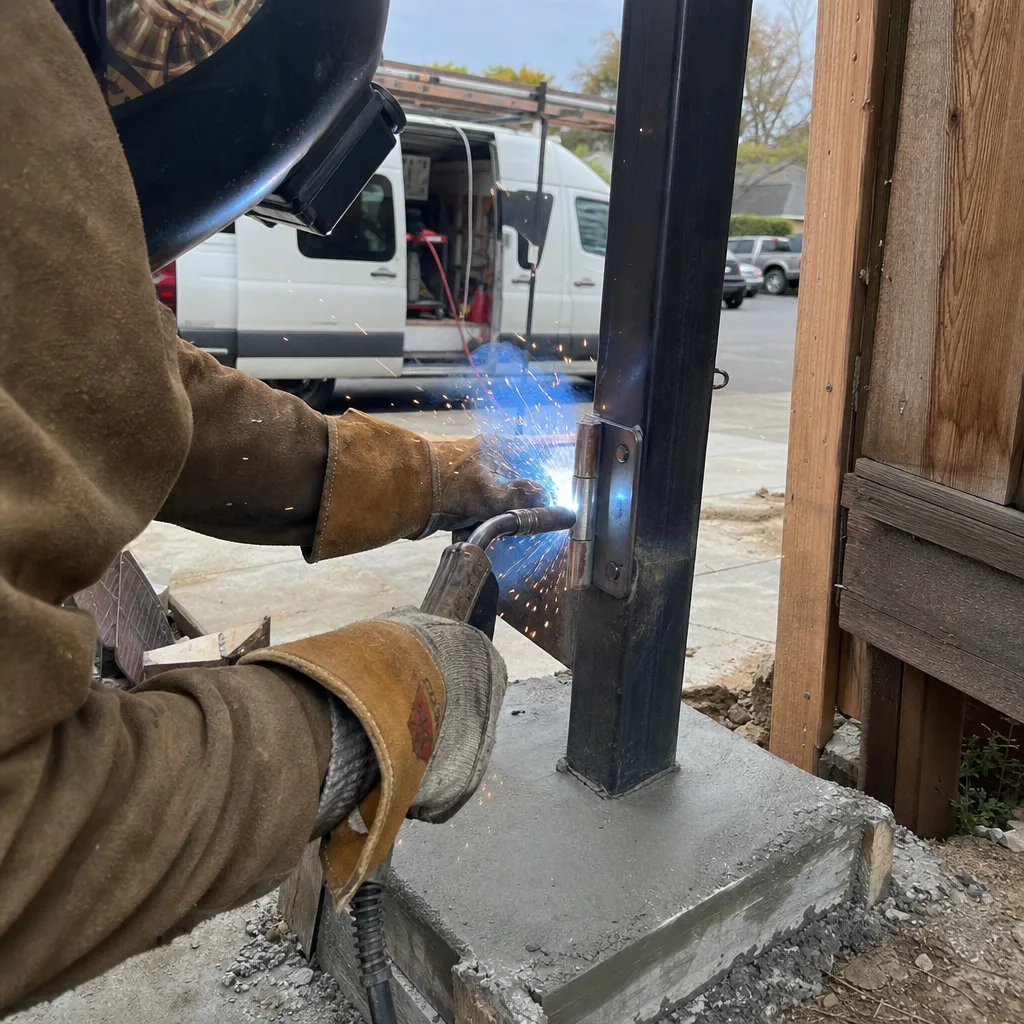
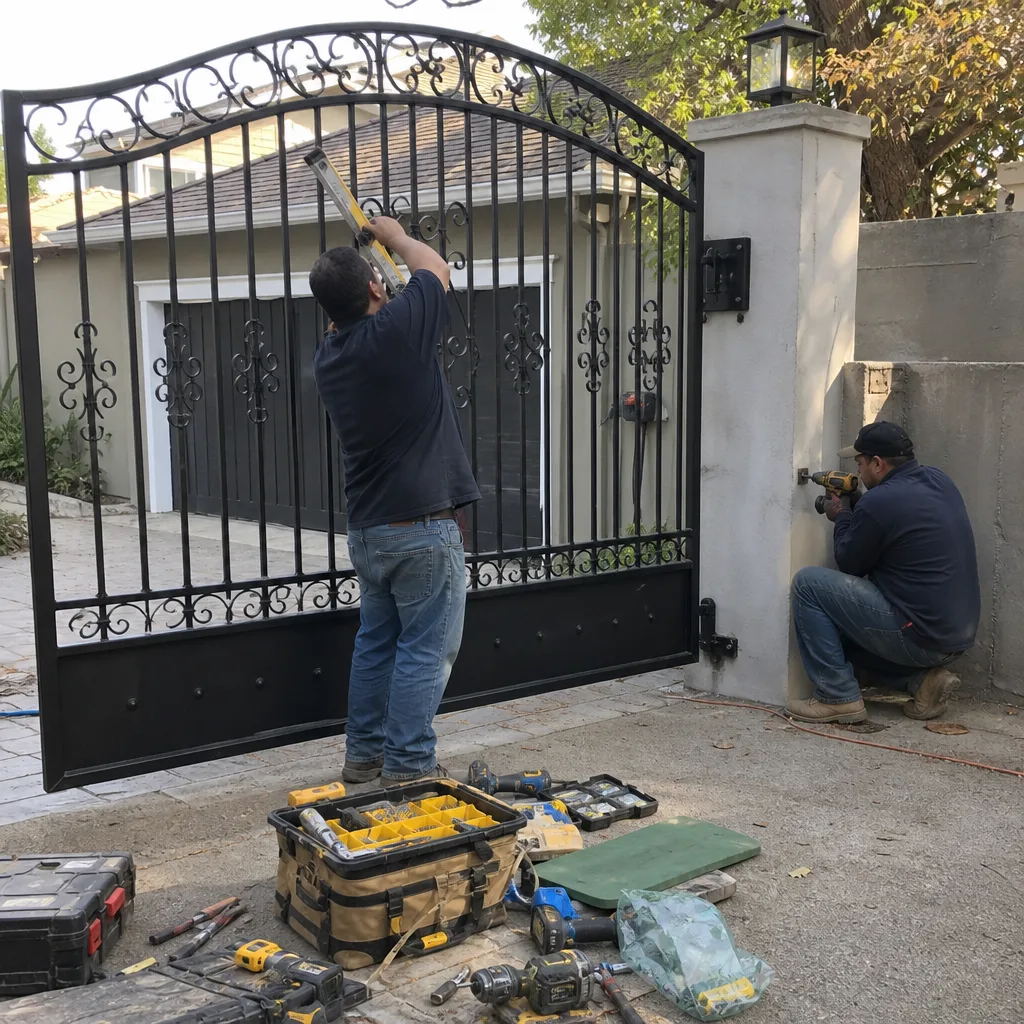
A sagging swing gate in Sunnyvale’s older neighborhoods, particularly around the historic Murphy Avenue corridor, often suffers from seized or worn hinge pins. You can legally replace these. The risk is mechanical, not regulatory: a solid steel or aluminum gate can weigh 200 to 600 pounds, and removing a hinge pin without proper support causes immediate crushing hazard. Use a floor jack with a wood block to support the gate leaf before touching any hardware. If the hinge is welded rather than bolted, you’re now in metal fabrication territory, and that work should be performed by a contractor with welding certification for structural gates.
Gate Wheels and Track (Slide Gates)
Legal status: Permitted for homeowners.
Skill requirement: Low to moderate.
Safety risk: Moderate. Pinch points between wheel and track.
Permit trigger: No, unless track replacement modifies the foundation or footing.
Slide gates along Sunnyvale’s commercial strips on El Camino Real and Mathilda Avenue collect debris in their V-groove or box-track systems. Cleaning and lubricating is straightforward homeowner maintenance. Replacing a worn wheel carriage is also legal, but requires releasing spring-tension on some cantilever designs. That spring tension is stored energy, and improper release can launch components. We document roughly a dozen wheel-carriage replacements annually where a homeowner started the job, released the spring incorrectly, and bent the gate frame beyond economical repair.
Manual Locks and Latches
Legal status: Permitted for homeowners.
Skill requirement: Low.
Safety risk: Low.
Permit trigger: No.
This is genuinely within homeowner scope. A manual deadbolt or slide latch on a pedestrian gate or as secondary security on a driveway gate is simple hardware replacement. Use corrosion-resistant materials, as Sunnyvale’s winter rains and summer marine layer moisture accelerate rust on standard steel hardware.
Gate Motor / Operator Replacement
Legal status: Requires licensed contractor (C-61/D-28 or C-10).
Skill requirement: High. Involves electrical, mechanical, and programming knowledge.
Safety risk: High. Electrical shock, crushing, and entrapment hazards.
Permit trigger: Yes, electrical permit if power connection is modified.
This is where most Sunnyvale homeowners stumble into legal and liability trouble. The motor itself, whether it’s a LiftMaster residential swing operator, a FAAC hydraulic underground system, or an Elite slide-gate commercial unit, is not a plug-and-play appliance. It must be matched to gate weight, duty cycle, and wind load. It must be installed with proper entrapment protection that meets the gate’s specific risk category under UL 325. And the electrical connection must comply with NEC Article 725 for low-voltage control circuits and Article 430 for motor loads.
A homeowner who swaps their own motor and later a child is injured by the gate faces a straightforward insurance denial: the modification was unperformed by an unlicensed individual, and the policy’s workmanship exclusion applies. We have reviewed claims where this exact scenario cost homeowners their coverage and exposed personal assets to litigation.
Photo-Eye Sensors and Safety Edges
Legal status: Requires licensed contractor.
Skill requirement: Moderate to high. Requires calibration and testing equipment.
Safety risk: Moderate during work; catastrophic if misinstalled.
Permit trigger: Yes, as modification to safety system.
Photo-eyes (the infrared beam pair that stops gate travel when interrupted) and safety edges (pressure-sensitive strips on the gate leaf) are not merely accessories. They are the legally required entrapment protection for automated gates under UL 325 and California Title 8. Their installation, relocation, or adjustment is never homeowner-permitted work. The calibration requires knowing the gate’s closing force, the sensor’s response time, and the proper mounting height for the gate’s risk category. A misaligned photo-eye that appears to work, because the gate stops when you wave your hand, may fail to detect a small child or pet at the wrong angle.
Limit Switches and Control Boards
Legal status: Requires licensed contractor.
Skill requirement: High.
Safety risk: High. Incorrect settings cause uncontrolled travel.
Permit trigger: Yes.
Limit switches tell the motor when to stop opening and closing. On a Mighty Mule residential operator, these are magnetic or mechanical switches set during installation. On commercial units like FAAC or LiftMaster CSW models, they’re programmable positions with encoder feedback. Adjusting them without understanding the gate’s physical travel limits causes over-run, which bends gate arms, damages stops, and creates crush hazards. We reset limit switches on roughly thirty percent of our Sunnyvale service calls where a homeowner or handyman adjusted them “by feel” and created a new problem.
Access Control: Keypads, Remotes, Telephone Entry
Legal status: Gray area for homeowner programming; licensed work for installation.
Skill requirement: Variable.
Safety risk: Low for programming; moderate for installation.
Permit trigger: Yes for new installation or low-voltage wiring extension.
Programming an existing keypad with new codes is generally permitted homeowner work, though the manual should be followed precisely, as incorrect programming can lock out all access or create security vulnerabilities. Installing a new keypad, running low-voltage wiring to it, or connecting telephone entry systems requires a licensed contractor and often a low-voltage electrical permit in Sunnyvale.
The Liability Math: How DIY Repairs Affect Your Insurance
California follows a pure comparative negligence standard for personal injury, but homeowner’s insurance policies contain specific exclusions for unlicensed workmanship and unpermitted modifications. Understanding how these interact with gate injuries is essential to evaluating the true cost of DIY, as covered in our more guides & resources.
Here’s the scenario that keeps liability attorneys busy: a homeowner in Sunnyvale’s Birdland neighborhood replaces their own LiftMaster slide-gate operator after watching online tutorials. They don’t adjust the force settings for the gate’s actual weight. Six months later, a delivery driver is struck while the gate is closing. The driver suffers a broken pelvis and sues for medical costs, lost wages, and pain and suffering.
The homeowner’s insurance carrier investigates and discovers:
- The gate operator was replaced without electrical permit or inspection
- The work was performed by an unlicensed individual (the homeowner)
- The force settings exceeded UL 325 limits for the gate class
- No documented safety testing occurred post-installation
Most California homeowner policies exclude coverage for “work performed by unlicensed persons” or “modifications made without required permits.” The carrier denies the claim. The homeowner now faces personal liability for damages that can exceed policy limits. Even if the homeowner wins at trial, the defense costs alone typically run $50,000 to $150,000 for a serious injury case.
By contrast, a licensed contractor’s work carries:
- Contractor’s bond (typically $25,000 minimum in California)
- General liability insurance (usually $1 million to $2 million per occurrence)
- Workers compensation if employees are involved
- Access to the California Contractors State License Board recovery fund
- Documented compliance with UL 325 and local codes
The cost difference between DIY and professional repair is not the invoice amount. It’s the risk transfer. When you hire a licensed contractor, you’re purchasing not just labor but liability protection. Under Vance Gate Repair Sunnyvale home standards, that protection includes our 365-Day Done Right Promise and the documented evidence that proves the work was performed correctly.
What Professional Repair Documents That DIY Cannot
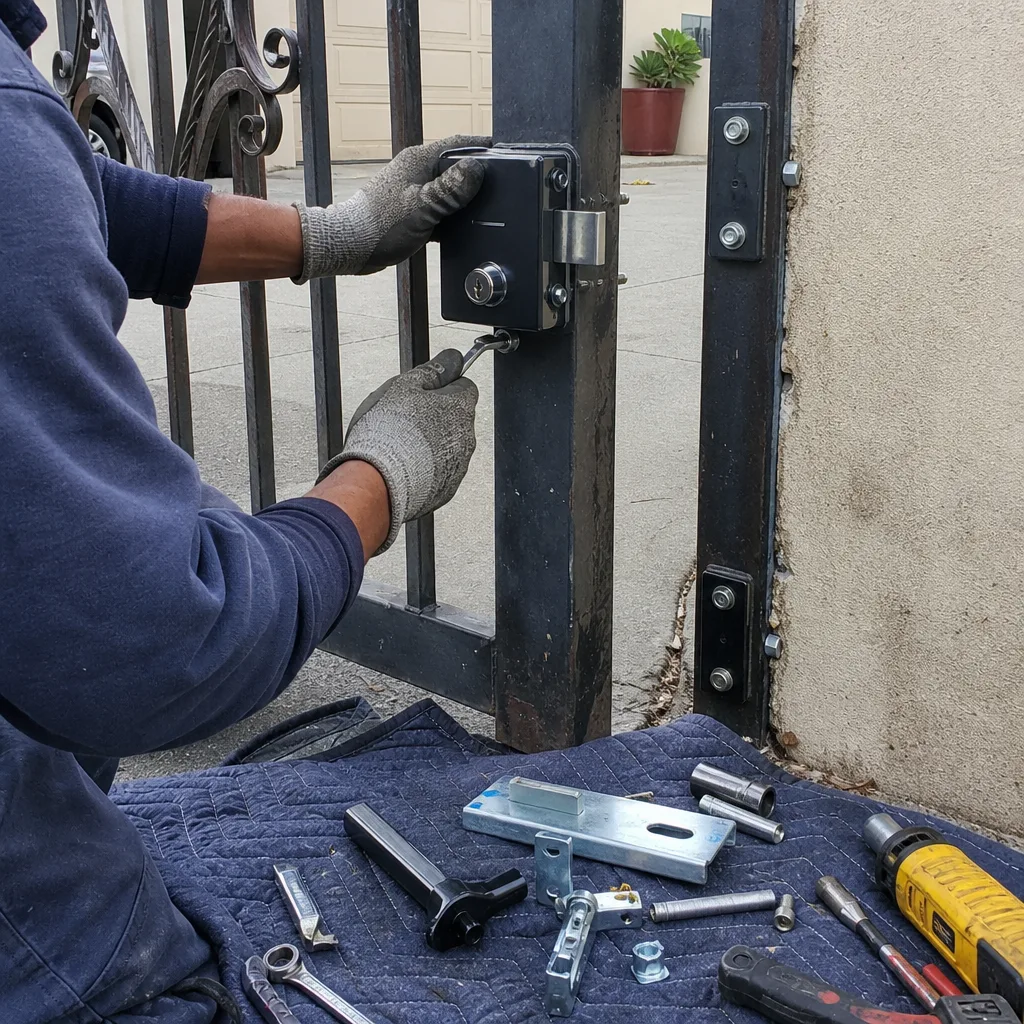
Documentation is where professional gate repair separates itself from even skilled homeowner work. Under The Haven Standard that governs every job we perform, four documents are created on every visit:
- Written scope and price, signed before work begins (Clause 1)
- Photographic record of pre-existing conditions
- Calibrated settings recorded and photographed
- Post-repair safety test results, with photo evidence (Clause 4)
A homeowner performing their own repair has no mechanism to create the third and fourth items in a way that would be admissible in dispute resolution. Here’s what each contains and why it matters.
Calibrated Limit-Switch Readings
When we adjust a gate operator’s open and close limits, we record the exact degree or encoder position, not “about there.” On a FAAC 770 underground operator, for example, we document the potentiometer reading or digital position to two decimal places. If the gate later over-travels, we can prove where it was set and that the setting was within manufacturer specification. A homeowner setting limits by eye has no record and no precision reference.
Wiring Diagrams and Connection Photos
Every gate motor and opener in Sunnyvale that we service receives a photographed wiring record. We photograph terminal block connections, wire colors, and any splices. If a future technician services the gate, they know exactly what was done without disassembling connections to trace circuits. This is the commercial documentation habit Adrian Vance developed on access-control sites starting in 2014, applied to residential work. Homeowners rarely photograph their own wiring, and when they do, the images lack the systematic coverage that makes them useful to future workers.
Entrapment-Protection Test Results
This is the critical documentation that no DIY repair can replicate credibly. UL 325 requires three specific tests for each class of entrapment protection:
- Photo-eye test: Verify beam alignment, response time, and obstruction detection across the full gate opening
- Safety edge test: Verify activation force is between 15 and 40 pounds for the specific edge type
- Current-sensing reverse test: Verify the operator reverses within 2 seconds when encountering resistance at specified force levels
We perform these tests with calibrated equipment, record the results, and photograph the test setup. The homeowner receives a copy. This documentation is what an insurance adjuster or attorney would request to prove the gate was safe after repair. A DIY repair has no such proof, creating exactly the evidentiary gap that supports claim denial.
The Photo Log You Receive
Before we leave any Sunnyvale job, you receive a photo log showing: what we found on arrival, what we adjusted or replaced, and what the completed installation looks like. This is filed in our job record and provided to you. If you sell the home, this documentation transfers to the new owner. If there’s a warranty question, we reference the same images. Under Haven Standard Clause 4, this evidence is included at no additional charge on every single visit.
The One Case Where DIY Is Always Wrong
Regardless of your skill level, tool collection, or mechanical confidence, there is one repair scenario where DIY is categorically the wrong choice: any work involving the gate’s entrapment-protection system.
This includes:
- Replacing, relocating, or adjusting photo-eye sensors
- Installing or replacing safety edges on the gate leaf
- Modifying or bypassing current-sensing reverse mechanisms
- Altering the control-board logic that governs safety-device response
- Programming “force override” or similar dealer-level settings
The reason this line is absolute has nothing to do with technical difficulty. A competent homeowner could physically mount a photo-eye and connect wires. The problem is threefold:
First, California law classifies this as licensed contractor work, with the liability consequences described above.
Second, the calibration requires equipment and knowledge that cannot be acquired from a video. A photo-eye must be aligned not merely to “work” but to detect obstructions at the specified height and angle for the gate’s risk category (Class I through IV under UL 325). A safety edge must activate at the correct force threshold, which varies by edge type and gate weight. Current-sensing settings must be matched to the motor’s torque curve. These are not intuitive adjustments.
Third, and most critically, the testing that validates correct function requires deliberate simulation of entrapment scenarios. A professional technician performs these tests with understanding of what constitutes pass versus fail. A homeowner testing their own work is naturally biased toward confirmation, not rigorous failure-seeking. We have found photo-eyes that “worked” in homeowner testing but failed to detect a child’s crawling height, or safety edges that responded to hand pressure but not to the slower, distributed pressure of a trapped limb.
Every year in California, automated gates cause serious injuries and fatalities, predominantly to children. The majority involve entrapment-protection failure. The legal and moral weight of this specific system makes it non-negotiable: hire a licensed professional for any entrapment-protection work.
Sunnyvale Climate, Codes, and Common Gate Issues
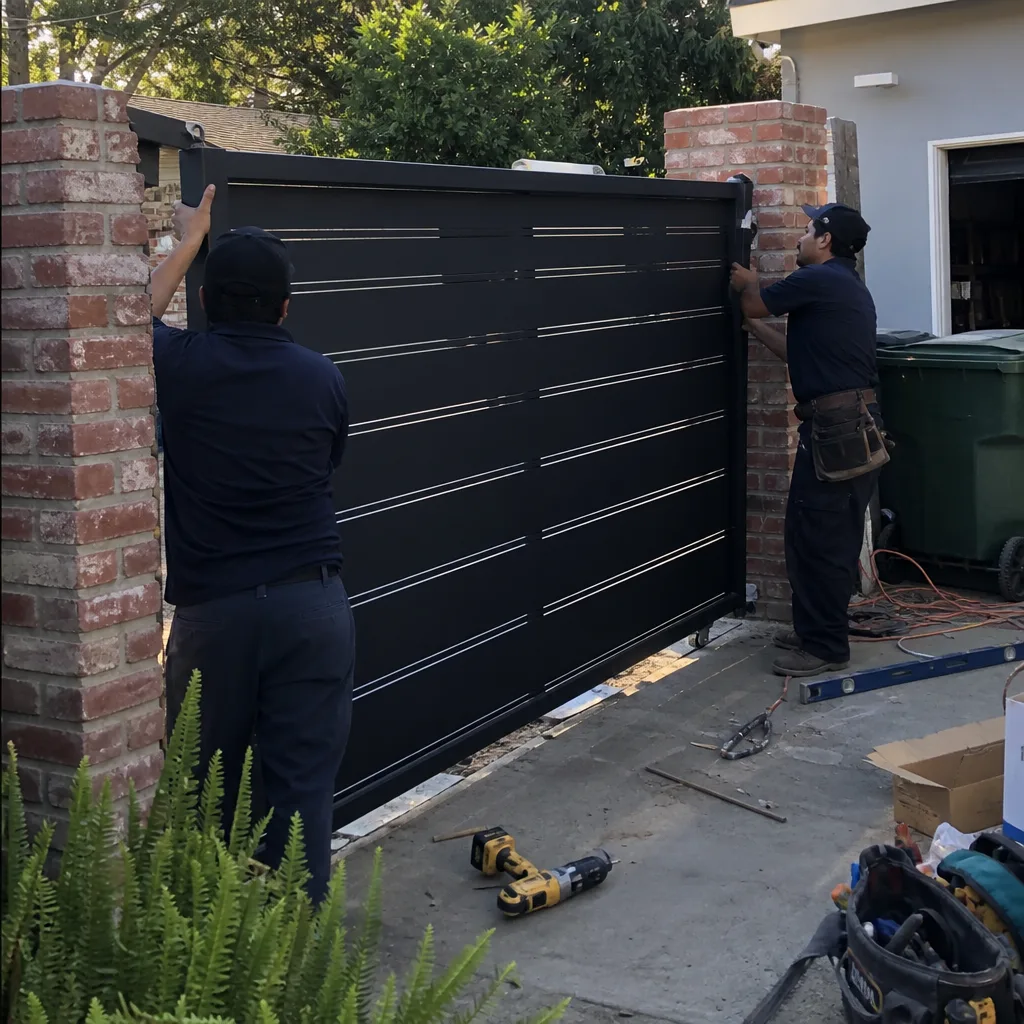
Sunnyvale’s location in Santa Clara Valley creates specific conditions that affect gate durability and repair frequency. Understanding these helps evaluate whether a problem is truly DIY-appropriate or signals deeper issues requiring Gate Repair professional diagnosis.
Marine Layer Moisture and Corrosion
Sunnyvale experiences regular marine layer intrusion from San Francisco Bay, particularly May through October. Morning humidity often exceeds 90 percent before burning off by mid-morning. This moisture cycle accelerates corrosion on unprotected steel components. Hinge pins, track hardware, and chain drives on slide gates show accelerated wear compared to inland Bay Area locations.
Homeowners can perform visible corrosion inspection and apply appropriate lubricants. But when corrosion has progressed to pitting on load-bearing components, or when gate frames show bubbling paint indicating internal rust, professional welding and refinishing is required. We see this frequently on gates installed during Sunnyvale’s 1990s and 2000s building booms, where galvanized or powder-coated protection has degraded.
Clay Soil and Foundation Movement
Parts of Sunnyvale, particularly the older neighborhoods north of El Camino Real and areas near Permanente Creek, have expansive clay soils. Seasonal wetting and drying causes gate posts and slide-gate footings to shift. A gate that “just started dragging” may indicate post movement of a quarter-inch or more, throwing the entire geometry off.
DIY adjustment of hinges or track to compensate for foundation movement is temporary and often accelerates wear. The proper repair involves post stabilization or footing repair, which requires excavation, concrete work, and often permit compliance. We document post-plumb measurements on every gate repair in Sunnyvale to distinguish true component failure from foundation issues.
Wind Loading on Tall Privacy Gates
Sunnyvale’s zoning allows substantial height for privacy screening, and many homeowners install six-foot or taller solid-panel gates. These act as sails in wind events, particularly the dry offshore winds of late summer and fall. The wind load calculation for the gate operator must account for this, and operators are frequently underspecified by installers who treated the gate like a standard residential unit.
A homeowner replacing an operator that failed prematurely due to wind loading will likely install the same underspecified unit, repeating the failure. Professional assessment includes measuring gate area, calculating wind load for Sunnyvale’s exposure category, and specifying appropriate operator capacity, sometimes upgrading from residential to light-commercial duty ratings.
Local Code Enforcement
The city of Sunnyvale enforces California Building Code Chapter 31B for swimming pool barriers, which includes many residential gates that provide access to pool areas. These gates must self-close and self-latch, with specific hardware requirements. A homeowner modifying pool-area gate hardware must ensure compliance, or they face citation during property sale inspection. Professional repair includes verification against these specific requirements.
Cost Comparison: DIY Expense vs. Professional Repair Pricing
Direct cost comparison is complicated by the hidden expenses in DIY repair and the risk-adjusted value of professional work. Below is a realistic breakdown for common Sunnyvale gate repairs, showing what a homeowner actually spends versus professional pricing.
| Repair Type | DIY Material Cost | DIY Tool/Equipment Cost (if not owned) | Professional Repair Range (Sunnyvale market) | DIY Legal? |
|---|---|---|---|---|
| Hinge lubrication and bolt tightening | $15-$30 | $0 (basic tools) | $150-$250 service call | Yes |
| Manual lock replacement | $25-$80 | $0-$40 (drill bits, chisels) | $200-$350 | Yes |
| Slide gate wheel carriage replacement | $60-$180 | $80-$200 (spring tools, jack) | $400-$650 | Yes, with caution |
| Gate motor replacement (residential swing) | $400-$1,200 | $150-$400 (conduit bender, multimeter, torque wrench) | $1,200-$2,400 | No |
| Photo-eye alignment/replacement | $40-$120 | $80-$200 (alignment tools, force gauge) | $250-$450 | No |
| Limit switch adjustment | $0 | $100-$300 (service manual, programming tool) | $200-$400 | No |
| Safety edge replacement | $80-$250 | $100-$250 (force calibration equipment) | $350-$600 | No |
| Access control keypad installation | $150-$500 | $100-$300 (low-voltage tools, cable tester) | $600-$1,400 | No |
The professional pricing ranges reflect Sunnyvale’s market conditions: higher labor costs than Central Valley markets, but competitive with nearby Mountain View and Cupertino. These are flat prices established under Haven Standard Clause 1, agreed in writing before work begins.
What the table doesn’t capture: the cost of a single failed DIY repair that damages the gate or operator, requiring emergency professional intervention at premium rates; the cost of permit penalties if work is discovered unpermitted; the potential uninsured liability exposure; and the value of documented warranty protection. Our 365-Day Done Right Promise means if any repair fails within a year, we correct it at no charge. DIY repairs carry no such protection.
For new gate installation in Sunnyvale, the cost comparison shifts further toward professional work, as installation requires footing excavation, concrete work, electrical conduit, and comprehensive safety-system integration that is never homeowner-permitted.
Common Mistakes to Avoid
- Assuming a gate motor is like a garage door opener. Gate operators are regulated as access-control devices with specific entrapment-protection requirements. The installation standards, electrical requirements, and liability framework are substantially different from garage door systems.
- Using standard hardware store lubricant on gate components. Sunnyvale’s marine layer moisture washes away lightweight oils quickly. Use lithium-based grease or manufacturer-specified lubricants. WD-40 is a solvent, not a lubricant, and attracts dirt that accelerates wear.
- Adjusting force settings to “fix” a dragging gate. When a gate drags, increasing operator force masks the underlying problem, strains the motor, and creates entrapment hazard. The proper response is diagnosing why it’s dragging: track debris, post settlement, hinge wear, or structural misalignment.
- Replacing a failed motor with the same model without assessing why it failed. Premature motor failure usually indicates an underlying problem: undersizing for gate weight, inadequate duty cycle for usage pattern, or mechanical binding that overloaded the motor. Installing identical replacement without diagnosis repeats the failure.
- Ignoring the difference between a gate on private property and one on a shared driveway or HOA common area. California’s homeowner maintenance exemption applies to your property. Gates on shared driveways, HOA-controlled access points, or commercial properties never qualify for unlicensed work, regardless of who performs it.
- Performing electrical work without verifying power isolation. Gate operators store capacitive charge even when disconnected. Testing with a non-contact voltage detector is insufficient. Proper lockout-tagout procedures, which professional technicians follow, are beyond typical homeowner knowledge.
- Trusting that a repair “works” because the gate moves. Correct function under UL 325 requires specific safety-system responses, force limits, and entrapment protection. A gate that opens and closes may still fail every safety standard and create massive liability exposure.
When to Call a Professional
Call a licensed gate repair contractor when any of the following apply: the repair involves electrical connections or the operator motor; any component of the entrapment-protection system needs work; the gate is part of a multi-unit property, shared driveway, or commercial site; you’ve performed maintenance but the problem persists or worsens; the gate makes unusual noises, vibrates, or shows visible structural distress; or you need documentation of safety-system function for insurance, sale, or HOA compliance purposes.
Vance Gate Repair Sunnyvale offers free estimates in Sunnyvale. We’ll assess your gate, identify the specific component causing the problem, and provide a written price before any work begins. Call (669) 900-1904 to schedule. Every repair includes the documented photo record and calibrated settings that protect your liability exposure, backed by our 365-Day Done Right Promise.
Frequently Asked Questions
Most residential gate repairs in Sunnyvale range from $200 to $800, depending on the component and whether electrical work is required. Motor replacements typically run $1,200 to $2,400 including the unit, installation, and safety-system integration. We provide a written flat price before any work starts under Haven Standard Clause 1. Call (669) 900-1904 for an exact quote on your specific gate, estimates are free.
No. Gate motor replacement requires a California C-61/D-28 or C-10 licensed contractor. The work involves electrical connections and modification of a regulated safety device. Performing it without a license voids your protection under the state contractor recovery fund and may trigger insurance claim denial if the gate later causes injury. The permit requirement varies by jurisdiction, but the license requirement does not.
Homeowners can legally perform: hinge and track lubrication with appropriate products; visible bolt and fastener tightening; manual lock and latch replacement; debris removal from tracks and gate path; and visual inspection of components for wear or damage. Stop before any work that requires tool access to the operator housing, electrical disconnection, or adjustment of safety-system components.
Basic homeowner testing is limited and potentially misleading. You can verify that photo-eyes stop the gate when you break the beam, but you cannot verify response time, alignment precision, or detection at all required heights without calibrated equipment. Professional testing includes force-measurement verification, response-time measurement, and documentation that meets UL 325 requirements. If your gate is more than two years old or has had any repair, professional safety-system verification is prudent.
Single-family residential maintenance generally does not require permits. Operator replacement may require electrical permit if power connections are modified. Any work on entrapment protection, structural modification, or new installation requires permit and inspection. Santa Clara County and the city of Sunnyvale enforce these requirements, and unpermitted work can be flagged during property sale inspection. A licensed contractor handles permit compliance as part of the repair.
You should receive: a written scope of work and final price, signed before work began; a description of components replaced or adjusted with part numbers; and evidence that safety systems were tested after repair. Under The Haven Standard, Vance Gate Repair provides a photographed record of all adjustments, calibrated settings, and safety-test results on every visit. This documentation protects your insurance coverage and provides warranty reference. Contractors who provide only a verbal summary or handwritten receipt are not meeting professional documentation standards.
The Bottom Line
The DIY versus professional decision for gate repair in Sunnyvale is determined by California law, not by your comfort with tools. Homeowner maintenance is limited to lubrication, visible hardware, and manual locks. Any work involving motors, electrical connections, or entrapment protection requires a licensed contractor and creates uninsured liability if done without one. The true cost of DIY is not the parts you buy, it’s the documentation you cannot create, the permits you cannot file, and the liability you cannot transfer. Professional repair purchases documented safety, warranty protection, and compliance verification. For any repair beyond basic maintenance, the rational choice is hiring a licensed professional who provides written pricing before work starts and documented evidence when finished.
Written by Adrian Vance, Owner at Vance Gate Repair Sunnyvale, serving Sunnyvale since 2014.