
Last updated September 22, 2026
Free on-site gate assessment - hinges, posts, and your LiftMaster or Nice gate operator checked before anything is quoted
The assessment is free and the quote is the invoice.
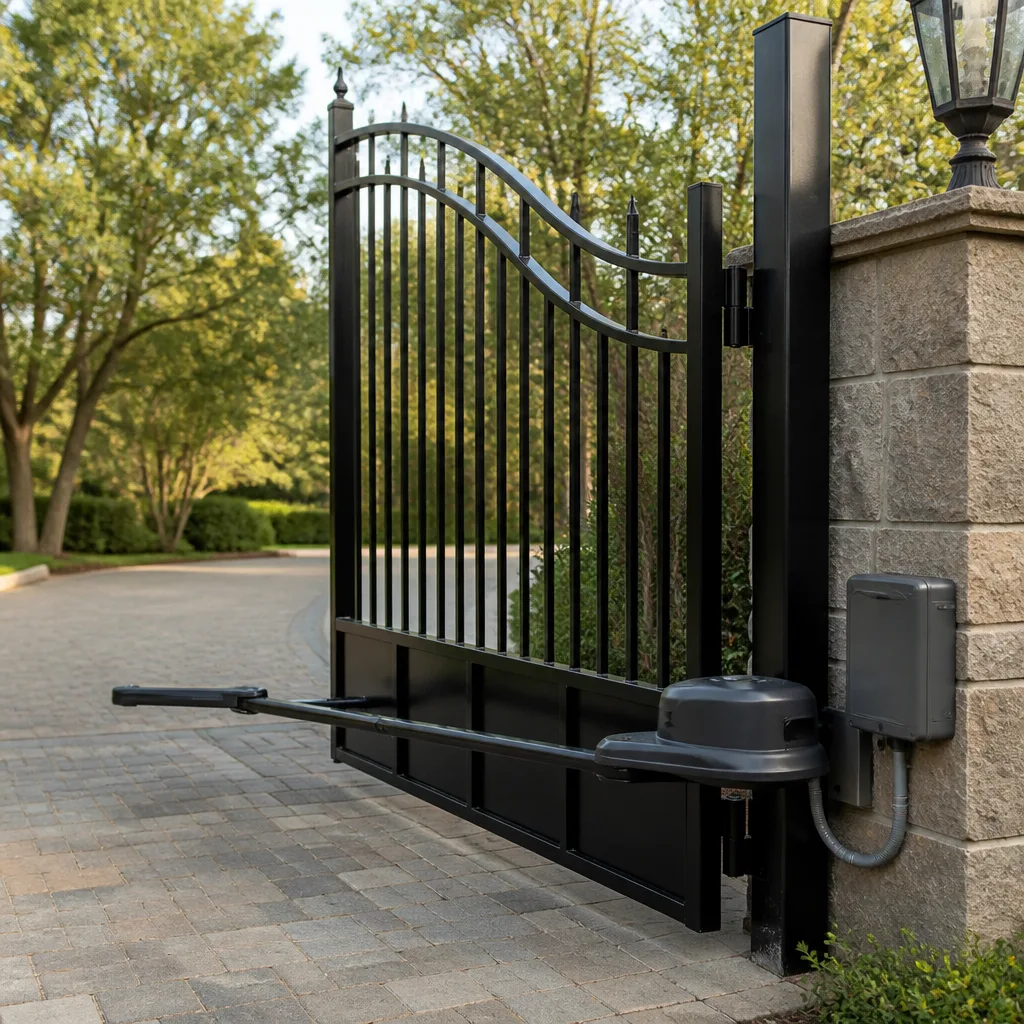
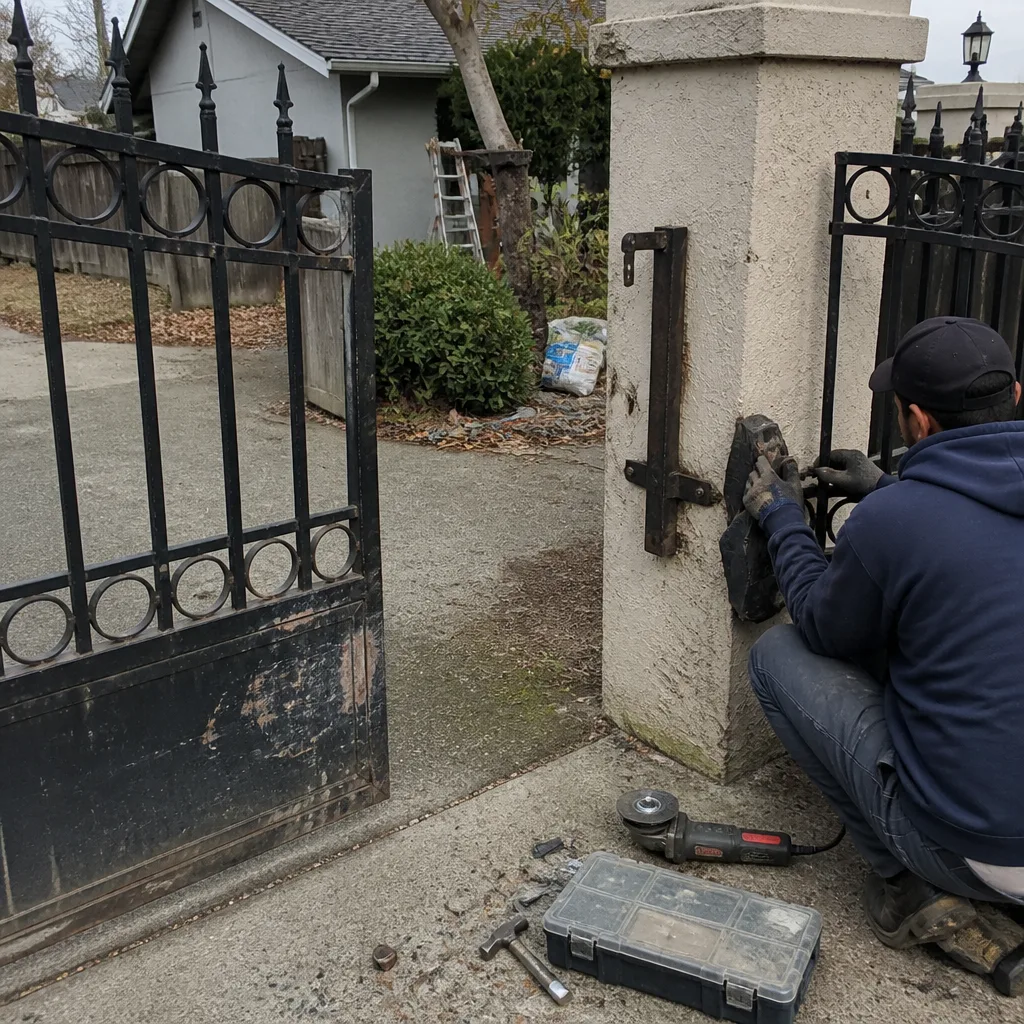 Before
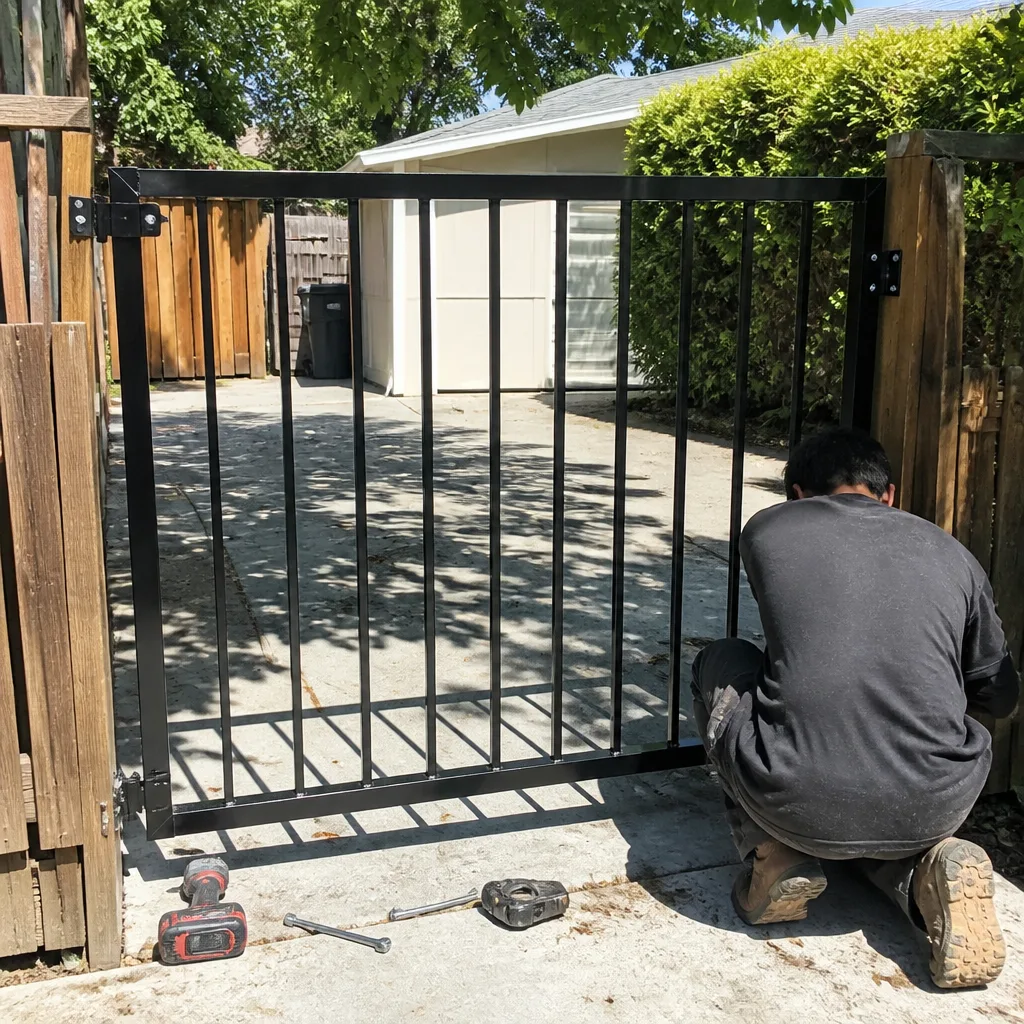 After
After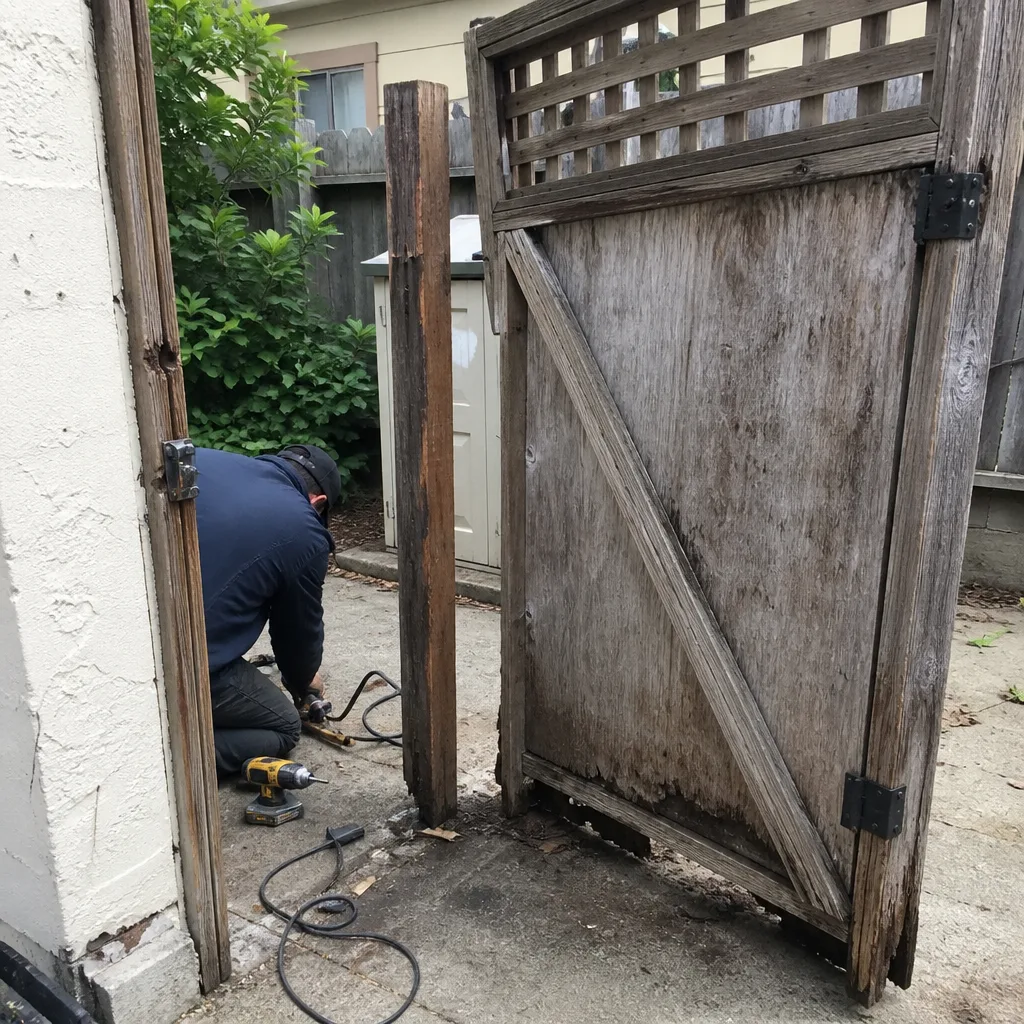 Before
 After
After Before
 After
AfterSeasonal Gate Repair Care for Sunnyvale: Year-Round Homeowner’s Guide
Sunnyvale’s weather looks mild on paper. No blizzards, no hurricanes, no dramatic freeze-thaw cycles. That’s exactly why most homeowners here skip seasonal gate maintenance entirely - and then call us in January when their slide gate motor burns out from fighting a track misaligned by winter ground movement. In our experience serving Sunnyvale since 2014, the majority of preventable gate failures happen because the Bay Area’s subtle seasonal shifts accumulate damage that a single annual inspection misses. This guide maps the four real stress windows for Sunnyvale gate hardware, gives you a season-by-season checklist, and shows you how to read early warning signs in your driveway before they become a $900 gate repair.
Quick Answer
Sunnyvale gate owners should perform focused maintenance four times per year: pre-rain inspection in late October (drainage, rust inhibition, seal check), spring hinge realignment after soil settlement, summer UV inspection of wiring and photo-eye lenses, and early fall track clearance verification. Catching ground movement and UV degradation in season prevents 70% of the emergency repair calls we see in Sunnyvale between December and February; find more guides & resources on our blog.
Table of Contents
- The Four Sunnyvale Stress Windows (And What Actually Breaks)
- Late October: The Pre-Rain Checklist That Prevents January Failures
- Spring: Realignment After Ground Movement
- Summer: UV Damage on Components Most Guides Ignore
- Early Fall: Track Clearance and the Last Inspection Window
- The Seasonal Log Format Technicians Actually Want to See
- Common Mistakes to Avoid
- When to Call a Professional
- Frequently Asked Questions
 Before
 After
AfterThe Four Sunnyvale Stress Windows (And What Actually Breaks)
Sunnyvale’s Mediterranean climate creates four distinct hardware stress periods that don’t match the traditional seasonal calendar. Understanding these windows changes what you inspect and when.
Winter rain (December-February): The first sustained rains after six dry months cause clay-heavy soils in Sunnyvale’s older neighborhoods - particularly around Cherry Chase, Birdland, and the areas near the Permanente Creek watershed - to expand rapidly. This ground heave puts lateral load on gate posts and slide gate tracks. Meanwhile, accumulated road grit and organic debris from the dry season traps moisture against hinges and chain drives, accelerating rust. The combination of mechanical load plus corrosion produces our highest volume of emergency calls: motors straining against misaligned tracks, seized rollers, and hinge pins that have gone from stiff to frozen.
Spring (March-May): As soils dry and contract, gates that heaved in winter settle into new positions. Hinge alignment shifts. Slide gate tracks that were tight in January now have clearance gaps or, worse, high points where the soil settled unevenly. This is the season of mysterious new noises - grinding, catching, intermittent reverse cycles - as the gate tries to follow a path that no longer matches its hardware geometry.
Summer (June-September): Three months of direct UV with minimal fog cover degrades rubber and plastic components faster than most Sunnyvale homeowners expect. Photo-eye lenses craze and fog. Wire insulation on exposed low-voltage runs becomes brittle. Gate operator control boards in unshaded enclosures experience thermal derating - they don’t fail outright, but they become more sensitive to voltage fluctuation and more likely to throw false obstruction errors. The dry, hard ground also transmits more vibration, loosening hardware that winter’s mud had dampened.
Early fall (October-November): The narrow pre-rain window. Soils are at their driest and most contracted. This is the only time of year when you can see the true settled position of your gate posts and track foundation. Any adjustment made now has the best chance of staying correct through the winter heave cycle. Miss this window, and you’re adjusting hardware in wet, swollen soil conditions where today’s “fix” becomes tomorrow’s misalignment.
We’ve documented this pattern across thousands of Sunnyvale service calls. The homeowners who avoid winter emergencies are not the ones who spend the most on maintenance; they’re the ones who time their inspections to these stress windows.
Late October: The Pre-Rain Checklist That Prevents January Failures
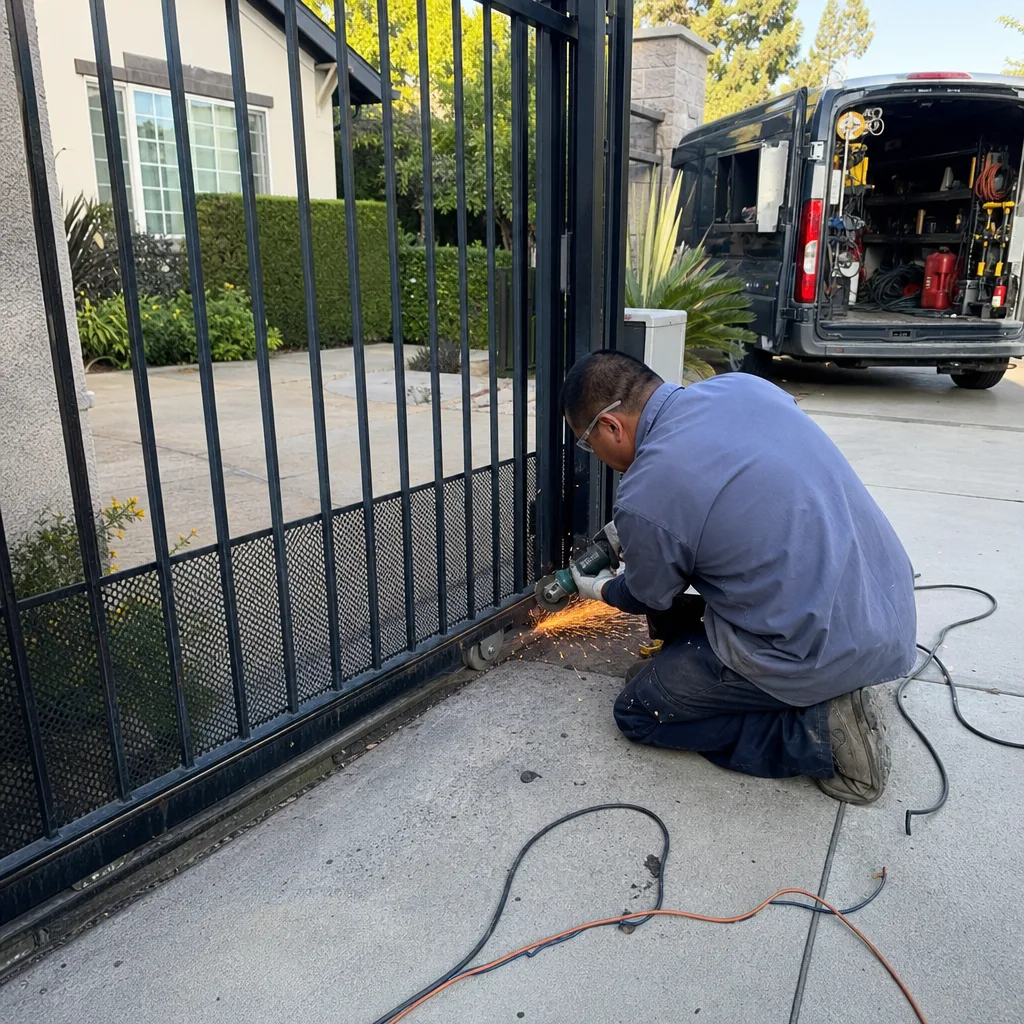
This is the highest-leverage maintenance window for any Sunnyvale gate. A thorough late-October inspection takes 45 minutes and addresses the specific failure modes that dominate our winter repair schedule.
Drainage Around Post Footings
Walk your gate line during or immediately after a test irrigation cycle or light rain. Look for:
- Water pooling within 18 inches of any post or track foundation
- Downspout discharge, sprinkler overspray, or landscape runoff directed toward gate hardware
- Splash marks on post bases indicating repeated wet-dry cycling
In Sunnyvale’s flat residential lots, especially in the Lakewood and Ponderosa Park areas where drainage infrastructure dates to the 1960s, even modest landscape grading errors direct water toward gate lines. A post that sits in pooled water through January and February will heave, rust at the concrete interface, and eventually loosen in its footing. The fix is usually regrading or a simple French drain - not gate hardware - but the gate pays the price if you don’t catch it.
Rust Inhibition Points
Apply a thin coat of lithium grease or dedicated rust inhibitor to:
- Hinge pins and bushings (not the decorative cap - the actual load-bearing interface)
- Chain drive links and sprocket teeth on slide gates
- Exposed bolt threads on track brackets and roller assemblies
- Any raw steel where paint or powder coat has chipped
Wipe off excess. Attraction of grit is worse than no lubrication at all. We use a specific product on commercial sites, but for residential gates in Sunnyvale, any quality lithium grease applied thinly and wiped clean will outlast winter.
Weather Seal Inspection
Check rubber or brush seals on the gate bottom and edges. UV damage from summer is now visible as cracking, hardening, or compression set. Failed seals admit water directly to the gate interior, where it accelerates rust on steel frames and delaminates wood cores. Replacement is straightforward on most Elite and LiftMaster gate systems; we carry common seal profiles and can measure for odd sizes.
Operator Enclosure Vent Check
Ensure ventilation slots on the motor housing are clear of spider webs, leaf debris, and dust. Winter moisture plus blocked ventilation equals condensation on control boards. We’ve replaced three FAAC control boards in Sunnyvale this past January alone where the root cause was a vent blocked since October.
Spring: Realignment After Ground Movement
By March, the soils that swelled in December have dried and contracted. Your gate may now sit in a subtly different position relative to its track, its stops, and its latch receiver.
Reading the Ground for Heave or Settlement
This is the skill most Sunnyvale homeowners never learn, and it’s the one that saves the most money. Walk your gate line and look for these specific indicators:
- Soil cracks radiating from post bases: Indicates differential settlement. The post moved relative to surrounding soil, which means the hinge or track bracket attached to it moved too.
- Exposed concrete at post base: Soil has washed away or settled below original grade, removing lateral support. The post can now rock slightly, which manifests as gate wobble or latch misalignment.
- Track sections that no longer sit flush on their foundation: On slide gates, look for gaps between the track and its mounting surface, or shiny spots on the track top where rollers are now contacting at an angle.
- Gate leaf that hangs closer to ground on one end: Hinge-side post may have tilted, or the gate frame itself may have racked from seasonal stress.
In the Serra neighborhood and other areas with older concrete flatwork, we’ve seen 3/8-inch post movement in a single winter produce track wear that would have cost $2,000 to replace if left through summer. Caught in March, the fix was a post re-plumb and track shim - under $400.
Hinge Realignment Procedure
For swing gates, check hinge pin plumb with a level. The pin should be vertical in both directions; any tilt introduces a twisting load that accelerates bushing wear and can eventually crack the gate frame at the hinge weld. If the post has tilted, don’t shim the hinge - address the post. Shimming a tilted post is a temporary fix that transfers load unevenly and guarantees premature failure.
For slide gates, verify track level with a 4-foot level placed directly on the track surface. Any deviation over 1/8 inch per foot will cause the gate to bind, the motor to strain, and the rollers to flat-spot. Spring is the ideal time for track adjustment because the soil is dry and stable; winter adjustments in swollen soil are guesses at best.
Summer: UV Damage on Components Most Guides Ignore
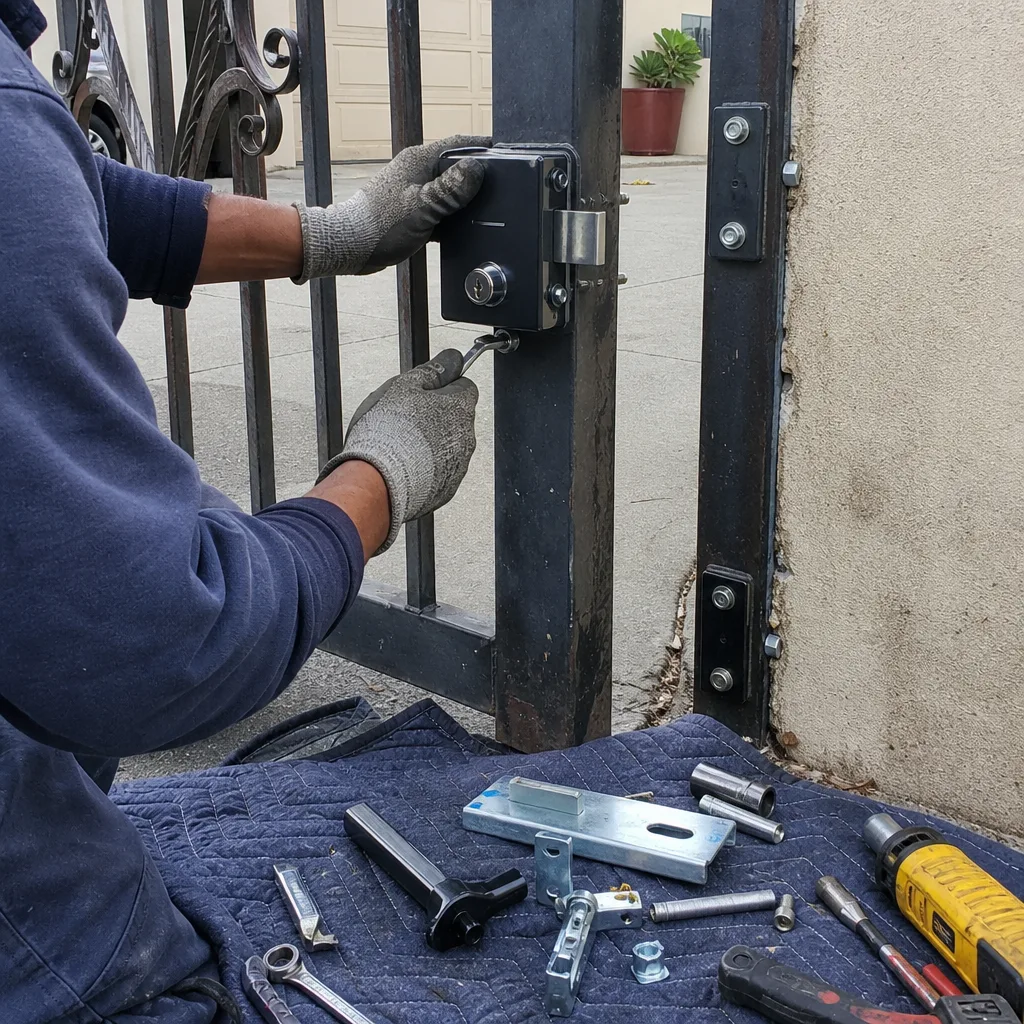
Standard gate maintenance guides mention lubrication and debris clearing. Almost none address the specific UV degradation that dominates Sunnyvale summer failures. Three months of unrelenting sun, with fog intrusion limited to early mornings, creates damage patterns we see repeatedly from June through September.
Photo-Eye Lens Crazing
The infrared photo-eye (the safety beam that stops or reverses the gate if interrupted) has a plastic lens exposed to direct sun. Over two to three Sunnyvale summers, this lens develops micro-cracks - crazing - that scatter the infrared beam. The result is intermittent false obstructions: gate starts, stops, reverses, or refuses to close on sunny afternoons when the sun angle maximizes glare through the damaged lens.
Inspect lenses in July or August. Look for cloudiness, fine surface cracking, or a frosted appearance. Replacement lenses are $15-$40 depending on brand; a service call for “gate won’t close” diagnosed as photo-eye failure runs $180-$260. The lens check takes 30 seconds.
Low-Voltage Wiring Insulation
Exposed control wiring - common on older Mighty Mule installations and some DIY Elite setups - uses PVC insulation that UV embrittles. By year three or four in Sunnyvale exposure, this insulation cracks when flexed. The wire itself may be intact, but a crack at a staple point or conduit exit admits moisture and creates intermittent shorts.
Inspect visible wiring runs for chalking (a white powdery surface), stiffness, or cracking. Any suspect section should be replaced with UV-rated cable or routed into conduit. This is not a repair to defer; a shorted loop detector or safety edge circuit can damage the control board.
Control Board Thermal Stress
Gate operator enclosures in direct sun reach internal temperatures of 140°F or higher. Control boards are rated for continuous operation at lower temperatures; they don’t fail immediately, but capacitors degrade faster and voltage regulators become less stable. The symptom is erratic behavior on hot afternoons - slow response, missed remote signals, or spontaneous diagnostic beeps - that clears by evening.
If your operator enclosure is unshaded, consider a simple shade structure or relocation during summer. For critical applications, some commercial-grade operators include active cooling; for residential gates, passive shade is usually sufficient.
Rubber Component Hardening
Gate bumpers, roller tires, and drive belts all harden in sustained UV. Hardened bumpers transmit impact load to the gate frame rather than absorbing it. Hardened roller tires develop flat spots and transmit vibration. Drive belts slip or crack. Summer inspection should include a squeeze test - rubber should have some give, not feel like hard plastic.
Early Fall: Track Clearance and the Last Inspection Window
October in Sunnyvale is dry soil, low sun angle, and the final opportunity to correct problems before winter rains make accurate assessment impossible. This inspection focuses on mechanical clearance and wear accumulation that summer’s vibration has accelerated.
Slide Gate Track Clearance Verification
- Close the gate fully and mark the track position at each roller location.
- Open the gate and measure the gap between roller and track web (the vertical portion of the channel) at each marked point. Clearance should be 1/8 to 3/16 inch on each side.
- Check for roller wobble by grasping the gate and moving it laterally. Any perceptible movement indicates worn roller bearings or bent track.
- Inspect track joints for step or gap. Even a 1/16-inch vertical step will produce a “clunk” and eventual roller flat-spotting.
Track clearance issues caught in October can be corrected with shim, roller replacement, or track section replacement. Left through winter, the gate fights the track daily, motor current draw rises, and by February you’re looking at motor replacement plus track work.
Swing Gate Latch and Stop Alignment
With the gate in the closed position, verify that the latch pin enters the receiver without contact on any surface. A latch that scrapes or requires the gate to “settle” into position indicates hinge or post movement that will worsen in winter soil cycling. Similarly, mechanical stops (the hard limits that prevent over-travel) should be contacted squarely, not on an edge. Edge contact means the gate has racked or the stop has shifted.
Final Lubrication Before Rain
Apply lubricant to all moving surfaces now, so it has time to wick into interfaces before winter moisture arrives. Wipe clean after application. This is also the time to replace any hardware showing corrosion that started in the previous winter - bolts, nuts, cotter pins - while the access is easy and the gate is still operating.
The Seasonal Log Format Technicians Actually Want to See
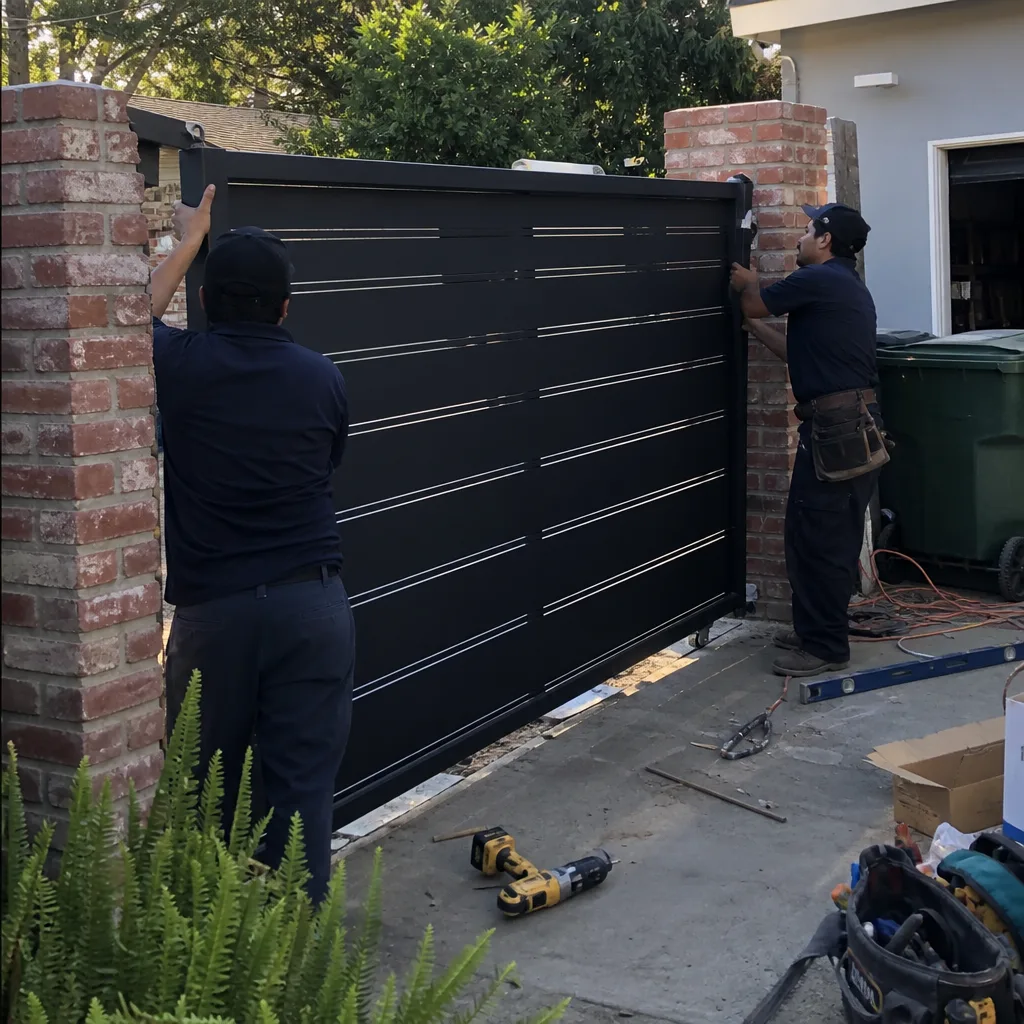
When you call for service, the most expensive diagnostic starting point is “it started acting weird a while ago.” A simple seasonal log transforms that into actionable data and often shortens the service call.
We recommend a single page, four entries per year, with these fields:
- Date and weather: General conditions, recent rain or heat, irrigation changes
- Gate behavior: Specific observations - “grinding at 3/4 open,” “reverses at latch,” “slow on hot afternoons”
- Visual findings: Rust locations, crack locations, soil changes, water pooling
- Maintenance performed: Lubrication, cleaning, adjustments, parts replaced
- Photo reference: Phone photo numbers or cloud album links
Here’s an example entry from a Sunnyvale client whose log helped us diagnose a recurring issue:
October 14, 2023. Dry, 78°F. Post base on driveway side showing 1/2 inch exposed concrete, new this year. South hinge pin has slight rust bleed. Lubricated all hinges, cleared operator vent (spider web). Photo 1023-14-a: post base. Photo 1023-14-b: hinge pin.
When this client called in January with “gate catching at same spot,” we had a baseline. The post had tilted further; the hinge pin rust was now a binding surface. Repair time was 45 minutes because we knew the history. Without the log, we’d have spent an hour diagnosing, possibly replaced hardware that wasn’t the root cause, and scheduled a return visit when the fix didn’t hold.
Under Haven Standard Clause 4, we document every visit with photos and written findings. Your seasonal log complements our records and gives us trend data that single-visit documentation cannot.
Common Mistakes to Avoid
- Waiting for a failure to inspect. In Sunnyvale’s climate, a gate can operate poorly for months before it fails completely. By then, secondary damage - worn motor, damaged track - has multiplied the repair cost.
- Lubricating without cleaning first. Grease over grit creates abrasive paste. We see this most on chain drives in the older Sunnyvale neighborhoods where trees drop fine debris year-round. Clean with a dry brush, then lubricate sparingly.
- Adjusting track in wet soil. Any adjustment made in January or February is being made in swollen, unstable soil. The “correct” position in wet conditions becomes incorrect when soils dry. Wait for October or March.
- Ignoring photo-eye maintenance. These lenses need cleaning quarterly in Sunnyvale’s dusty dry season, replacement every 3-4 years. Most homeowners never touch them until the gate malfunctions.
- Using the wrong lubricant on electrical contacts. We’ve found WD-40 on limit switches and control terminals. It attracts dust, insulates slightly, and eventually causes contact failure. Electrical contacts get contact cleaner or nothing.
- DIY spring or cable adjustment on swing gates with torsion or tension assist. These components store significant energy. Improper release can cause serious injury. Document what you observe, then call for service.
- Assuming “mild climate” means “no maintenance needed.” Sunnyvale’s weather is gentle on people and brutal on gate hardware in specific, predictable ways. The lack of dramatic seasons makes the damage cumulative and harder to notice.
When to Call a Professional
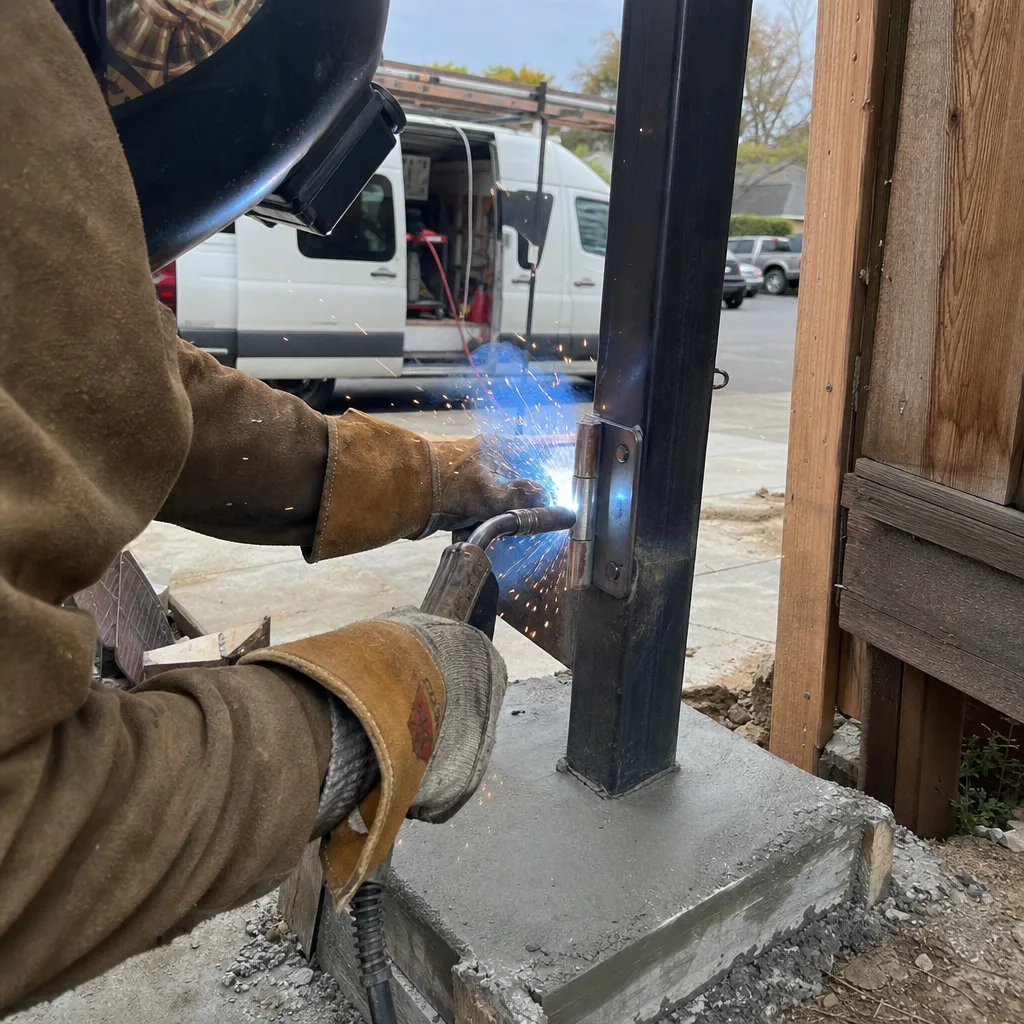
Some gate maintenance is straightforward homeowner work: cleaning, visual inspection, basic lubrication, and seasonal logging. Other tasks require specific tools and training, and some present genuine safety hazards - see our DIY vs Professional Gate Repair guide to decide what’s right for you.
Call a technician if you find post movement greater than 1/4 inch, track step or gap, electrical issues beyond a simple photo-eye lens replacement, or any problem with springs, cables, or tensioning devices. These are not DIY repairs. The stored energy in a gate assist spring or the precision required for track alignment makes professional service the cost-effective choice.
Gate Repair in Sunnyvale from Vance Gate Repair Sunnyvale includes a written price before any work starts, documented photo evidence of findings and adjustments, and our 365-Day Done Right Promise. We offer free estimates in Sunnyvale - call (669) 900-1904.
Frequently Asked Questions
Professional seasonal inspection and adjustment typically runs $180-$340 for a single-family residential gate, depending on access complexity and whether parts need replacement. A full preventive maintenance agreement covering four annual visits averages $600-$900 per year and includes priority scheduling. We provide a written price before any work begins under Haven Standard Clause 1. Call (669) 900-1904 for an exact quote - estimates are free.
Homeowners can safely perform cleaning, visual inspection, lubrication, and seasonal logging. Post movement assessment, track adjustment, electrical diagnosis, and any work involving springs or tensioning devices should be handled by a trained technician. The documentation habit - photos and written observations - is valuable regardless of who performs the hands-on work. Call us if your inspection reveals anything beyond your comfort level.
January combines maximum soil moisture (from December rains) with the first sustained cold snaps that stiffen lubricants and contract metal components slightly. Gates that were marginally aligned in October become binding in January. The motor strains, current draw spikes, and either the motor fails or the control board trips its overload protection. This pattern is so predictable in Sunnyvale that our call volume typically doubles in the second week of January.
Every 3-4 years for lenses in direct sun, 5-6 years for shaded installations. Inspect annually for crazing or clouding. Replacement is a simple homeowner task on most LiftMaster, Elite, and Mighty Mule systems - the lens housing unscrews or snaps off. We carry common replacements and can measure for obsolete profiles.
Our seasonal service includes: mechanical inspection (hinges, rollers, track, chain or belt, stops, latch), electrical inspection (operator, control board, safety devices, remote range test), ground and drainage assessment, lubrication of all specified points, limit-switch verification and documentation, and a written photo record delivered to you. Under Haven Standard Clause 4, you receive the photo log and written findings before we leave. Gate Motor & Opener in Sunnyvale service includes operator-specific diagnostics for all nine brands we support.
We service and repair nine major automation brands: LiftMaster, FAAC, BFT, Linear, Viking, Ghost Controls, DoorKing, Elite, and Mighty Mule. We do not steer customers toward replacement when repair is viable, and we stock common parts for all nine brands. If your operator is obsolete or parts are unavailable, we’ll document why replacement is necessary and provide written options. Gate Installation in Sunnyvale is available when replacement is the appropriate solution.
The Bottom Line
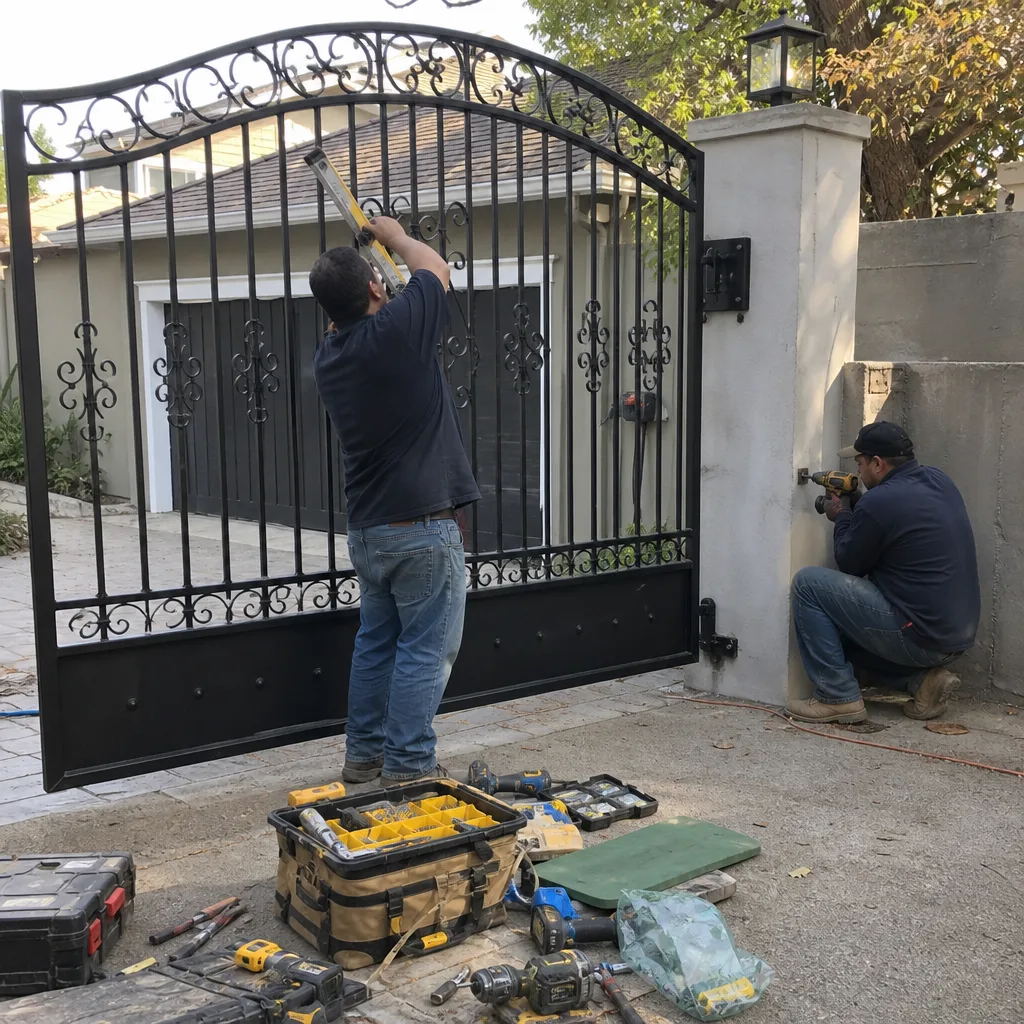
Sunnyvale’s climate doesn’t announce its threats with blizzards or hurricanes. It degrades gate hardware through subtle, cumulative stress - soil movement, UV exposure, moisture trapping - that a single annual inspection misses. The homeowners who avoid emergency repairs are those who match their maintenance to the four real stress windows: pre-rain inspection in late October, spring realignment after ground movement, summer UV inspection of overlooked components, and early fall clearance verification. Document what you find each season. When you do need professional service, that documentation becomes the fastest path to a correct, lasting repair.
Written by Adrian Vance, Owner at Vance Gate Repair Sunnyvale, serving Sunnyvale since 2014.